












Story Highlight
– New safety kitemark scheme launched for kitchen worktops.
– Scheme aims to protect workers from silicosis risks.
– The i Paper’s campaign credited for driving industry change.
– Health and Safety Executive endorses significant safety improvements.
– Annual inspections and safety measures required for compliance.
Full Story
A significant advancement in workplace safety has emerged following advocacy from The i Paper, which has led to the introduction of a new safety kitemark scheme aimed at reducing risks associated with silica dust in kitchen worktop fabrication. This initiative has garnered commendation from the Health and Safety Executive (HSE) and medical professionals, promising to enhance protections for young workers and potentially save lives.
The Worktop Fabricators Federation (WFF) and the British Occupational Hygiene Society (BOHS) have jointly established this pioneering framework, which sets forth safety protocols designed to mitigate hazards encountered during the cutting of engineered stone with high silica content. This initiative has been heralded as a milestone in the UK’s manufacturing sector, ensuring that kitchen renovations adhere to stringent safety standards.
Dr. Rick Brunt, director of engagement and policy at HSE, acknowledged the scheme as an essential progress in workplace safety. “We recognise this is an important development by the Worktop Fabricators Federation and the British Occupational Hygiene Society, working together to raise awareness of the risks of silica,” he stated.
The issue of silica dust in the kitchen fabrication industry gained significant attention following the revelations from The i Paper about the first cases of engineered stone-induced silicosis in the UK. To date, at least 45 tradesmen have been diagnosed with this debilitating condition, typically affecting younger workers who are often exposed to hazardous working conditions.
In response to these alarming statistics, Dr. Johanna Feary, a leading expert treating quartz silicosis patients at the Royal Brompton Hospital, praised the kitemark initiative as a “significant step forward for protecting workers’ respiratory health.” She pointed out that such schemes could lead to a marked reduction in future silicosis cases while facilitating early identification of those at risk.
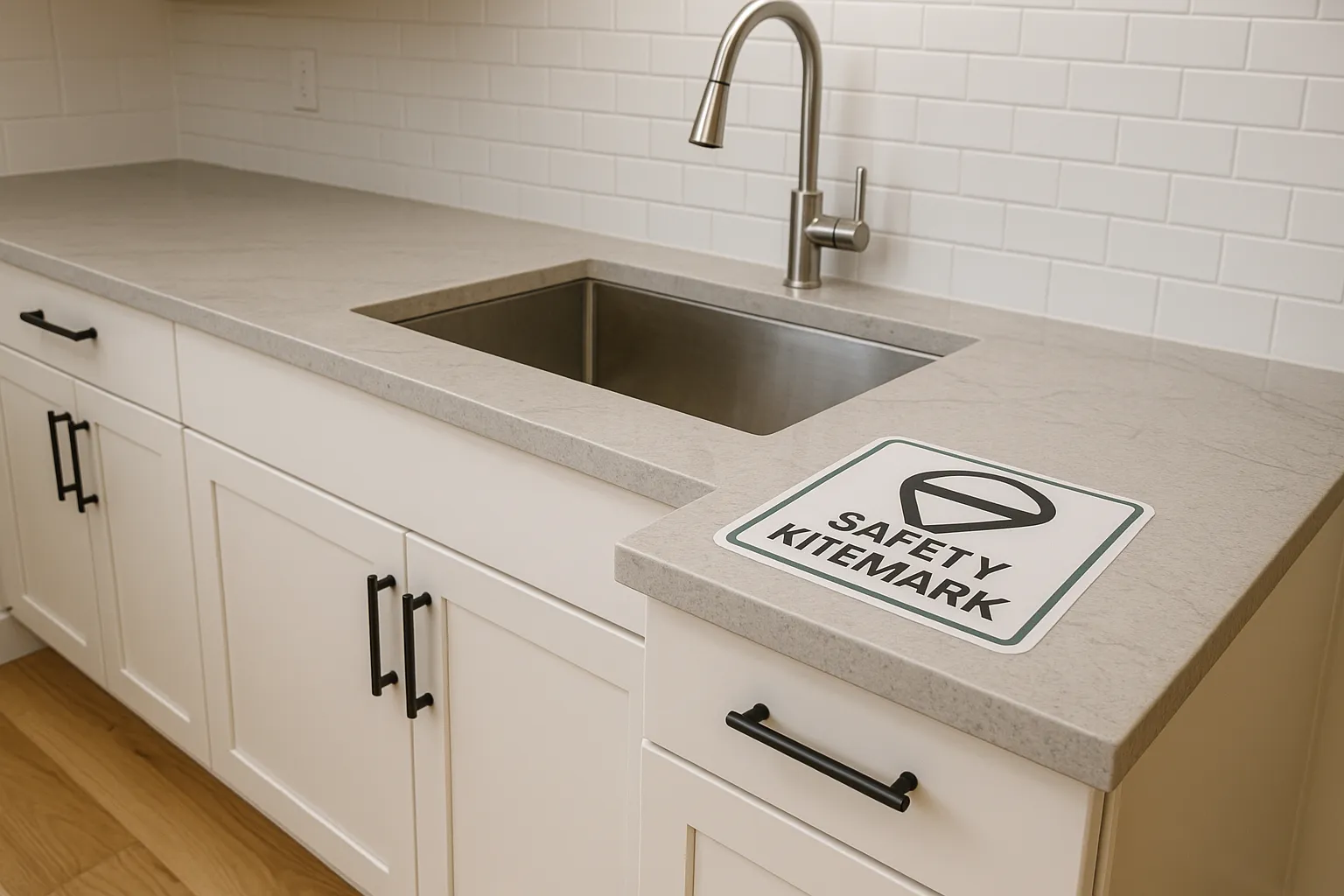
The new safety kitemark scheme aims to provide assurance to homeowners that their kitchen worktops are manufactured with health-preserving measures in place. Those acquiring worktops can rest assured that the products meet regulatory safety requirements and do not compromise employees’ health for lower costs. The kitemark will denote compliance with a set of 16 specific safety standards, which include mandatory wet cutting methods to suppress dust generation and annual inspections by accredited professionals.
As Nigel Fletcher from WFF noted, “This will be the first step towards having some sort of regulation that identifies best practice.” He emphasized that the initiative marks the beginning of a transition toward greater professionalism within the industry.
Under the new framework, firms must engage in wet cutting practices, whereby stone is manipulated using water to reduce dust hazards. They will also be required to keep rigorous records of health surveillance activities and engage occupational hygienists to conduct inspections and assessments. Notably, products must be traceable to firms certified by a registered occupational hygienist to ensure the highest quality standards.
To further enhance transparency, a QR code will accompany each certified worktop, allowing consumers to verify that the product was manufactured according to the guidelines set forth in the kitemark scheme. This innovative approach not only heightens consumer confidence but holds manufacturers accountable for their production processes.
Critics of the industry have long expressed concerns regarding unregulated operations where safety standards are overlooked for the sake of profit. Bampton highlighted the need to focus on those entities that neglect their responsibilities toward worker safety. “It will certainly save lives,” he affirmed, advocating for stricter controls on businesses that do not adequately protect their employees.
The introduction of this kitemark scheme is seen as a crucial development, particularly amid rising awareness of health risks among workers in the stonemasonry field. Many professionals are now leaving less scrupulous firms in search of safer working environments. Dr. Feary underscored the importance of ongoing education and effective exposure control measures, saying, “An initiative such as this kitemark is a substantial leap forward for protecting workers’ respiratory health.”
The kitemark is scheduled for implementation by April and will be accessible to both WFF members and non-members. The WFF’s members currently account for around 70% of the UK kitchen countertop market, thus their compliance could significantly influence industry standards.
Bampton further stated that adherence to the kitemark’s standards would substantially decrease the likelihood of workplace respiratory disorders. “This is a first for British industry, where consumers can assess the health implications associated with their choices in products,” he said, expressing hope that this would encourage companies to prioritise worker welfare.
The “Killer Kitchens” campaign, spearheaded by The i Paper, continues to advocate for rigorous safety measures within the kitchen worktop sector. Chief elements of their agenda include banning unsafe cutting practices, urging for government-funded health screenings for workers, and improving health surveillance mechanisms. They advocate for a system similar to Australia’s which has proven effective in identifying the scope of silicosis among stonemasons.
Despite the visible progress, industry experts, including Fletcher, caution against complacency. Many small firms may still flout safety standards, opting for cost-cutting measures that jeopardise employee health. “There will always be those that cut corners, exposing their staff to unnecessary risks,” he remarked.
In summary, the newly launched kitemark initiative promises a substantial improvement in safeguarding workers in the kitchen fabrication sector. With collective endorsement from the HSE and health professionals, there is optimism that this regulatory advancement will encourage safer manufacturing practices and prevent the emergence of further health issues connected with silica dust exposure.
Our Thoughts
The introduction of a new safety kitemark scheme is a crucial step to mitigate health risks related to silica dust in the kitchen worktop industry. To prevent past incidents of silicosis among workers, the following measures should have been prioritized:
1. **Implementation of Control Measures**: Prior to the campaign, many firms did not utilize wet cutting techniques or proper dust suppression methods, which are essential under the Control of Substances Hazardous to Health Regulations (COSHH).
2. **Regular Inspections and Health Surveillance**: Consistent safety inspections by qualified professionals and ongoing health monitoring for employees could have significantly reduced exposure to hazardous silica dust. The absence of these practices likely contributed to the development of silicosis among tradesmen.
3. **Training and Awareness Campaigns**: Prior to the attention brought by the Killer Kitchens campaign, many workers might not have been adequately trained on the risks associated with silica dust. This falls under the Health and Safety at Work Act 1974 mandate for employers to ensure worker safety through proper training.
4. **Regulatory Compliance**: Many employers may not have adhered to existing regulations, reflecting a need for stricter enforcement and possibly the introduction of new regulations to eliminate unsafe practices such as dry cutting.
Future prevention can be achieved by ensuring compliance with updated regulations, promoting worker education, and increasing the frequency of workplace inspections to identify and rectify unsafe practices.