
















Story Highlight
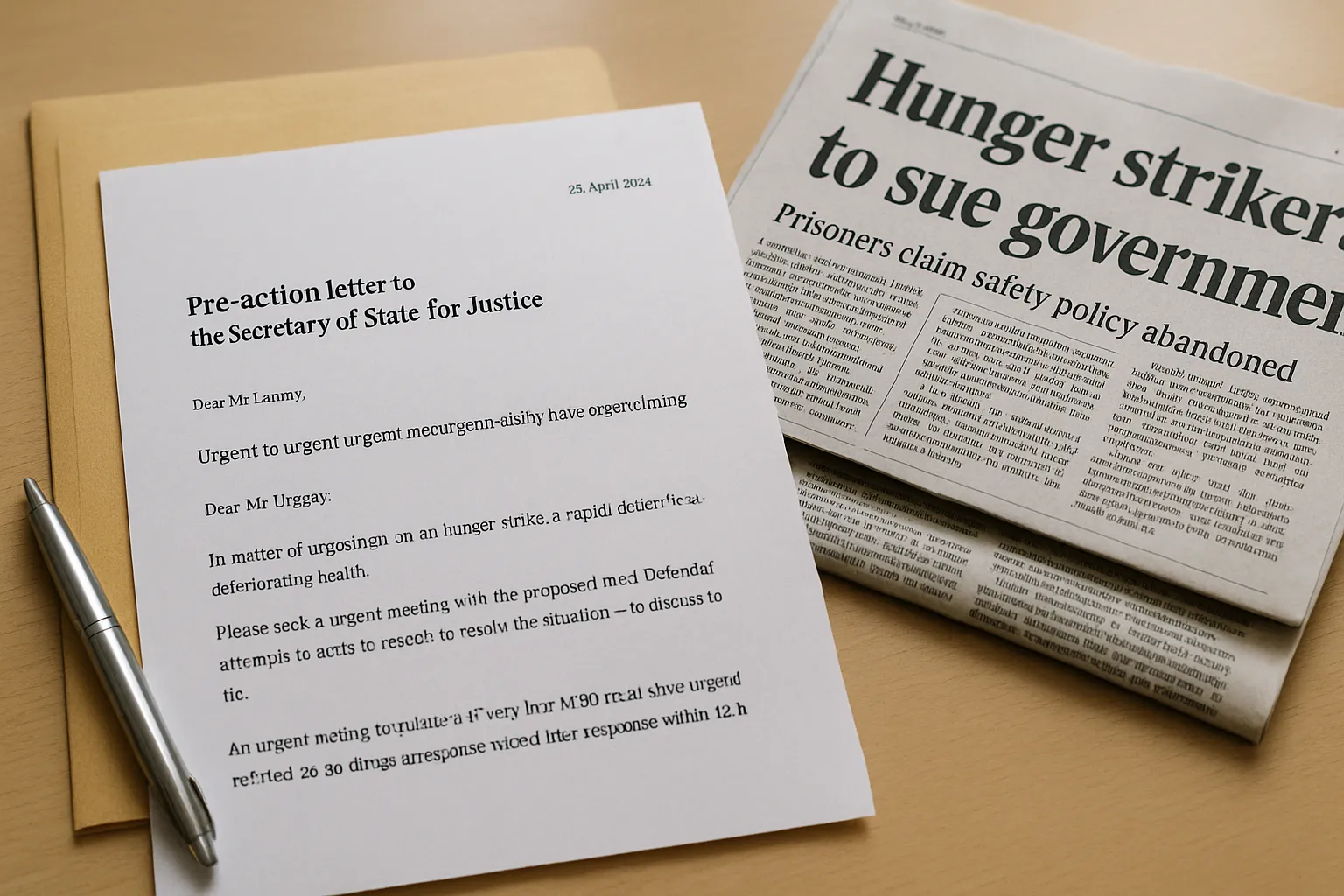
– Palestine Action hunger strikers initiate legal action against government.
– Strikers claim neglect of prison safety policy framework.
– Seven prisoners hospitalized due to hunger strike health issues.
– Over 800 doctors warn of high risk of death.
– Strikers demand de-proscription and immediate bail for prisoners.
Full Story
Members of the Palestine Action group, engaged in hunger strikes to protest their imprisonment, have initiated legal action against the UK government, alleging a failure to uphold its own prison safety standards. A legal team acting on behalf of the activists has sent a pre-action letter to Justice Secretary David Lammy, who also serves as Deputy Prime Minister, urging immediate action in light of the deteriorating health of several strikers.
The communication, dispatched on Monday, asserts that the government has neglected its duty under established prison safety policies, and calls for a response within 24 hours. The legal representatives have expressed significant concern, stating that the health of their clients is in a precarious state, increasing the risk of fatal consequences. “Our clients’ health continues to deteriorate, such that the risk of their dying increases every day,” the letter highlights, further requesting an urgent meeting with Lammy to discuss the situation and explore potential resolutions.
Among the hunger strikers is Amu Gib, 30, who has been hospitalised following a prolonged refusal of food, now on day 51 of the protest, with reports indicating that their condition has necessitated the use of a wheelchair. Kamran Ahmed, 28, currently on day 43 of his strike after being held at Pentonville Prison in London, is also experiencing severe health issues. Since the start of the hunger strike on 2 November, at least seven other prisoners have been admitted to hospital, and two have been compelled to end their strikes prematurely due to critical health concerns.
In a stark warning issued last Thursday, emergency physician Dr James Smith stated that “some of the activists are dying” and that they are in urgent need of specialist medical care. Dr Smith, accompanied by over 800 fellow medical professionals who endorsed a letter directed at the government, expressed alarm regarding the serious health risks faced by the activists. The potential for severe medical complications includes organ failure, neurological damage, and even death, underscoring the gravity of the situation.
The charges faced by the imprisoned activists stem from alleged acts of criminal damage or break-ins conducted in the name of Palestine Action, which has been designated a terrorist organisation under UK law. Gib is alleged to have vandalised RAF Voyager planes at RAF Brize Norton, while Ahmed reportedly inflicted £1 million worth of damage on a site associated with an Israeli defence contractor in Bristol.
The demands set forth by the hunger strikers include the delisting of Palestine Action as a terrorist entity, a cessation of operations by defence companies associated with Israel, and immediate bail for the imprisoned individuals. They also seek assurances for their right to a fair trial and protection of freedom of expression within the prison system, citing concerns over missing correspondence and obstructed phone communications.
In response to the allegations, a spokesperson for the Ministry of Justice reaffirmed the government’s position, asserting, “We strongly refute these claims. We want these prisoners to accept support and get better, and we will not create perverse incentives that would encourage more people to put themselves at risk through hunger strikes.”
Prime Minister Sir Keir Starmer has previously stated that established “rules and procedures” are being adhered to in managing hunger strikes, while Prisons Minister Lord Timpson emphasised the experience of the service in handling such situations, assuring that they have robust measures in place. Lord Timpson also made it clear that the Prison Service would not engage in direct discussions with the prisoners or their representatives.
As the hunger strikes continue, the involvement of medical professionals and legal experts underscores a growing concern over the treatment of the prisoners. Activists and supporters are rallying in solidarity, highlighting the broader implications of the case for prisoner rights and health policies within the UK justice system. Such legal actions serve as a reminder of the ongoing tensions surrounding issues of activism, state responses, and individual rights in the context of the Israeli-Palestinian conflict.
Local communities and humanitarian organisations have been critical of the government’s stance, advocating for an urgent reassessment of how hunger strikes are managed and the health risks associated with them. Many activists argue that hunger strikes, while a form of protest, should not lead to serious health risks or fatalities, and that greater responsibility lies with the authorities to ensure the welfare of inmates.
The ongoing circumstances surrounding Palestine Action and their members in prison sheds light on the complexities and urgent challenges within the intersection of activism, state policy, and human rights. As legal proceedings progress, the stakes remain high for those involved, with implications that may resonate well beyond the immediate context of these hunger strikes. The outcome not only affects the individuals currently protesting but also raises broader questions regarding the treatment of prisoners and the right to free expression in the UK.
Our Thoughts
The situation regarding the Palestine Action hunger strikers raises several health and safety concerns under UK legislation, particularly the Health and Safety at Work Act 1974, which mandates the provision of a safe working environment, including prisons.
To avert such health crises, the Prison Service should enhance its procedures for monitoring and responding to the health of hunger strikers, ensuring adherence to its own safety policy framework. There appears to be a breach of duty of care towards the prisoners, as evidenced by the reported delays in medical intervention, such as refusing an ambulance for over 12 hours, which contravenes the requirement for prompt medical assistance.
Key lessons include the necessity for effective communication between prison authorities and medical staff and ensuring a robust process for supporting prisoners undertaking hunger strikes. Additionally, a review of existing policies concerning the handling of protests and hunger strikes could prevent future incidents.
Emergency protocols should be established to address rapid health deterioration in hunger strikers, aligning with the Health and Safety Executive’s guidelines on risk assessment and emergency preparedness in prisons. Regular training for staff on health risks associated with prolonged hunger strikes is essential to mitigate similar incidents in the future.