















Story Highlight
– Campaigners accuse UK government of neglecting prison safety.
– Several hunger strikers hospitalized due to health issues.
– One striker has refused food for 51 days.
– Legal firm demands urgent meeting regarding prisoners’ health.
– Ministry of Justice denies claims, asserts prison handling expertise.
Full Story
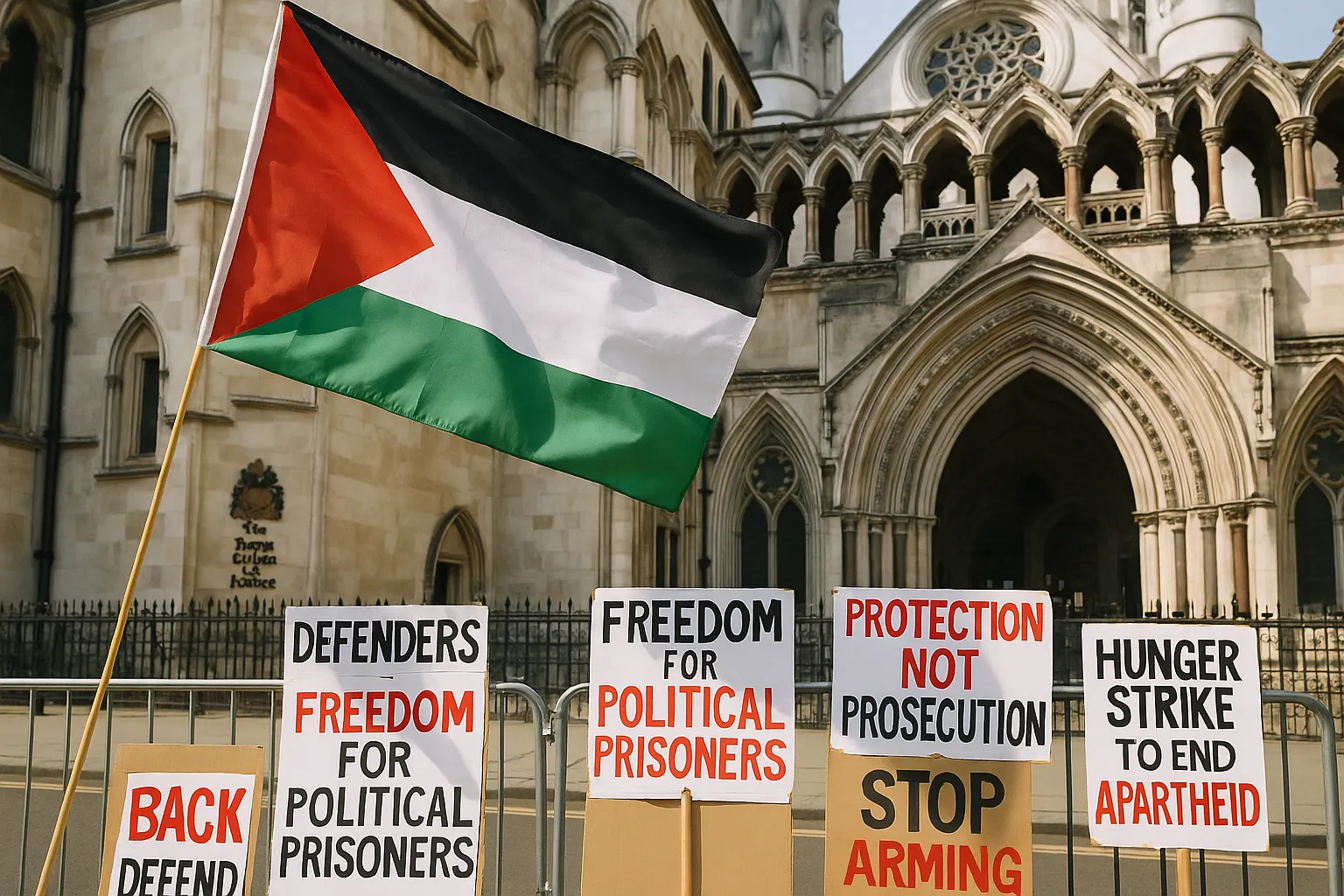
Campaigners have launched legal action against the UK government, claiming it has neglected its own policies regarding prison safety. Outside the Royal Courts of Justice, members of Palestine Action, who have been on hunger strike, have expressed serious concerns over the health conditions of fellow activists currently incarcerated.
A pre-action letter has been dispatched to Justice Secretary David Lammy, which outlines alarming reports of deteriorating health among several imprisoned members. Of particular concern is the case of one activist who has been on hunger strike for an extended period, refusing sustenance for 51 days.
The legal representation for these campaigners is seeking an immediate response from the government within a strict time frame of 24 hours, alongside a request for a meeting focused on the health issues affecting the prisoners. They have cautioned that without prompt action, there may be a severe risk to the lives of those involved in the hunger strike.
The demands laid out by the Palestine Action hunger strikers are multifaceted. They are calling for the de-proscription of their group as a terrorist organisation, a complete shutdown of defence firms operating in connection with Israel, the release on bail of those who are currently imprisoned, and a guarantee of freedom of expression for all individuals.
However, the Ministry of Justice has firmly rejected the accusations, asserting that it will not take actions that might create “perverse incentives” regarding prison protocols. In response to the situation, Prisons Minister Lord Timpson has emphasised the expertise of the Prison Service in managing hunger strikes, reiterating that the current stance is not to engage in discussions with the strikers.
The unfolding situation has attracted notable attention, with advocacy groups and human rights organisations closely monitoring the developments. Concerns have been raised not only about the immediate welfare of the hunger strikers but also about the implications of the government’s stance on activists’ rights and freedom of speech.
Experts have commented on the broader implications of the case. Sarah Collins, a lecturer in Human Rights Law, remarked, “The treatment of prisoners engaged in hunger strikes raises significant questions about the ethical responsibilities of the state, particularly regarding health and safety in custody.” She added that the government’s actions could set precedents that may impact future cases involving activists or political prisoners.
Local perspectives have also emerged, with community members expressing their solidarity with the hunger strikers. Many have taken to social media to voice their support, highlighting the importance of addressing the mental and physical wellbeing of those involved. One local activist stated, “We cannot turn a blind eye to the suffering of these individuals. Their cause is rooted in a deep struggle for justice.”
Public opinion appears to be divided, with some advocating for a hardline approach against what they perceive as activism bordering on extremism, while others call for compassion and engagement. The ongoing dialogue surrounding the case is reflective of wider debates within society about the balance between national security and individual freedoms.
As the situation continues to evolve, the urgency of the campaigners’ demands highlights the tense climate surrounding activism in the UK. With increasing scrutiny on governmental policies concerning free speech and the treatment of activists, the implications of this case could resonate far beyond the immediate context.
Palestine Action’s fight against what they view as oppressive governance is emblematic of a broader challenge faced by various activist groups in the UK. As they strive to draw attention to their plight, the demand for justice and accountability remains at the forefront of their efforts.
The UK government’s approach to this unfolding crisis may have lasting effects not only on the individuals involved but also on the broader landscape of political dissent. The way this legal challenge is navigated could reshape public perception and influence the future of activism within the country.
In conclusion, the concerns raised outside the Royal Courts of Justice reflect deeper societal issues regarding the intersection of state power and individual rights. As the situation develops, the demands of the hunger strikers will continue to resonate within discussions of justice, free expression, and the treatment of those who challenge the status quo. Both the legal proceedings and the health of the strikers will undoubtedly draw significant attention in the days and weeks to come.
Our Thoughts
The situation highlights potential breaches of UK health and safety legislation, specifically the Health and Safety at Work Act 1974, which mandates that employers ensure the health and safety of all employees, including those in custody. To prevent such incidents, the Prison Service should have adopted more proactive measures regarding the health monitoring of prisoners on hunger strikes, ensuring that their wellbeing is prioritized.
Key safety lessons include the necessity of implementing thorough risk assessments for vulnerable individuals, especially those engaged in hunger strikes, and maintaining open lines of communication with health professionals and legal representatives. There should also be clear protocols in place to respond to deteriorating health conditions swiftly and appropriately.
Ensuring compliance with the Management of Health and Safety at Work Regulations 1999 could have helped in developing systematic approaches to managing such high-risk situations. Regular training for prison staff on the mental and physical health implications of hunger strikes and the legal obligations towards the health of incarcerated individuals could further mitigate risks and promote a safer environment.