














Choose an AI chat
Worker dies in Cardiff after company fails to maintain industrial door
UK Health and Safety Latest

Worker dies in Cardiff after company fails to maintain industrial door

by Ellie Cartwright
June 19, 2026
0

A Cardiff-based printing company has been fined £400,000 following the death of maintenance worker Anthony Webb while repairing an industrial...

Read moreDetails
Thousands face potential spinal surgery due to implant recall

Thousands face potential spinal surgery due to implant recall

June 19, 2026
Amber alert issued as southern England braces for extreme heat

Amber alert issued as southern England braces for extreme heat

June 19, 2026
Temporary mobility issues may lead to Blue Badge eligibility in Scotland

Temporary mobility issues may lead to Blue Badge eligibility in Scotland

June 18, 2026
Patients face unprecedented NHS medicine shortages

Patients face unprecedented NHS medicine shortages

June 17, 2026

Archives

  • June 2026
  • May 2026
  • April 2026
  • March 2026
  • February 2026
  • January 2026
  • December 2025
  • November 2025
  • October 2025
  • September 2025
  • July 2025
  • August 2009

Categories

  • Health and Safety Help
  • News
  • Policies
  • UK Health and Safety Latest
  • About
  • Advertise
  • Policies
    • Privacy Policy
    • Editorial Policy
    • Corrections & Complaints policy
  • Useful Documents
    • Understanding RIDDOR
    • 10 Workplace Safety Failures
    • A Complete Guide to Reporting Safety Incidents in the UK
    • Fire Risk Assessment: Meeting the Regulatory Reform (Fire Safety) Order
    • COSHH Basics: A Practical Guide to Control of Substances Hazardous to Health
    • Working at Height in the UK: The Essentials (WAH Regulations 2005)
    • Asbestos in the Workplace: Control of Asbestos Regulations 2012 (CAR) Essentials
    • Managing Contractors Under CDM 2015: Roles, Duties & Controls
    • DSE & Ergonomics: Healthy Workstations for Office & Hybrid Teams
    • Lock out Tag out LOTO
    • Workplace Transport Safety: Forklifts, Pedestrians & Traffic Management
    • Noise & Vibration at Work: Practical Controls (2005 Regulations)
    • Confined Spaces in the UK: Safe Entry under the Confined Spaces Regulations 1997
  • Contact
  • Agent
Friday, June 19, 2026
16 °c
London
17 ° Sat
15 ° Sun
17 ° Mon
  • Login
UK Safety News
  • Home
  • News
    • All
    • UK Health and Safety Latest
    Worker dies in Cardiff after company fails to maintain industrial door

    Worker dies in Cardiff after company fails to maintain industrial door

    Thousands face potential spinal surgery due to implant recall

    Thousands face potential spinal surgery due to implant recall

    Amber alert issued as southern England braces for extreme heat

    Amber alert issued as southern England braces for extreme heat

    Temporary mobility issues may lead to Blue Badge eligibility in Scotland

    Temporary mobility issues may lead to Blue Badge eligibility in Scotland

    Patients face unprecedented NHS medicine shortages

    Patients face unprecedented NHS medicine shortages

    Patients face record NHS medicine shortages

    Patients face record NHS medicine shortages

    Medicine shortages pose life-threatening risks to patients in the UK

    Medicine shortages pose life-threatening risks to patients in the UK

    Residents oppose council’s warning against flag displays during World Cup

    Residents defend flag displays as council warns against public displays during World Cup

    Residents defend flag displays as council warns against public displays during World Cup

    UK issues amber heat health alerts as temperatures soar

    UK issues amber heat health alerts as temperatures soar

    Trending Tags

    • Donald Trump
    • Future of News
    • Climate Change
    • Market Stories
    • Election Results
    • Flat Earth
No Result
View All Result
UK Safety News
No Result
View All Result
Home News UK Health and Safety Latest

Snow and freezing temperatures raise workplace safety concerns in the UK

Tara Rowden by Tara Rowden
January 6, 2026
in UK Health and Safety Latest
Reading Time: 4 mins read
0
Snow and freezing temperatures raise workplace safety concerns in the UK

Story Highlight

– UK experiencing snow and below freezing temperatures.
– Workers researching legal minimum workplace temperature guidelines.
– No statutory minimum, but suggested is 16°C or 13°C.
– Employers must ensure staff safety and provide warmth.
– Duty of care includes proper clothing and safety measures.

Full Story

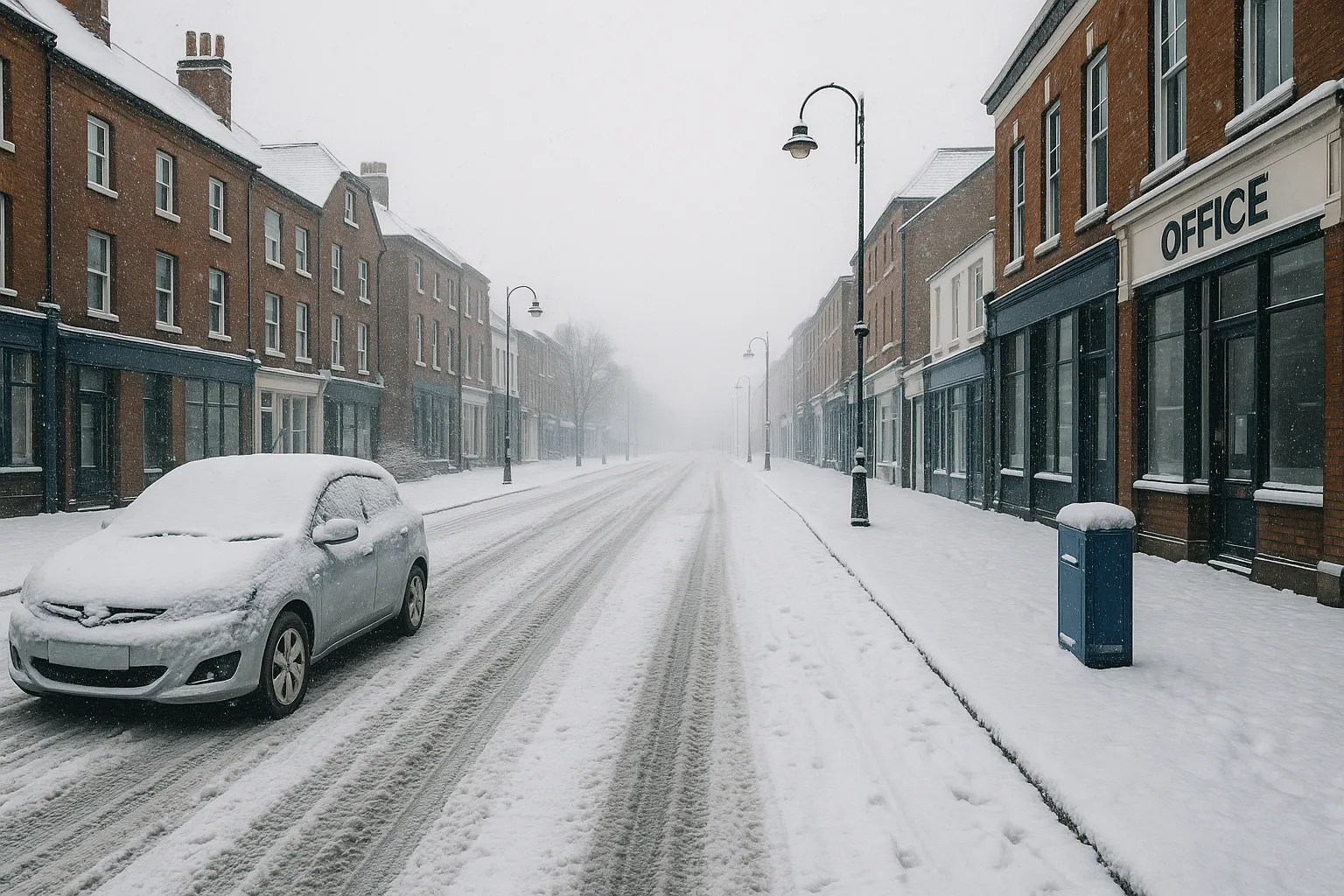
Severe winter weather has recently swept across the UK, bringing with it significant snowfall and plunging temperatures, leading to concerns regarding workplace conditions. Many employees have found that the chill inside their offices mirrors the harsh climate outdoors, prompting a renewed interest in understanding the legalities surrounding minimum workplace temperatures.

As workers navigate their icy commutes, there has been an increasing inquiry into the regulations governing indoor temperature standards. According to the Advisory, Conciliation and Arbitration Service (ACAS), there is no specific statutory minimum temperature for workplaces, but certain guidelines exist. These regulations recommend maintaining a temperature of at least 16 degrees Celsius, and 13 degrees Celsius for roles requiring vigorous physical exertion.

ACAS elaborates on this guidance: “Although there’s no legal maximum or minimum working temperature, health and safety guidance suggests that a reasonable temperature should typically be at least 16°C. If much of the work involves considerable physical effort, it is advisable to maintain a temperature of 13°C.” Additionally, the type of work environment can significantly influence what is deemed reasonable; for instance, a bakery will naturally have different temperature needs compared to an office or a cold storage facility.

The Health and Safety Executive (HSE) also provides clarification in its guidelines, stating, “The Approved Code of Practice on the Workplace (Health, Safety and Welfare) Regulations suggests the minimum temperature for working indoors should normally be at least 16C or 13°C if much of the work involves rigorous physical effort.”

Guidance from the government reinforces that employees who feel uncomfortable with workplace temperatures should engage in discussions with their employers to seek a resolution. This proactive approach encourages communication and problem-solving regarding temperature-related discomfort.

For those whose jobs require outdoor work, the situation becomes more complex. Legislation mandates that employers must ensure the safety and well-being of their employees, regardless of adverse weather conditions. Under their ‘duty of care’ obligations, employers are expected to take necessary measures to safeguard their staff, which can include adjusting work schedules, offering additional training, and supplying extra layers of clothing to combat the cold.

Phil Pepper, a leading employment law expert at Shakespeare Martineau, emphasizes the critical nature of these responsibilities. He states, “Under the Health and Safety at Work Act, employers have a perpetual duty of care to make sure their workers are secure, and this obligation intensifies when the weather is particularly cold.” He adds that this responsibility encompasses everything from providing suitable clothing to maintaining a workspace that is free from hazards, such as slips and trips.

Should employers neglect these requirements, they risk halting work entirely, as employees would not be legally obliged to attend. “If an employer cannot ensure compliance with safety laws and provide a secure environment for their workforce, they cannot justifiably mandate that employees come to work,” he remarked.

In addition to weather-related hazards, employers must also navigate the complexities of health and safety associated with the ongoing pandemic. This includes ensuring staff are equipped with the necessary personal protective equipment (PPE), such as face masks and face shields, to adhere to local and national COVID-19 regulations.

The construction industry, in particular, faces stringent health and safety regulations that apply uniformly to all workers, including full-time staff, contractors, and agency personnel. The unique challenges of winter combined with ongoing health risks require concerted efforts from employers across all sectors to secure a safe and compliant work environment.

The recent focus on workplace temperature legality is indicative of a broader dialogue regarding employee welfare as weather conditions worsen. As temperatures plummet, it remains imperative for businesses to balance operational requirements with the health and safety of their employees. Open dialogue between workers and management is essential to foster a culture of safety and ensure that workplace environments are adequately prepared for the rigours of winter.

As this winter progresses, both employers and employees must be vigilant in recognising the potential impact of severe weather on working conditions. With some areas expecting further cold snaps and snowfall, understanding and adhering to health and safety regulations will be fundamental in safeguarding the well-being of the workforce across the UK.

Our Thoughts

To avoid the issues stemming from low workplace temperatures during the recent Arctic conditions, employers should have proactively assessed and managed indoor temperatures to meet the recommended guidelines of at least 16°C. This aligns with the Health and Safety at Work Act, which mandates a duty of care to ensure worker safety. Employers could have implemented measures such as adjusting heating systems or rescheduling shifts for outdoor workers to combat the cold.

Key safety lessons include the importance of regular assessments of workplace conditions and the provision of adequate training and resources for employees regarding extreme weather. Employers should have distributed additional protective clothing to keep workers warm and ensured that workspaces were free from slip hazards due to snow and ice.

Relevant regulations potentially breached include the Workplace (Health, Safety and Welfare) Regulations and the general duty of care under the Health and Safety at Work Act. Employers failing to meet these requirements risk not being able to require employees to attend work. Similar incidents can be prevented by instituting clear policies for extreme weather conditions, ensuring compliance with safety regulations, and enhancing communication between employers and employees regarding safety measures.
SummarizeShare35Share197SendSend
ADVERTISEMENT
Tara Rowden

Tara Rowden

Related Posts

Stanley Park Market reopening delayed due to weather concerns

Stanley Park Market reopening delayed due to weather concerns

by Tara Rowden
March 24, 2026
0

Liverpool's Stanley Park Market has postponed its opening, originally set for March 25, due to safety concerns over high winds....

Family seeks accountability after mother dies from hot tub infection

by Ellie Cartwright
December 11, 2025
0

Paulette Crookes tragically lost her life to Legionnaires' disease in 2020, with an inquest revealing the infection stemmed from a...

Useful Documents

  • Understanding RIDDOR
  • 10 Workplace Safety Failures
  • A Complete Guide to Reporting Safety Incidents in the UK
  • Understanding RIDDOR
  • Fire Risk Assessment: Meeting the Regulatory Reform (Fire Safety) Order
  • COSHH Basics: A Practical Guide to Control of Substances Hazardous to Health
  • Working at Height in the UK: The Essentials (WAH Regulations 2005)
  • Lock out Tag out LOTO

Recent Posts

  • Worker dies in Cardiff after company fails to maintain industrial door
  • Thousands face potential spinal surgery due to implant recall
  • Amber alert issued as southern England braces for extreme heat
  • Temporary mobility issues may lead to Blue Badge eligibility in Scotland
  • Patients face unprecedented NHS medicine shortages

Recent Comments

  1. Piper Douglas on Worker dies due to inadequate machinery safety measures
  2. Natalie Coleman on New housing laws aim to tackle damp and mould crisis in England
  3. Simon Barrett on Honeymoon ruined by illness as newlywed suffers severe infection in Cape Verde
  4. Nolan Barrett on Work-related ill health in Great Britain remains a concern after pandemic peak
  5. Dylan Reeves on Sickness rates among Scottish police officers soar to troubling levels
UK Safety News

Copyright © 2026
UK Safety News

Navigate Site

  • About
  • Advertise
  • Policies
  • Useful Documents
  • Contact
  • Agent

Follow Us

Welcome Back!

Login to your account below

Forgotten Password?

Retrieve your password

Please enter your username or email address to reset your password.

Log In
No Result
View All Result
  • Home
  • News

Copyright © 2026
UK Safety News

This website uses cookies. By continuing to use this website you are giving consent to cookies being used. Visit our Privacy and Cookie Policy.