















Story Highlight
– Mayor Mamdani promises safety, affordability, and abundance.
– Funding challenges for universal childcare and free buses ahead.
– Relations with Trump could spark future policy conflicts.
– Business leaders’ support crucial for Mamdani’s agenda.
– Public safety improvements a top priority for the new mayor.
Full Story
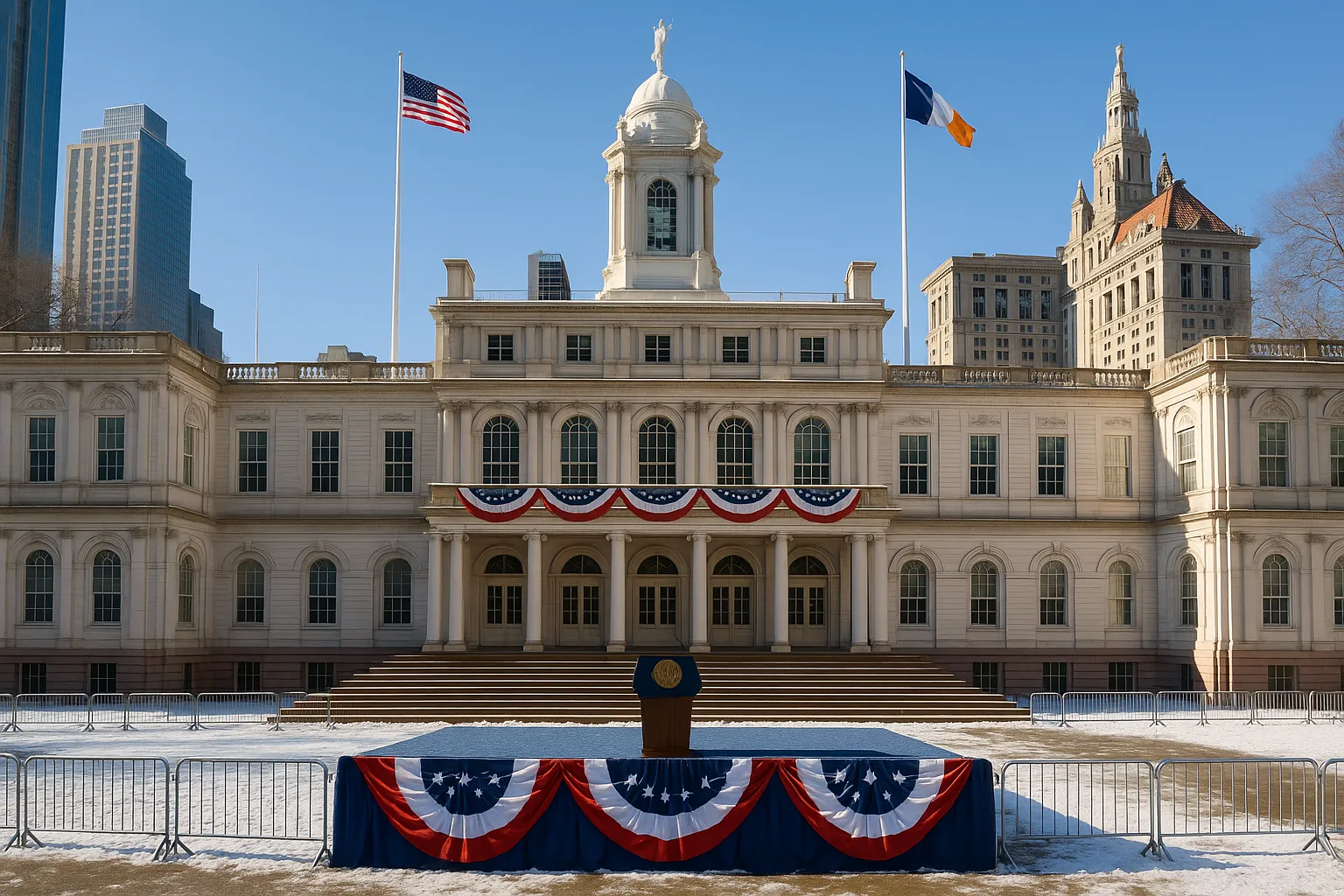
On a frigid winter day in January 2026, New York City Mayor Zohran Mamdani took to the podium in front of an enthusiastic crowd in Times Square, radiating optimism as he laid out a vision for the city’s future. “City Hall will deliver an agenda of safety, affordability, and abundance – where government looks and lives like the people it represents,” he proclaimed during his inauguration, embodying the hopes of many who rallied behind his campaign. This call for a “new story” encapsulated the spirit of progressive change that notably contributed to the surprising victory of this 34-year-old Democratic socialist in the previous November’s election.
As he embarks on this ambitious agenda, including proposals such as universal childcare, free public transport, and city-operated grocery stores, Mamdani faces significant hurdles that will test his leadership. Experts in urban politics and public policy caution that bringing these ambitious promises to fruition will require navigating an intricate political landscape. “He’ll put all of his political and other might behind getting these things accomplished,” explained Patrick Egan, a political science professor at New York University. “However, New York City is a complex and vast entity, leaving uncertainty about the viability of these initiatives.”
Central to Mamdani’s platform is the pressing issue of affordability, particularly regarding housing costs. His key strategy involves freezing rent increases for subsidised housing and establishing comprehensive free childcare options. While some of these initiatives might be implemented without substantial expenses—such as appointing supportive members to the city’s rent control board—funding other ambitious projects remains a significant challenge, especially given the city’s existing budgetary constraints. “To provide free services like bus transportation and childcare, substantial financial resources will be necessary,” noted Robert Shapiro, a professor from Columbia University. “The main obstacles are tied to New York’s fiscal health, the state’s budget, and the political willingness of the governor.”
Mamdani foresees new taxes on the wealthy as a channel for funding these initiatives, potentially generating around $9 billion (£6.6 billion) by raising the corporate tax from 7.25% to 11.5%. Yet, enacting such tax changes is contingent upon approval from the state government. Governor Kathy Hochul, who previously endorsed Mamdani during his electoral campaign, faces her own political calculations as she prepares for re-election. She has signalled ambivalence regarding support for Mamdani’s broader tax proposals, which could pose additional hurdles.
Relations with federal authorities also loom large for the new mayor, particularly given the contentious backdrop of the recent election. Former President Donald Trump vigorously opposed Mamdani prior to his election, labelling him a “communist” and threatening to withhold essential federal funding. However, the initial meeting between Mamdani and Trump post-election indicated a surprising warmth, with Trump expressing confidence that Mamdani could excel in his new role. Despite this cordial engagement, stark divergences in their policies, particularly concerning immigration, may lead to future confrontations.
Throughout his campaign, Mamdani championed New York’s identity as a city built and sustained by immigrants, pledging to maintain its welcoming ethos. Yet, while New York has largely evaded the kind of federal interventions seen in other major cities during anti-immigration protests, the atmosphere remains tense, particularly with ongoing federal immigration enforcement actions.
Mamdani’s unexpected rise has elicited varied reactions from the business community. His primary victory sent shockwaves through Wall Street, prompting some leaders to contemplate relocating their businesses while others scrambled to support rival candidates. Yet, as his lead persisted, he began to engage constructively with business leaders, including a notable outreach to JPMorgan Chase CEO Jamie Dimon, who subsequently expressed willingness to assist the mayor-elect. Similarly, real estate developer Jeffrey Gural referred to Mamdani as both “personable” and “smart”, indicating a potential thaw in relations.
Despite these early gestures of collaboration, significant apprehensions persist among business leaders regarding Mamdani’s capability to govern effectively in a city as large and intricate as New York. Concerns are particularly heightened over his proposed tax hikes on corporations and affluent individuals, which could potentially drive investment away. Egan underscored the necessity of cooperation between Mamdani and the business sector, especially finance and real estate, essential contributors to the city’s economy.
Addressing public safety continues to be a crucial concern for Mamdani as he takes office. The complex landscape of crime in New York has evolved, witnessing varying trends influenced by the COVID-19 pandemic. However, a recent decline in homicide and shooting rates in the city provides Mamdani with a unique opportunity to explore innovative approaches to public safety, incorporating expanded mental health support and community engagement initiatives. His proposal for establishing a Department of Community Safety reflects a desire to expand mental health resources and crisis intervention services across the city—a commitment some experts and community leaders argue is necessary, as past initiatives have fallen short in tackling homelessness and mental health challenges effectively.
Howard Wolfson, a Democratic strategist closely observing the political landscape, highlights that Mamdani’s success will be judged primarily on his handling of public safety and related quality-of-life issues. With his decision to retain Police Commissioner Jessica Tisch, who worked under outgoing Mayor Eric Adams, he aims to assuage fears among constituents and business stakeholders. Wolfson aptly notes, “Public safety is really kind of the prerequisite for success or failure,” suggesting that perceptions of safety will significantly impact public tolerance for broader urban challenges under Mamdani’s mayoralty. As Mayor Mamdani prepares to navigate the complexities of his administration, the unfolding narrative of New York City will inevitably reflect both the aspirations of its new leader and the intricate realities shaping his governance.
Our Thoughts
The article does not specifically address any incidents or accidents that occurred requiring a health and safety analysis. Therefore, there are no relevant regulations breached or safety lessons to be drawn from the content provided.