















Story Highlight
– Over 100,000 UK patients need pacemaker replacements or updates.
– 13% of ‘Accolade’ pacemakers have battery flaws.
– Two US patients died linked to faulty pacemakers.
– Software update avoids operations for most affected patients.
– Hospitals contacting impacted patients for further evaluation.
Full Story
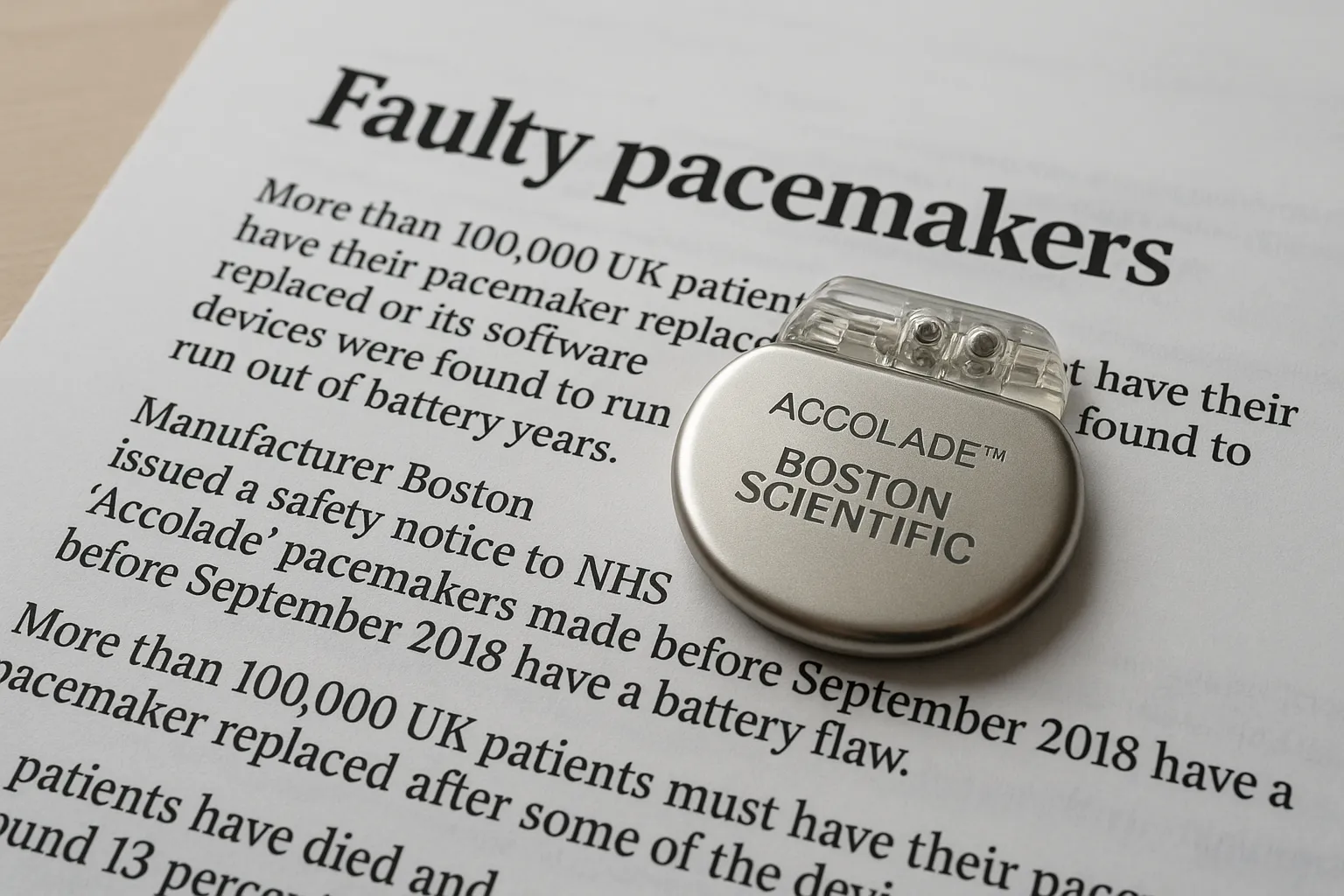
In the UK, a significant health alert has been issued as over 100,000 patients are urged to either replace or update the software of their pacemakers due to a potentially dangerous battery defect. The manufacturer, Boston Scientific, has informed NHS organisations that approximately 13% of its ‘Accolade’ pacemakers produced before September 2018 are affected by this issue. This defect increases the risk of the devices unexpectedly entering a ‘safety mode’, which poses severe health risks for patients relying on them for maintaining proper heart rhythms.
The Medicines and Healthcare products Regulatory Agency (MHRA) has confirmed to the Health Service Journal that 13,969 defective devices were distributed to 153 hospitals across the UK. Reports indicate that two fatalities and upwards of 800 injuries associated with these malfunctioning devices have been documented in the United States.
Boston Scientific has been proactive, issuing a software fix last autumn specifically designed to address the identified battery flaw. The company has advised that this update should be administered on-site during patient appointments. However, according to the MHRA, the concern extends beyond the initially reported batch, suggesting that an additional 97,557 devices across 308 NHS hospitals also require software updates.
The pacemakers in question were implanted in patients between 2015 and 2018, primarily to manage conditions such as slow or irregular heart rhythms. Originally, these devices were expected to function effectively for a decade, but the discovered issue has led to some entering safety mode after just six years of use.
NHS hospitals are currently in the process of reaching out to those affected. Professor Simon Ray, the clinical director for heart disease at NHS England, stated, “While all pacemakers will need their battery replaced eventually, a small proportion of patients affected by this will need to have them replaced early. Patients affected will be contacted by their local hospital and reviewed by an expert clinical team, who will decide if they require an early replacement. People should continue to attend their usual pacemaker follow-up appointments.”
The implementation of the software update typically negates the need for surgical replacement of the devices. Instead, a straightforward software correction should suffice, allowing for ongoing monitoring of the patient’s condition. Nonetheless, the MHRA has reported that 89 early replacement surgeries have already been performed, along with 51 standard device replacements necessitated by the pacemakers shifting to safety mode.
Despite the software update being available since last September, healthcare providers observed a continuation of 88 early replacement surgeries and an additional 23 routine replacements in the months following the release. At the Royal Wolverhampton Trust, 912 patients have been identified as needing further attention, with 53 previously replaced devices documented in their records. The trust has acknowledged that this situation is considered a national emergency and has prioritised it accordingly.
Internal documents reviewed by the Health Service Journal indicated that the Royal Wolverhampton Trust is evaluating potential compensation from Boston Scientific for the additional financial burden incurred due to the defective devices. The trust noted that discussions with the manufacturer regarding compensation have begun, though it remains uncertain if the offered remedy will adequately address the incurred costs.
Similarly, Norfolk and Norwich University Hospitals previously reported identifying 580 patients with the malfunctioning pacemakers, 72 of whom were categorised as being at heightened risk due to their device’s battery issues. Concerns among patients are considerable, particularly for those directly affected by the device failures.
Adding to the legal ramifications of this safety issue, a woman from Southport has taken action against Boston Scientific following her experience with two failed pacemakers. This case exemplifies the broader implications of the product defect for patients, as the legal landscape surrounding medical device malfunctions can become increasingly complex.
The ramifications of the battery defect in Boston Scientific’s Accolade pacemakers extend beyond mere inconvenience for patients and healthcare providers. With an ongoing patient follow-up and monitoring process underway, health authorities must balance the need for immediate action with the complexities of coordination and resource allocation across the NHS.
As hospitals continue to grapple with both the clinical implications and administrative challenges posed by this safety notice, the response from Boston Scientific remains under scrutiny. The health of numerous patients hangs in the balance as health professionals work collaboratively to ensure the safety of medical devices and the well-being of individuals who depend on them. The situation emphasizes the importance of regular device checks and patient engagement in proactive health management as the NHS navigates this significant challenge in cardiac care.
Our Thoughts
To avoid the issues related to the faulty Boston Scientific ‘Accolade’ pacemakers, several improvements could have been executed. Firstly, enhanced pre-market testing and post-market surveillance should have been mandated under the UK Medical Devices Regulations, ensuring thorough reliability of device batteries well beyond the claimed lifespan. Effective risk management protocols would have identified potential failure modes early, enabling timely action before patient harm occurred.
Although a software update has been rolled out, communication channels to inform and monitor patients would benefit from expansion, ensuring all affected individuals receive prompt updates. Consistent follow-up and patient engagement are crucial in fostering patient safety, as highlighted by the regulatory framework governing medical devices.
The fact that early replacements continue, despite the software update, indicates a breach of the Health and Safety at Work Act 1974, where manufacturers must ensure that their devices are safe and do not pose risks to users. Future incidents could be mitigated through stricter adherence to safety reporting and risk assessment regulations, such as those outlined in the UK’s Medical Devices Regulation and the General Product Safety Regulations, emphasizing proactive patient safety measures and accountability from manufacturers.