
















Story Highlight
– UK schools face closures due to heavy snowfall.
– Travel conditions and temperatures prompt additional school closures.
– Minimum classroom temperature laws vary across regions.
– NEU advocates for at least 18C classroom temperatures.
– Parents should monitor school announcements for updates.
Full Story
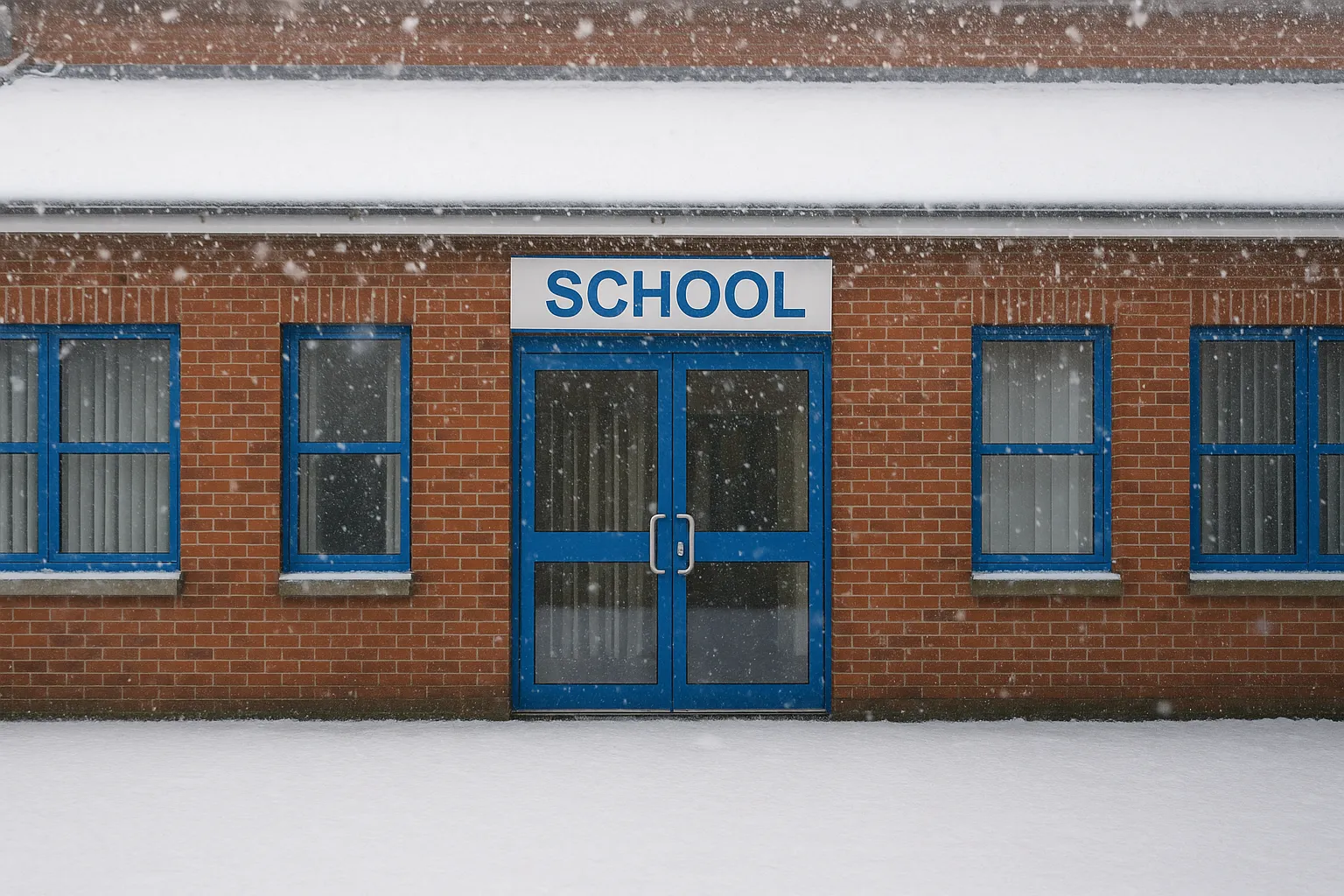
Pupils across the United Kingdom were poised to resume their studies today following the Christmas holiday. However, the wintry weather has led to many students being asked to remain at home for an extra day. A considerable number of educational institutions have closed their doors due to heavy snowfall, particularly in regions such as Scotland, Wales, Northern Ireland, and parts of Devon. This decision stems from concerns regarding treacherous travel conditions and a significant drop in temperatures.
The closures arise amidst concerns regarding safety, with many parents being advised by schools to check for announcements regarding their status. In the context of school operations, certain regulations govern the minimum temperature necessary for schools to remain functioning. Prior to changes implemented in October 2012, English law mandated that classroom temperatures should not descend below 18 degrees Celsius (64.4 degrees Fahrenheit). This regulation was superseded by the School Premises (England) Regulations, which do not stipulate a specific minimum temperature for school facilities.
In contrast, the Workplace (Health, Safety and Welfare) Regulations of 1992 establish heating requirements applicable to all workplaces, including schools. These regulations specify that the temperature within educational institutions should be deemed “reasonable,” typically understood to mean at least 16 degrees Celsius (60 degrees Fahrenheit). The National Education Union (NEU) emphasises that this requirement applies not only to classrooms but also to areas used for non-teaching activities, extending beyond standard school hours.
“The NEU position remains that temperatures in school classrooms should be at least 18C (64.4F),” said a spokesperson from the union. This stance underscores the organisation’s commitment to ensuring that learning environments are conducive to students’ well-being and academic performance.
According to information available on GOV.UK, schools are generally inclined to remain open even in adverse weather circumstances, which include storms, flooding, snow, and extreme temperatures. Nevertheless, ensuring the safety of both students and staff takes precedence in any decision-making process. “On rare occasions, schools sometimes need to close or operate at a reduced level,” the guidance states, reflecting the need for individual establishments to exercise their discretion in regard to their unique circumstances.
The autonomy granted to schools means that the responsibility of assessing whether conditions are safe for operations ultimately lies with each individual institution. This measure allows for flexibility, enabling schools to respond suitably to localised challenges. GOV.UK states, “It’s up to schools to decide on whether it is safe for them to open or close based on their own risk assessment and taking local issues into account.”
Parents have been encouraged to remain vigilant in monitoring communications from their child’s school, particularly during times of inclement weather. The communication strategies adopted by schools vary, as many institutions have implemented specific applications or messaging services to keep parents informed. While schools strive to provide ample notice regarding closures or changes in operation, it is acknowledged that the dynamic nature of weather conditions may lead to last-minute decisions.
In Wales, local authority maintained schools are subject to the Education (School Premises) Regulations 1999, which obligate them to maintain heating systems capable of achieving set minimum temperatures. These stipulations require that most teaching areas maintain a warmth of at least 18 degrees Celsius (64.4 degrees Fahrenheit), while medical facilities are required to reach a minimum of 21 degrees Celsius. Moreover, sports halls have a prescribed minimum of 15 degrees Celsius, ensuring that all areas serve their intended purpose without compromising safety or health.
The interplay between weather conditions and school operations raises significant discussion about the physical environments in which educational activities occur. Experts stress the importance of maintaining comfortable and safe learning conditions, particularly in regions prone to fluctuating temperatures and severe weather events. Moreover, the NEU’s advocacy for a minimum classroom temperature reflects a growing recognition of the role that physical environment plays in student engagement and achievement.
As communities adapt to the realities of winter weather, the implications extend beyond immediate logistics. Assessors and educational professionals highlight the need for ongoing conversation around the standards that govern school environments and the broader impacts of climate variability on education.
In conclusion, as students in various parts of the UK adjust to the unexpected delays in their return to classrooms caused by weather conditions, the critical discourse surrounding educational facility standards continues to evolve. Schools must navigate a delicate balance of ensuring safety while striving to provide an environment conducive to learning. This situation underscores the necessity for robust communication between institutions and families, as well as a continuing commitment to upholding the highest standards for all students’ educational settings.
Our Thoughts
To prevent the disruption caused by school closures due to severe weather, several key measures could have been implemented. First, schools should have established clear communication protocols for notifying parents in advance about potential closures, utilizing SMS or apps for real-time updates. This would reduce uncertainty and help parents plan accordingly.
Additionally, risk assessments should have been routinely updated to account for extreme weather conditions, ensuring that schools could quickly implement strategies for maintaining safe environments. The absence of a specified minimum temperature in the School Premises (England) Regulations since 2012 leaves room for interpretation, which can be detrimental. Schools must adhere to the Workplace (Health, Safety and Welfare) Regulations 1992, ensuring temperatures are maintained at a reasonable level, ideally above 16°C, to avoid unsafe conditions.
Furthermore, local authorities could enhance their support systems, providing guidance for schools on monitoring weather forecasts and responding proactively. Regular training on emergency weather responses could ensure all staff are prepared for such situations. Strengthening these areas would align with UK health and safety legislation and improve overall safety standards for educational institutions.