















Choose an AI chat
Glasgow employers urged to strengthen workplace safety measures
UK Health and Safety Latest

Glasgow employers urged to strengthen workplace safety measures

by Tara Rowden
July 29, 2026
0

Employers in Glasgow face urgent calls to reassess workplace safety protocols, following a Health and Safety Executive report revealing that...

Read moreDetails
Milton recalls baby bottle cleaner after insect contamination

Milton recalls baby bottle cleaner after insect contamination

July 29, 2026
Warning issued over plush toy posing suffocation risk to infants

Warning issued over plush toy posing suffocation risk to infants

July 29, 2026
New targeted therapy shows promise against antibiotic-resistant gonorrhoea

New targeted therapy shows promise against antibiotic-resistant gonorrhoea

July 28, 2026
Engineer dies after being crushed while working on Boeing 787 at Heathrow

Engineer dies after being crushed while working on Boeing 787 at Heathrow

July 28, 2026

Archives

  • July 2026
  • June 2026
  • May 2026
  • April 2026
  • March 2026
  • February 2026
  • January 2026
  • December 2025
  • November 2025
  • October 2025
  • September 2025
  • July 2025
  • August 2009

Categories

  • Health and Safety Help
  • News
  • Policies
  • UK Health and Safety Latest
  • About
  • Advertise
  • Policies
    • Privacy Policy
    • Editorial Policy
    • Corrections & Complaints policy
  • Useful Documents
    • Understanding RIDDOR
    • 10 Workplace Safety Failures
    • A Complete Guide to Reporting Safety Incidents in the UK
    • Fire Risk Assessment: Meeting the Regulatory Reform (Fire Safety) Order
    • COSHH Basics: A Practical Guide to Control of Substances Hazardous to Health
    • Working at Height in the UK: The Essentials (WAH Regulations 2005)
    • Asbestos in the Workplace: Control of Asbestos Regulations 2012 (CAR) Essentials
    • Managing Contractors Under CDM 2015: Roles, Duties & Controls
    • DSE & Ergonomics: Healthy Workstations for Office & Hybrid Teams
    • Lock out Tag out LOTO
    • Workplace Transport Safety: Forklifts, Pedestrians & Traffic Management
    • Noise & Vibration at Work: Practical Controls (2005 Regulations)
    • Confined Spaces in the UK: Safe Entry under the Confined Spaces Regulations 1997
  • Contact
  • Agent
Tuesday, August 4, 2026
25 °c
London
25 ° Wed
22 ° Thu
21 ° Fri
  • Login
UK Safety News
  • Home
  • News
    • All
    • UK Health and Safety Latest
    Glasgow employers urged to strengthen workplace safety measures

    Glasgow employers urged to strengthen workplace safety measures

    Milton recalls baby bottle cleaner after insect contamination

    Milton recalls baby bottle cleaner after insect contamination

    Warning issued over plush toy posing suffocation risk to infants

    Warning issued over plush toy posing suffocation risk to infants

    New targeted therapy shows promise against antibiotic-resistant gonorrhoea

    New targeted therapy shows promise against antibiotic-resistant gonorrhoea

    Engineer dies after being crushed while working on Boeing 787 at Heathrow

    Engineer dies after being crushed while working on Boeing 787 at Heathrow

    Train drivers demand improved toilet facilities and breaks after regulatory failures

    Train drivers demand improved toilet facilities and breaks after regulatory failures

    Outbreak of cyclosporiasis reveals gaps in US food safety system

    Outbreak of cyclosporiasis reveals gaps in US food safety system

    Construction safety under scrutiny as fatalities rise in high-risk industry

    Construction safety under scrutiny as fatalities rise in high-risk industry

    Talcum powder safety concerns escalate amid legal battles for Johnson & Johnson

    Talcum powder safety concerns escalate amid legal battles for Johnson & Johnson

    Train drivers face strike over lack of toilet facilities

    Train drivers face strike over lack of toilet facilities

    Trending Tags

No Result
View All Result
UK Safety News
No Result
View All Result
Home News UK Health and Safety Latest

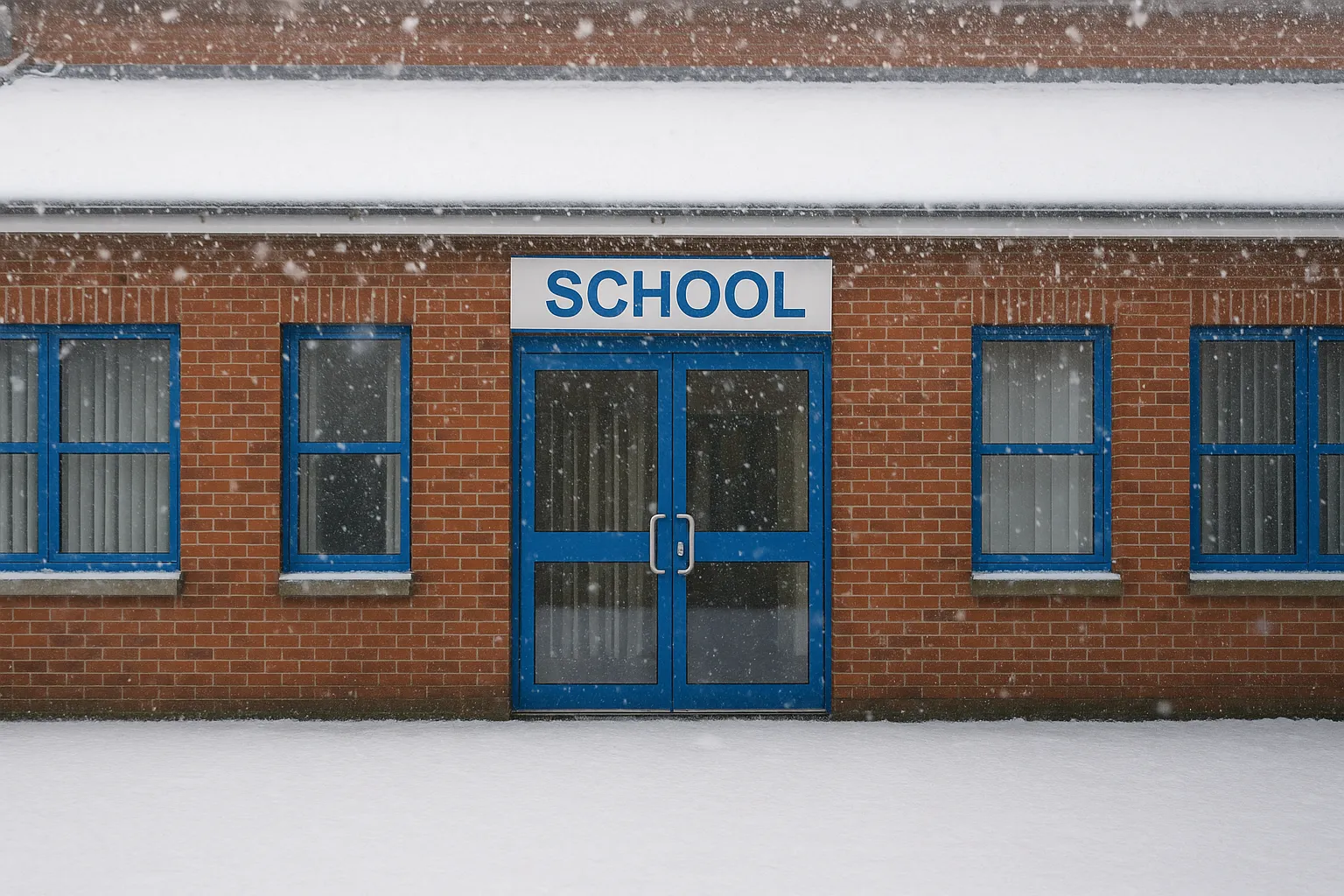
Pupils face extra day off as snow leads to school closures across the UK

Tara Rowden by Tara Rowden
January 5, 2026
in UK Health and Safety Latest
Reading Time: 4 mins read
0
Pupils face extra day off as snow leads to school closures across the UK

Story Highlight

– UK schools face closures due to heavy snowfall.
– Travel conditions and temperatures prompt additional school closures.
– Minimum classroom temperature laws vary across regions.
– NEU advocates for at least 18C classroom temperatures.
– Parents should monitor school announcements for updates.

Full Story

Pupils across the United Kingdom were poised to resume their studies today following the Christmas holiday. However, the wintry weather has led to many students being asked to remain at home for an extra day. A considerable number of educational institutions have closed their doors due to heavy snowfall, particularly in regions such as Scotland, Wales, Northern Ireland, and parts of Devon. This decision stems from concerns regarding treacherous travel conditions and a significant drop in temperatures.

The closures arise amidst concerns regarding safety, with many parents being advised by schools to check for announcements regarding their status. In the context of school operations, certain regulations govern the minimum temperature necessary for schools to remain functioning. Prior to changes implemented in October 2012, English law mandated that classroom temperatures should not descend below 18 degrees Celsius (64.4 degrees Fahrenheit). This regulation was superseded by the School Premises (England) Regulations, which do not stipulate a specific minimum temperature for school facilities.

In contrast, the Workplace (Health, Safety and Welfare) Regulations of 1992 establish heating requirements applicable to all workplaces, including schools. These regulations specify that the temperature within educational institutions should be deemed “reasonable,” typically understood to mean at least 16 degrees Celsius (60 degrees Fahrenheit). The National Education Union (NEU) emphasises that this requirement applies not only to classrooms but also to areas used for non-teaching activities, extending beyond standard school hours.

“The NEU position remains that temperatures in school classrooms should be at least 18C (64.4F),” said a spokesperson from the union. This stance underscores the organisation’s commitment to ensuring that learning environments are conducive to students’ well-being and academic performance.

According to information available on GOV.UK, schools are generally inclined to remain open even in adverse weather circumstances, which include storms, flooding, snow, and extreme temperatures. Nevertheless, ensuring the safety of both students and staff takes precedence in any decision-making process. “On rare occasions, schools sometimes need to close or operate at a reduced level,” the guidance states, reflecting the need for individual establishments to exercise their discretion in regard to their unique circumstances.

The autonomy granted to schools means that the responsibility of assessing whether conditions are safe for operations ultimately lies with each individual institution. This measure allows for flexibility, enabling schools to respond suitably to localised challenges. GOV.UK states, “It’s up to schools to decide on whether it is safe for them to open or close based on their own risk assessment and taking local issues into account.”

Parents have been encouraged to remain vigilant in monitoring communications from their child’s school, particularly during times of inclement weather. The communication strategies adopted by schools vary, as many institutions have implemented specific applications or messaging services to keep parents informed. While schools strive to provide ample notice regarding closures or changes in operation, it is acknowledged that the dynamic nature of weather conditions may lead to last-minute decisions.

In Wales, local authority maintained schools are subject to the Education (School Premises) Regulations 1999, which obligate them to maintain heating systems capable of achieving set minimum temperatures. These stipulations require that most teaching areas maintain a warmth of at least 18 degrees Celsius (64.4 degrees Fahrenheit), while medical facilities are required to reach a minimum of 21 degrees Celsius. Moreover, sports halls have a prescribed minimum of 15 degrees Celsius, ensuring that all areas serve their intended purpose without compromising safety or health.

The interplay between weather conditions and school operations raises significant discussion about the physical environments in which educational activities occur. Experts stress the importance of maintaining comfortable and safe learning conditions, particularly in regions prone to fluctuating temperatures and severe weather events. Moreover, the NEU’s advocacy for a minimum classroom temperature reflects a growing recognition of the role that physical environment plays in student engagement and achievement.

As communities adapt to the realities of winter weather, the implications extend beyond immediate logistics. Assessors and educational professionals highlight the need for ongoing conversation around the standards that govern school environments and the broader impacts of climate variability on education.

In conclusion, as students in various parts of the UK adjust to the unexpected delays in their return to classrooms caused by weather conditions, the critical discourse surrounding educational facility standards continues to evolve. Schools must navigate a delicate balance of ensuring safety while striving to provide an environment conducive to learning. This situation underscores the necessity for robust communication between institutions and families, as well as a continuing commitment to upholding the highest standards for all students’ educational settings.

Our Thoughts

To prevent the disruption caused by school closures due to severe weather, several key measures could have been implemented. First, schools should have established clear communication protocols for notifying parents in advance about potential closures, utilizing SMS or apps for real-time updates. This would reduce uncertainty and help parents plan accordingly.

Additionally, risk assessments should have been routinely updated to account for extreme weather conditions, ensuring that schools could quickly implement strategies for maintaining safe environments. The absence of a specified minimum temperature in the School Premises (England) Regulations since 2012 leaves room for interpretation, which can be detrimental. Schools must adhere to the Workplace (Health, Safety and Welfare) Regulations 1992, ensuring temperatures are maintained at a reasonable level, ideally above 16°C, to avoid unsafe conditions.

Furthermore, local authorities could enhance their support systems, providing guidance for schools on monitoring weather forecasts and responding proactively. Regular training on emergency weather responses could ensure all staff are prepared for such situations. Strengthening these areas would align with UK health and safety legislation and improve overall safety standards for educational institutions.
SummarizeShare35Share197SendSend
ADVERTISEMENT
Tara Rowden

Tara Rowden

Tara Rowden covers health, safety, and environmental news for UK Safety News, focusing on product safety, consumer health warnings, and occupational hazards. She reports on alerts from bodies including the MHRA, HSE, and local authorities, helping workers and employers stay informed about emerging risks.

Related Posts

Urgent reforms urged for maternity care following Welsh Government assessment

Urgent reforms urged for maternity care following Welsh Government assessment

by Ellie Cartwright
March 3, 2026
0

An independent assessment commissioned by the Welsh Government has unveiled serious deficiencies in maternity and neonatal care in Wales, calling...

Health warning issued for outdoor workers amid rising summer temperatures

Health warning issued for outdoor workers amid rising summer temperatures

by Michael Harland
June 16, 2026
0

Outdoor workers in the UK are facing heightened health risks as the Met Office forecasts an increase in summer heatwaves,...

Useful Documents

  • Understanding RIDDOR
  • 10 Workplace Safety Failures
  • A Complete Guide to Reporting Safety Incidents in the UK
  • Understanding RIDDOR
  • Fire Risk Assessment: Meeting the Regulatory Reform (Fire Safety) Order
  • COSHH Basics: A Practical Guide to Control of Substances Hazardous to Health
  • Working at Height in the UK: The Essentials (WAH Regulations 2005)
  • Lock out Tag out LOTO

Recent Posts

  • Glasgow employers urged to strengthen workplace safety measures
  • Milton recalls baby bottle cleaner after insect contamination
  • Warning issued over plush toy posing suffocation risk to infants
  • New targeted therapy shows promise against antibiotic-resistant gonorrhoea
  • Engineer dies after being crushed while working on Boeing 787 at Heathrow

Recent Comments

  1. Piper Douglas on Worker dies due to inadequate machinery safety measures
  2. Natalie Coleman on New housing laws aim to tackle damp and mould crisis in England
  3. Simon Barrett on Honeymoon ruined by illness as newlywed suffers severe infection in Cape Verde
  4. Nolan Barrett on Work-related ill health in Great Britain remains a concern after pandemic peak
  5. Dylan Reeves on Sickness rates among Scottish police officers soar to troubling levels
UK Safety News

Copyright © 2026
UK Safety News

Navigate Site

  • About
  • Advertise
  • Policies
  • Useful Documents
  • Contact
  • Agent

Follow Us

Welcome Back!

Login to your account below

Forgotten Password?

Retrieve your password

Please enter your username or email address to reset your password.

Log In
No Result
View All Result
  • Home
  • News

Copyright © 2026
UK Safety News

This website uses cookies. By continuing to use this website you are giving consent to cookies being used. Visit our Privacy and Cookie Policy.