














Story Highlight
– UK prisoners launched hunger strike for fair trial rights.
– Umar Khalid remains on hunger strike after 73 days.
– Government rejects intervention, citing constitutional appropriateness.
– Strikers demand end to censorship and fair treatment.
– Legal action planned against government for prisoners’ rights.
Full Story
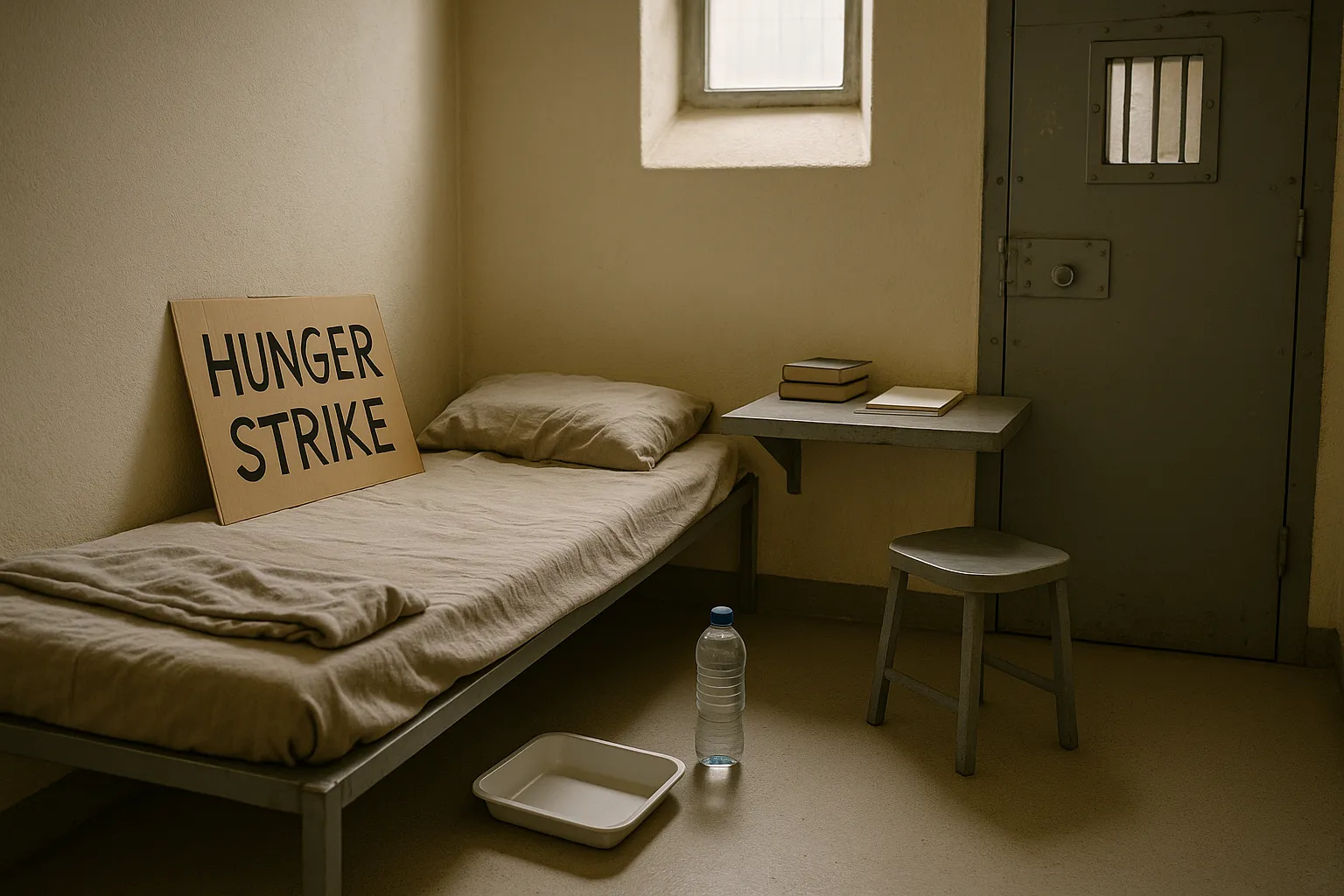
In recent weeks, a significant hunger strike has unfolded within various UK prisons, marking a notable movement among inmates protesting against their treatment and circumstances. This action is viewed by participants as a crucial attempt to advocate for their rights, specifically the right to a fair trial, and to challenge the government’s classification of Palestine Action as a terrorist organisation.
Having commenced in early November 2025, the hunger strike has seen varying degrees of commitment from seven prisoners, primarily those awaiting trial for their alleged involvement in actions against Elbit Systems, an Israeli arms manufacturer. As of mid-January 2026, only one of these inmates, Umar Khalid, has maintained his refusal to consume food, while three others concluded their strikes after achieving one key demand. Notably, some participants were compelled to stop due to serious health concerns arising from prolonged fasting.
The hunger strikers are demanding several pivotal changes, including the end of censorship regarding their correspondence, immediate bail releases, the assurance of fair trial processes, and the de-proscription of Palestine Action. Additionally, they seek the closure of Elbit’s operations in the UK and have updated their requests to include lifting non-association orders and allowing prisoner access to various activities and educational courses.
In a recent official response, the Ministry of Justice, represented by Minister of State for Prisons, Probation and Reducing Reoffending Lord Timpson, acknowledged the seriousness of hunger strikes within the prison system but maintained that the government must uphold the separation of powers, asserting that intervention in ongoing legal matters would be unconstitutional and inappropriate. According to Lord Timpson, hunger strikes are not uncommon, with approximately 200 recorded annually over the past five years. He highlighted that prison healthcare teams continuously monitor the situation and provide necessary medical care, disputing claims of neglect regarding hospital treatment of the inmates involved.
The hunger strikers represent individuals—including Qesser Zuhrah, Amu Gib, Heba Muraisi, Teuta Hoxha, Kamran Ahmed, Umar Khalid, and Lewie Chiaramello—who argue they have been subjected to extensive delays in the legal process, exacerbating their plight. For example, Amu Gib is not scheduled to face trial until 2027. During the course of the hunger strike, some individuals reported extreme health effects; for instance, Lewie Chiaramello, diagnosed with type 1 diabetes, had to modify his refusal of food, while Kamran Ahmed was hospitalised multiple times due to the impact of his ongoing strike.
The hunger protest has drawn comparisons to the infamous 1981 IRA hunger strikes, which claimed the lives of ten men including Bobby Sands. Campaigners suggest that the current protest highlights significant violations of justice principles, with many detainees held for over a year without trial. Teuta Hoxha has described the situation as emblematic of a broader “witch hunt”, addressing what she sees as misuse of counter-terrorism laws against dissenting individuals.
On January 14, a turning point occurred when Kamran, Heba, and Lewie concluded their hunger strikes following the government’s decision not to award a major defence contract to Elbit Systems UK, fulfilling one of their demands. Although the government did not acquiesce to all requests, activists claim that public dialogue surrounding the issue has begun to shift notably.
Despite some successes, serious health concerns remain for many participants. Following the end of their protests, the dangers of refeeding syndrome loom as individuals attempt to reintegrate food into their diets. Medical experts, such as neurologist Dr David Nicholl, have vocally expressed that retrying nutrition after an extended period of abstinence carries significant risks, including severe physical complications and even death.
Support for the hunger strikers has emerged from various fronts, including vocal endorsements from political figures such as MP Zarah Sultana, who has been alongside the movement since its inception. Sultana emphasised the reasonableness of the prisoners’ demands, suggesting that their continued detainment without trial is politically motivated rather than a necessity for public safety.
Public figures, including authors, activists, and cultural icons, have likewise rallied support for the prisoners, calling for a reconsideration of the actions taken against them. High-profile endorsements underscore a growing alignment around issues of social justice, with campaigns challenging the treatment of the prisoners in the media and public forums.
Looking ahead, Palestine Action has initiated legal proceedings against the government. A pre-action letter addressing Justice Secretary David Lammy, who also serves as Deputy Prime Minister, outlines their intention to pursue legal remedies for grievances against the justice system. Advocacy groups assert that ongoing neglect and the lack of response from government officials reinforce the very issues the hunger strikers are contesting.
The evolving situation points to a critical junction within the UK’s response to legal rights and systemic pressures faced by prisoners protesting perceived injustices. With ongoing public support and media attention, the implications of this hunger strike may catalyse broader discussions about justice and human rights within the UK’s legal framework.
Our Thoughts
The situation involving the hunger strikers highlights significant gaps in adherence to UK Health and Safety regulations within the prison system. Specifically, the hazards associated with prolonged hunger strikes underscore potential violations of the Health and Safety at Work Act 1974, which mandates protection from risks to health and safety, including mental and physical wellbeing. The prison authorities should have implemented more proactive measures to address the grievances presented by the prisoners, potentially preventing the escalation to hunger strikes.
To avoid similar incidents, enhancements in prisoner communication rights, timely legal proceedings, and addressing mental health concerns would be vital. The lack of timely trials and prolonged remand periods can lead to significant stress and adverse health outcomes, directly conflicting with the requirement to ensure adequate health provisions stipulated under prison healthcare guidelines.
Continuous monitoring by healthcare teams is necessary, as indicated by reports of severe health issues faced by the strikers. Adhering to the principle of “Duty of Care” could have necessitated earlier interventions to protect the wellbeing of these individuals, potentially preventing the critical health emergencies observed during the hunger strikes.