















Story Highlight
– UK plans to phase out animal testing by 2030.
– US FDA aims to reduce animal studies in drug testing.
– NAMs like organs-on-chips show promise over animal models.
– Animal use in research decreased by 36% since 2015.
– Validation of NAMs is essential for regulatory acceptance.
Full Story
In a significant shift towards advancing alternatives to animal testing in the UK, the government has outlined an ambitious strategy aimed at reducing reliance on animals for scientific research. Launched last November, the initiative seeks to phase out animal testing in specific research areas by implementing changes that could redefine the landscape of biomedical research and drug development.
The policy intends to eliminate animal testing for skin irritation by the end of this year, with reductions in studies involving dogs planned by 2030. The overarching goal articulated by the government is to create “a world where the use of animals in science is eliminated in all but exceptional circumstances.” This move aligns with a growing trend worldwide, as other nations, including the United States and members of the European Union, also contemplate significant reductions in the use of animals for research purposes.
In April 2023, for example, the US Food and Drug Administration (FDA) announced plans to make animal testing the exception within a five-year timeframe for evaluating drug safety and toxicity. Moreover, the US National Institutes of Health (NIH) has launched its own initiatives aimed at curtailing animal use in research. Meanwhile, plans are underway in Europe to issue a roadmap for the cessation of animal testing in chemical safety evaluations by the end of this year.
Increasing ethical and welfare concerns regarding animal testing have played a vital role in these developments. Alongside these considerations, the rapid progression of new scientific methodologies is enhancing the viability of alternatives. Known as ‘new approach methodologies’ (NAMs), these alternatives include innovative technologies such as organs-on-chips, 3D tissue cultures called organoids, and advanced computational models that leverage artificial intelligence. An analysis conducted by Animal Free Research UK indicates that the number of biomedical publications utilising solely NAMs skyrocketed from approximately 25,000 in 2006 to around 100,000 in 2022, demonstrating a notable shift towards alternative methods.
China also embraces this trend, having invested significantly in developing NAMs. In 2024, it launched its Human Organ Physiopathology Emulation System with backing of 2.64 billion yuan (about US$382 million), further signalling a global movement towards innovative research methods.
Supporters of NAMs argue that these techniques can provide more accurate representations of human biology compared to animal models, thereby improving the prediction of new drugs’ safety and efficacy. For instance, organs-on-chips are frequently constructed using human cells, and computational models can be built upon human-focused data. Donald Ingber, a noted bioengineer at Boston’s Wyss Institute, comments on this transition, calling it “long overdue.”
Despite the promise of these alternative methods, scientists caution that they are not yet ready to completely replace animal testing. Certain biological systems exhibit a level of complexity that current NAMs cannot fully replicate. Furthermore, many of these methodologies still require validation to ensure they can accurately reflect the systems they seek to model, a prerequisite for acceptance by drug and chemical regulators. Ingber notes, “Not all of these [alternative] models are ready for prime time.”
In historical context, the movement towards replacing, reducing, and refining the use of animals in research, commonly referred to as the ‘3Rs’, has gained momentum over the past decades. Reports indicate a decline in animal testing within the UK, with the number of scientific procedures involving animals dropping from 4.14 million in 2015 to 2.64 million by 2024.
In the UK, approximately 76% of experimental animal procedures are dedicated to fundamental and applied research focusing on understanding organisms, modelling diseases, and developing new therapies. The remaining 22% are primarily regulatory in nature, assessing the toxicity and safety of new chemical compounds and medications. A large proportion of these procedures involve rodents, particularly mice and rats.
The limitations of animal models in researching human diseases have become increasingly evident. A striking example is sepsis, a severe immune response to infection, where over 100 therapies developed based on promising rodent studies ultimately failed in human trials. This disparity arises due to the significant differences between human and rodent immune systems, compounded by the complexity of individual reactions to diseases.
Researchers like Joseph Wu from Stanford University are leading efforts to develop new methodologies based on human cells. Their “clinical trials in a dish” approach employs induced pluripotent stem cells from individuals with specific medical conditions to create organoids, allowing scientists to test potential drugs in a setting that closely mimics human physiological responses.
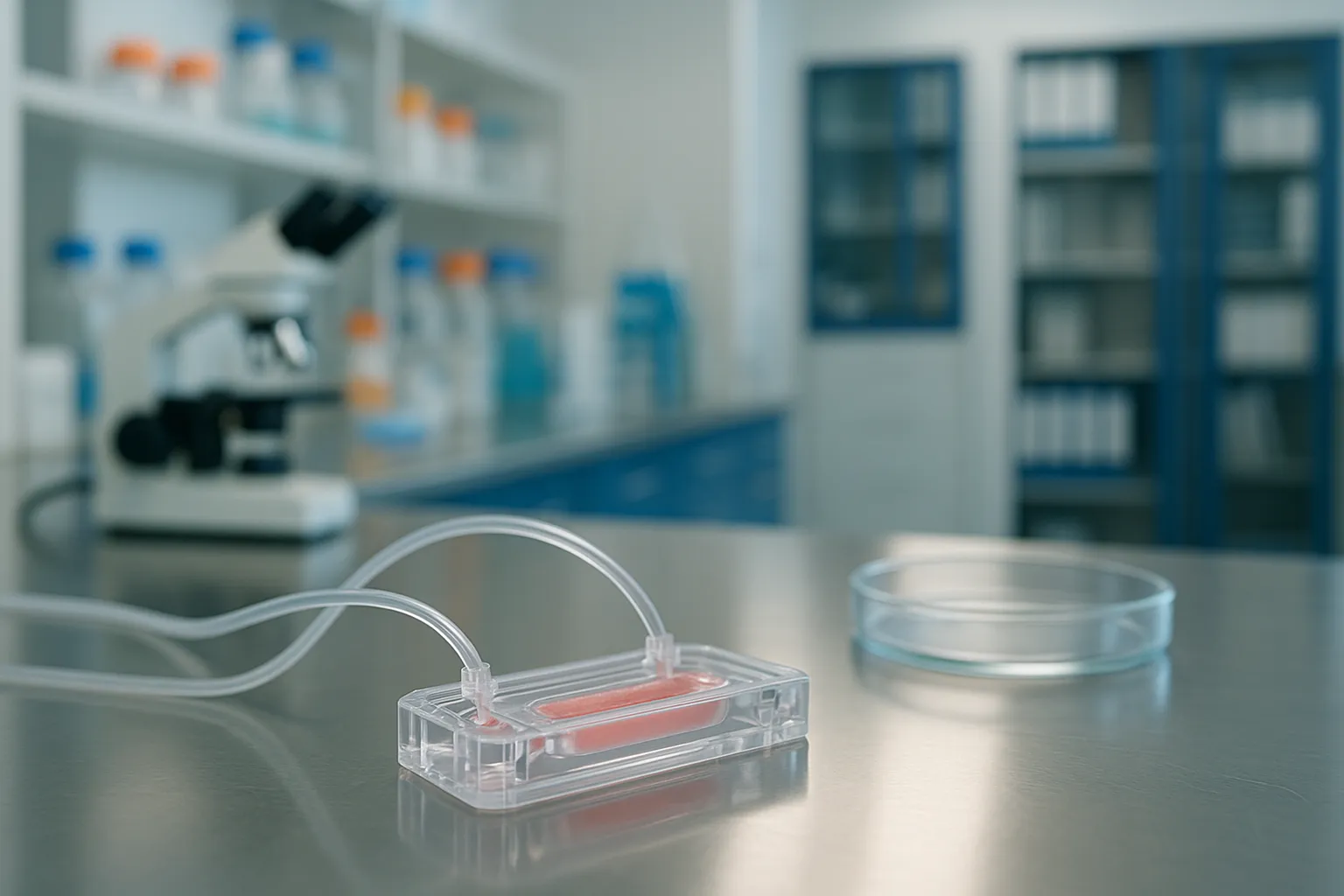
Emerging technologies such as organ-on-a-chip systems are also breaking new ground. For example, Emulate’s Liver-Chip device, a compact organ-on-a-chip, has demonstrated the capability to accurately predict liver injury caused by drugs with an impressive accuracy rate. The FDA’s Innovative Science and Technology Approaches for New Drugs (ISTAND) pilot programme, which highlighted the potential of Liver-Chip in 2024, showcases a growing recognition of NAMs in regulatory processes.
In addition to organ-on-a-chip technologies, the development of organoids has emerged as another promising alternative to traditional animal testing. These three-dimensional cell cultures are capable of replicating many functions of human tissues. Recent studies involving human liver organoids indicate strong potential in drug toxicity testing, presenting an opportunity for further advancements in the field.
Research teams are also harnessing the power of computational models, employing algorithms to simulate how substances might interact within biological systems. These models have begun to be validated by regulatory bodies, signifying a shift in how safety assessments are conducted.
As the pharmaceutical industry becomes increasingly invested in NAMs, there is optimism among scientists. Marianne Manchester from Roche highlighted the expanding studies using these alternative methods, pointing to a growing acceptance of their validity in drug testing protocols, reflecting a transformative shift in regulatory attitudes.
UK and US governmental strategies include various commitments to hasten the application and adoption of NAMs. The UK government’s framework has categorised animal testing into different groups based on the feasibility of replacing specific tests. The first category targets testing procedures that can be replaced quickly, such as skin irritation tests. The second involves tests that may take longer to supplant, while the third includes those for which alternatives are not yet available.
Despite these advancements, significant hurdles remain regarding the validation of NAMs for regulatory approval. The extensive validation process is often cited as both costly and labor-intensive, which poses challenges for widespread adoption. Efforts are underway to create frameworks that expedite this validation process, promoting faster integration of NAM-derived data in regulatory submissions.
The broad spectrum of opinions within the scientific community illustrates a complex landscape. While many welcome the increasing interest in alternatives that could reduce animal usage, concerns remain regarding the readiness and effectiveness of these new methods. Fundamental biological research that necessitates the intricate functionalities of complete organs and systems continues to rely on animal models, ensuring their role in scientific inquiry for the foreseeable future.
Our Thoughts
The article discusses the UK government’s initiative to phase out certain animal testing methods in favor of new approach methodologies (NAMs). To prevent potential risks associated with the transition to NAMs, several steps could be implemented based on UK health and safety legislation, particularly the Animal Welfare Act 2006 and the Animals (Scientific Procedures) Act 1986.
First, comprehensive validation of NAMs is essential to ensure their efficacy and reliability before replacing traditional animal testing. Regulatory bodies should enforce stringent validation processes to secure compliance with safety standards, preventing reliance on inadequately tested methods.
Second, robust training programs should be established for researchers to ensure they are adept in employing NAMs effectively, mitigating the risk of failure during drug development processes. Additionally, ongoing assessments and monitoring should be instituted to evaluate the success of NAMs in real-time applications.
Moreover, collaborations between regulatory agencies, research institutions, and pharmaceutical companies are vital to facilitate knowledge sharing and rapid advancement of ethical alternatives.
Overall, adherence to UK regulatory standards, along with systemic training and validation initiatives, will be crucial to minimizing the risks of transitioning away from animal testing while ensuring safety and efficacy in biomedical research.