
















Story Highlight
– Pornhub restricts UK access due to age verification laws.
– Only registered users can access content starting February 2.
– Traffic decreased by 77% after age checks implemented.
– Aylo claims law fails to protect minors effectively.
– Ofcom encourages tech firms to develop age assurance methods.
Full Story
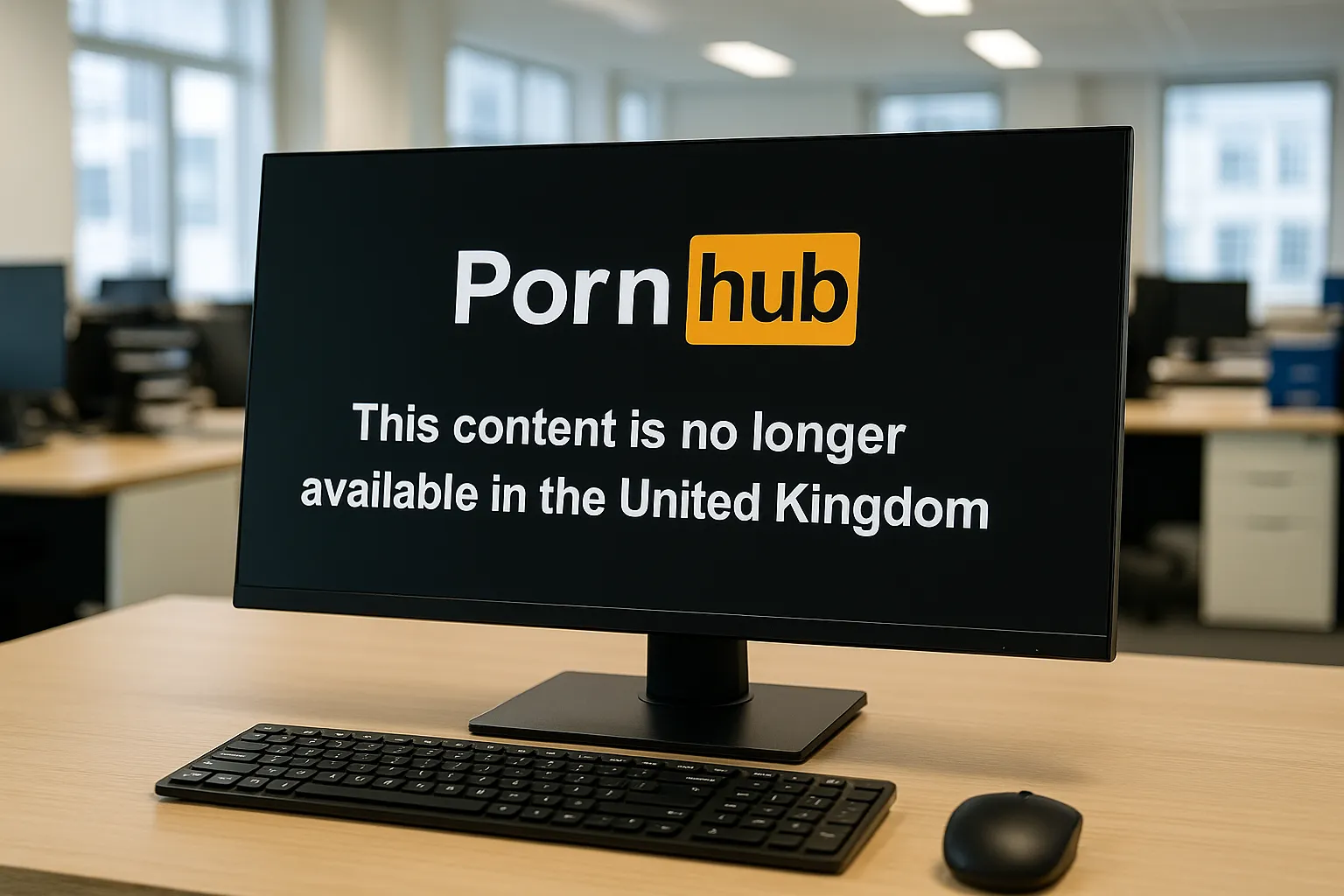
Starting from 2 February, access to Pornhub will be restricted in the UK, a move linked to stringent age verification measures mandated by the country’s Online Safety Act (OSA). This decision, announced by Aylo, the parent company of Pornhub, comes in the wake of significant changes to the regulations governing adult websites which, according to the firm, have not succeeded in their intended goal of safeguarding minors.
Aylo has indicated that only users with existing Pornhub accounts will be able to access the site, while new users in the UK will encounter restrictions preventing entry altogether. The company claims that the revisions to the OSA have instead driven traffic toward less regulated, potentially harmful areas of the internet. In a report from October, Aylo pointed out a staggering 77% decline in visitation attributed directly to these regulatory changes.
In contrast, Ofcom, the UK’s communications regulatory body, asserted at the time that the new age verification measures were effectively preventing children from accessing inappropriate content online. A spokesperson from Ofcom reiterated this stance on Tuesday, stating, “porn services have a choice between using age checks to protect users as required under the Act, or to block access to their sites in the UK.” The regulator has committed to ongoing discussions with Aylo to gain insight into this latest development regarding their operational strategy.
Alex Kekesi, who heads community and brand initiatives at Aylo, described the decision to limit access for UK users as a challenging one. “Our sites, which host legal and regulated porn, will no longer be available in the UK to new users, but thousands of irresponsible porn sites will still be easy to access,” she commented. Kekesi explained that the initial compliance with the OSA was based on the hope that Ofcom would effectively implement rules that, despite being poorly framed, could be made functional. However, six months after the introduction of the age verification requirements, she expressed concerns that the OSA has failed to meet its objectives in preventing minors from accessing adult content.
A representative from the Department for Science, Innovation and Technology defended the Online Safety Act, stressing the need for robust age assurance measures to prevent children from encountering pornographic materials online. The representative pointed out that the legislation does not impede adults from accessing legal content; websites simply need to implement adequate age verification procedures. “There are a range of ways to do this,” they stated.
Under the new restrictions, users attempting to view Pornhub in the UK after the specified date will face a “wall” that prohibits them from accessing content. Similar limitations apply to other adult platforms owned by Aylo, including YouPorn and Redtube.
Solomon Friedman, representing Ethical Capital Partners, Aylo’s owner, expressed confidence in Ofcom’s intent to enforce the age verification criteria. However, he noted that the core issue lies within the law itself. “You have a dedicated regulator working in good faith, but unfortunately, the law they are operating under cannot possibly succeed,” he remarked. Friedman highlighted that six months post-implementation of the age verification requirements, adult content remains readily accessible through various channels, indicating a gap in the law’s effectiveness.
Emma Drake, a partner at the law firm Bird and Bird who focuses on online safety and privacy, corroborated this sentiment by referencing Aylo’s research. She emphasized that despite increased interest in riskier pornographic sites among adults, the overall usage of these platforms has decreased, suggesting a similar trend could be applicable to children. Drake pointed out that while determined individuals might seek alternative routes, such as VPNs, implementing barriers on well-known sites like Pornhub nevertheless protects a significant number of minors who may not take the effort to bypass such restrictions.
Aylo has reiterated its position that device manufacturers, such as Apple, Google, and Microsoft, possess the capability to develop technical solutions aimed at keeping children from accessing pornographic websites. Friedman argued, “When access is controlled at the device level, it is efficient, it’s effective, it’s privacy-preserving.” This perspective aligns with Ofcom’s statement that nothing prevents technology companies from creating effective age assurance measures, and the regulator urged swift action to implement such solutions.
However, Ofcom acknowledged that age assurance controls at the device level alone are not an all-encompassing solution. Cybersecurity expert Chelsea Jarvie cautioned against reliance on singular measures, noting that while device-level controls could enhance age verification, they are not foolproof. “Virtual Private Networks continue to offer a workaround, which is why protecting children online requires layered controls rather than reliance on any single measure,” she stated. The use of VPNs allows individuals to mask their geographical location and access the internet as if they are in a different region. Following the introduction of age verification requirements, there has been a notable surge in the download of VPN applications in the UK.
In light of these ongoing developments, peers in the House of Lords recently voted to amend the Children’s Wellbeing and Schools Bill to prohibit the provision of VPNs to minors, highlighting ongoing efforts to bolster online safety in an increasingly complex digital landscape.
As the 2 February deadline approaches, both the industry and regulators are grappling with the implications of these changes. The discussions surrounding effective means of safeguarding minors while allowing responsible adult access to content are likely to continue as stakeholders navigate this challenging regulatory environment.
Our Thoughts
The challenges faced by Pornhub in implementing age verification under the UK’s Online Safety Act (OSA) highlight key areas for improvement in online safety measures. To avoid the situation where access to regulated content is restricted, a more robust legal framework could be established, clarifying the responsibilities of both content providers and technology firms. Specifically, the Act should incorporate more comprehensive age assurance measures that leverage technology at the device level, as suggested by experts.
Furthermore, the failure to prevent minors from accessing explicit content indicates a breach of duties under the Health and Safety at Work Act 1974, as companies may not have adequately controlled risks related to their services. This calls for a more proactive approach to risk management and compliance with established regulations.
To prevent similar incidents, continuous dialogue between regulators and service providers is essential to adapt to evolving digital environments. Encouraging collaboration with tech firms to create layered controls could enhance the effectiveness of age verification while ensuring that users still access legal content. Thus, multifaceted strategies incorporating regulatory, technological, and educational measures will be crucial for safer online experiences.