













Story Highlight
– Over 50 peers warn of free speech threats online.
– Key protections in Online Safety Act remain unimplemented.
– Legitimate posts being removed from social media platforms.
– Urgent enforcement of protections urged by senior politicians.
– Prominent figures from media and government signed the letter.
Full Story
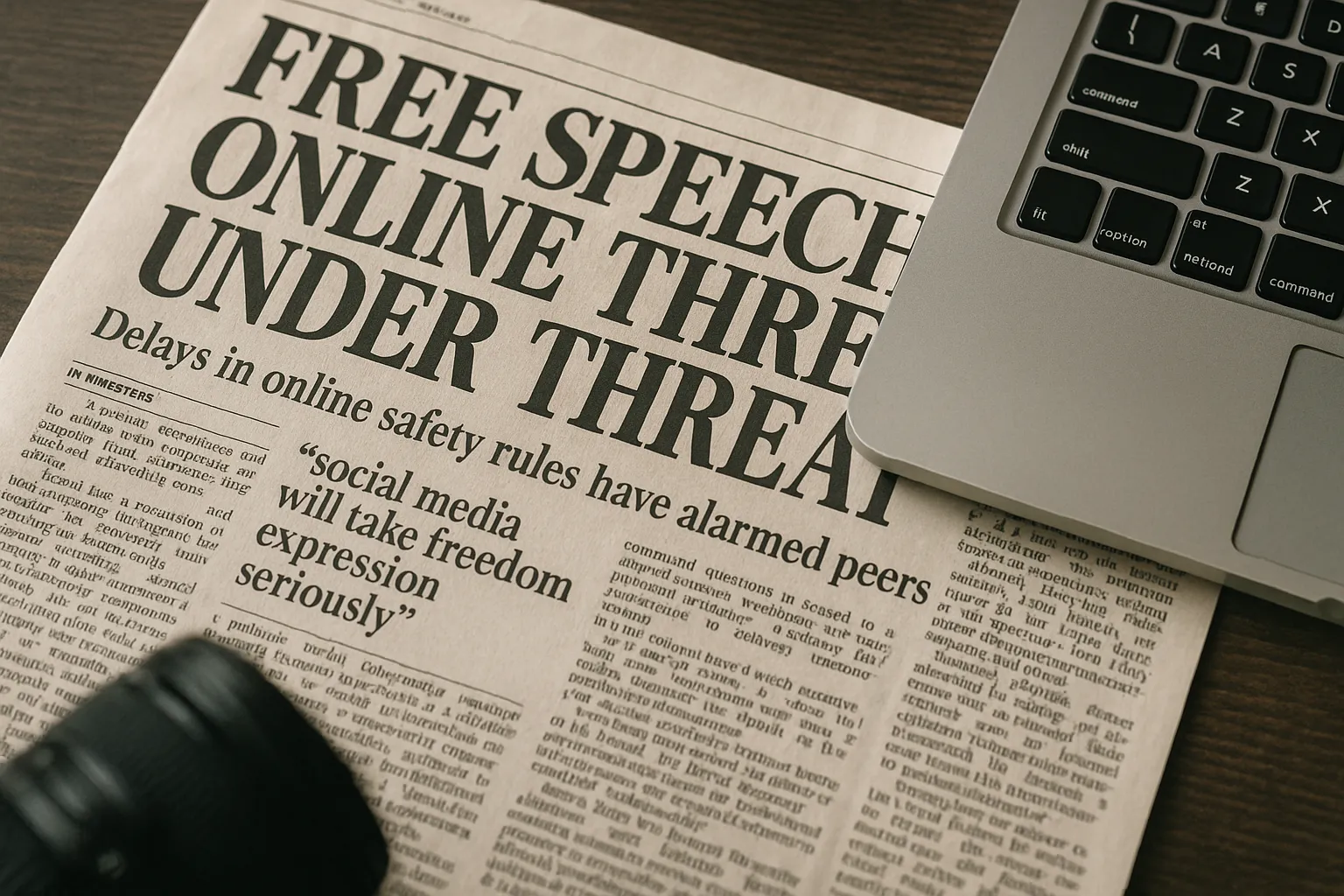
A coalition of over 50 distinguished members from the House of Lords has raised serious concerns regarding the threat to online free speech, attributing the issue to the delay in implementing essential legal protections stipulated in the Online Safety Act. In a formal letter directed at government ministers, the peers emphasised that these critical safeguards have yet to be activated despite the legislation being in effect for three years.
The ongoing postponement of these measures has led to significant consequences for online discourse, with social media platforms reportedly suppressing or eliminating legitimate content. The types of posts affected range widely, including remarks made by a Member of Parliament concerning grooming gangs, transcripts from legal proceedings, advocacy for the preservation of single-sex spaces, and historical accounts—such as those pertaining to a renowned Roman general.
Among the signatories of the letter is a diverse group, which includes three former Cabinet ministers, who are pressing for urgent action from Liz Kendall, the current Digital Secretary. They are calling for the immediate enforcement of the protections to ensure that social media companies adhere to the standards of freedom of expression that Parliament aimed to establish through the legislation.
The letter features notable figures, including Lord Gove, who has an established reputation as a former Cabinet minister and is involved in the editorial landscape as an editor of the Spectator, as well as Lord Lilley, who has held the position of trade secretary in the past. Additionally, Baroness Coffey, a former deputy prime minister, adds weight to the coalition’s appeal.
The assembly of peers also includes two prominent figures from the media sector: Lord Moore of The Telegraph and Baroness Fleet of the Evening Standard, both of whom have extensive experience in journalism. Their presence underscores the importance of press freedom as part of the broader conversation around online safety.
Other significant signatories include Lord Faulks, who presides over the Independent Press Standards Organisation, and Lord Lebedev, a proprietor of various media establishments. The letter has also garnered support from Baroness Deech, previously the chair of the Human Fertilisation and Embryology Authority, Baroness Spielman, who once led Ofsted, and Baroness Stowell, a former chair of the communications and digital committee.
The concerns voiced by these peers reflect a growing unease about the implications of social media regulation on free expression. The Online Safety Act was designed with the intention of creating a safer online environment, particularly for vulnerable groups, yet the unintended consequences have raised alarms among those who value freedom of speech. The peers contend that a lack of implementation of the Act’s provisions is undermining this vital democratic right.
As legitimate expressions of opinion are silenced or censored, there is increasing apprehension surrounding what constitutes permissible discourse in the digital realm. The MPs and other individuals whose comments have faced suppression represent a broader societal conversation regarding the limits of acceptable speech, and the responsibility that social media companies hold in moderating content.
The implications of the House of Lords’ appeal extend beyond just legal consequences; they touch on essential cultural and societal values in the UK. The peers assert that the government must recognise the integral role that open dialogue plays in a functioning democracy. They argue that swift action is necessary to prevent erosion of these freedoms, which are often taken for granted in an increasingly digital world.
The outcome of this advocacy initiative will be closely watched, as it could set a precedent for how online speech is handled in future legislation. While safeguards are necessary to protect users, the balance between ensuring safety and upholding free expression remains a contentious issue. The correspondence from the House of Lords highlights the urgent need for government intervention to clarify where the line should be drawn.
The voice of the community and stakeholders from various backgrounds, particularly those with a vested interest in media and public policy, will also play a critical role in shaping the conversation surrounding online safety. This coalition of peers raises a crucial question: how can we protect individuals from harmful content while simultaneously safeguarding the right to speak freely?
As deliberations continue, it will be imperative for the government to consider the perspectives expressed in the letter. The call to action advocated by more than 50 members of the House of Lords signifies a pivotal moment in the ongoing discussion about free speech in the age of social media. The government will need to ensure that the measures meant to protect individuals do not inadvertently silence their voices, maintaining a commitment to both safety and free expression in an increasingly complex digital landscape.
Our Thoughts
The article discusses delays in implementing key protections under the Online Safety Act, impacting free speech online. While not directly related to health and safety incidents, it highlights the importance of timely regulation enforcement. In a health and safety context, delays in implementing safety measures can lead to serious incidents.
Key safety lessons include ensuring compliance with established regulations to prevent misuse or misunderstanding of guidelines, which can jeopardize individuals’ rights to free expression. The Health and Safety at Work Act 1974 mandates that organizations must ensure safe working environments, which could extend metaphorically to online platforms’ responsibility to manage user content safely and responsibly.
If similar incidents regarding regulatory enforcement occur, robust internal procedures and regular audits could be introduced to ensure adherence to the regulations, minimizing the likelihood of such delays. Training for staff on compliance with relevant legislation is crucial to ensure swift action when new laws are enacted. Overall, the focus should be on prompt regulatory implementation and adherence to guidelines to safeguard both workers and users alike.