
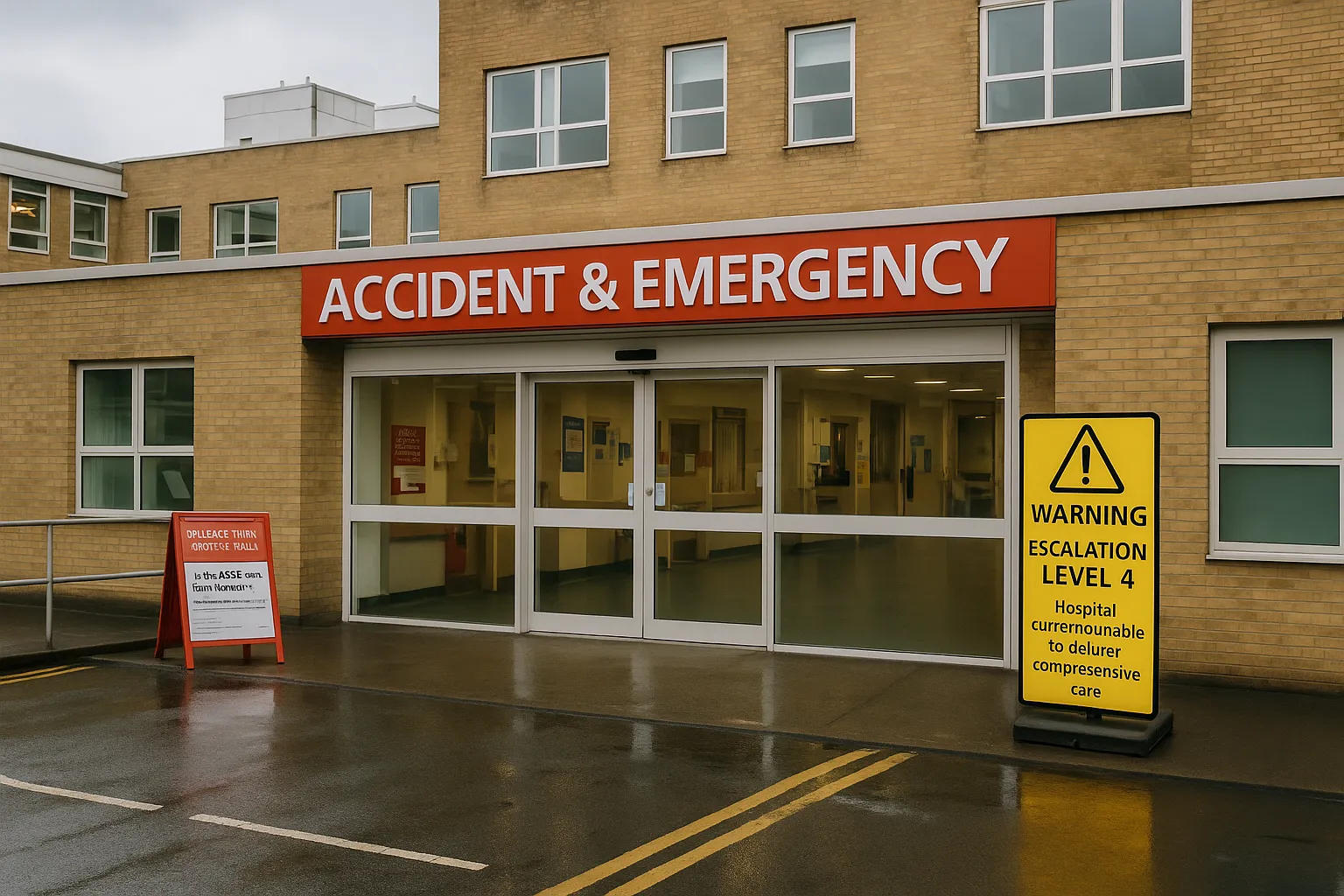
Story Highlight
– Two Lancashire hospitals declared “highest level” alert.
– Escalated to Level 4 due to service pressures.
– Non-essential meetings canceled to maintain patient safety.
– Patients advised to visit A&E only for emergencies.
– Essential services remain open for urgent medical help.
Full Story
Two hospitals in Lancashire have issued a high-level alert due to mounting strain on their services. The Lancashire Teaching Hospitals NHS Foundation Trust, which oversees both the Royal Preston Hospital and Chorley and South Ribble Hospital, has announced an escalation to Level 4 in the NHS grading system. This level indicates that the facilities are currently unable to provide comprehensive care due to increased demand.
This declaration marks the second instance in a matter of weeks where the trust has faced such significant operational pressure. In response to the situation, hospital management has outlined several measures to ensure the safety of patients. These measures include postponing non-essential meetings and advising patients and their families to consider arranging their own transportation upon discharge.
Amidst the rising tensions within the system, patients have been urged to seek emergency room care only for serious incidents and to consult with pharmacists for minor health concerns. A spokesperson for the trust emphasised the critical nature of patient safety, stating, “As always, patient safety must take priority and we need to take action to make sure that those who are more clinically urgent get the help they need as quickly as possible.”
Despite the current challenges, the spokesperson reassured the community, saying, “Our teams continue to work exceptionally hard, and we would like to reassure our patients and the public that in spite of the challenges faced, essential services remain fully open for anyone who needs them. So if you require urgent medical help, please continue to come forward.”
The declaration of Level 4 has raised concerns among local residents and stakeholders regarding the capacity of healthcare services in the area. The NHS grading system provides hospitals with a framework for assessing service demand and operational pressures, and reaching this elevated level can signal significant challenges in maintaining regular operations.
Hospital staff are making concerted efforts to navigate the current difficulties while ensuring that critical care continues. The ongoing situation has prompted community members to reflect on the pressures facing the National Health Service, particularly in light of recent experiences and reports of similar challenges at other hospitals within the region.
Stories concerning the strain on hospital services have been prominent, with local outlets highlighting similar alerts issued by the Lancaster Infirmary as well as previous challenges witnessed earlier in December 2025. Such instances underscore a system that is under constant pressure, exacerbated by seasonal health trends that typically accompany winter months.
Local healthcare professionals have expressed their concern regarding the sustainability of services, particularly when hospitals are forced to make operational adjustments in response to patient demand. Experts suggest that adequate staffing levels are crucial during peak periods, and they warn that ongoing difficulties could have long-term implications for patient care and outcomes.
Moreover, community health organisations have begun to engage with residents to discuss alternative healthcare pathways and educate them on how to navigate the local health system more effectively. This outreach aims to alleviate some of the pressures on emergency services by ensuring that the public is well-informed about available resources.
In light of these developments, residents are encouraged to remain proactive in seeking necessary medical assistance while also being mindful of the services’ demands. Community leaders are advocating for more robust support mechanisms to address these pressures, calling for enhanced resources and staffing to fortify the NHS infrastructure.
As the situation unfolds, hospital authorities will be closely monitoring the demand for services in order to adapt strategies as necessary. They aim to ensure that the safety and well-being of patients remain at the forefront of their operations, whilst also responding to the evolving landscape of healthcare needs in Lancashire.
This latest alert serves as a reminder of the ongoing challenges faced by the NHS, marking a critical moment for the trust as it seeks to maintain operational integrity amidst rising pressures. As it stands, both the Royal Preston and Chorley and South Ribble hospitals are working diligently to manage the situation while continuing to provide essential care to those who require it.
In the midst of these challenges, patient and community engagement remain vital. Local residents are encouraged to voice their experiences and concerns, and healthcare officials are committed to listening and adapting to the needs of the community.
As the Lancashire Teaching Hospitals NHS Foundation Trust navigates these trying times, the message remains clear: essential services are available, and help is still at hand for those in need. The commitment of healthcare professionals to uphold patient safety and care standards remains unwavering, even as they contend with the realities of an overburdened system.
Our Thoughts
The escalation to Level 4 alert at Lancashire Teaching Hospitals indicates a critical level of pressure on emergency services, breaching the Health and Safety at Work Act 1974, which mandates ensuring the health and safety of patients and staff. To avoid such situations, better workforce planning and resource allocation could have been implemented, such as hiring additional staff or providing incentives for staff retention to manage demand effectively.
Additionally, improving communication with the public about healthcare resources available for non-urgent issues could alleviate pressure on A&E departments. This could involve more robust community health initiatives and clear guidelines for the public to seek alternative care pathways, potentially reducing the number of inappropriate A&E visits.
Training for staff in managing peak pressures and regular assessments of patient flow can also provide insight into potential bottlenecks. By learning from this incident, the trust could develop a more proactive approach to crisis management and patient care, ensuring compliance with health and safety regulations, and prioritizing patient welfare during periods of high demand.