














Story Highlight
– Connect Property Services fined £400,000 after employee’s death.
– Darren Nevill inhaled toxic vapours from flooring adhesive.
– Investigation revealed failure to ensure health safety precautions.
– DCM concentration exceeded legal exposure limits significantly.
– HSE emphasizes need for safer product alternatives in workplaces.
Full Story
A significant fine of £400,000 has been levied against Connect Property Services Limited, following a tragic incident in which one of its employees succumbed to the effects of toxic vapours emitted from a flooring adhesive. The case has drawn attention not only to the importance of workplace safety but also to the regulations surrounding hazardous materials.
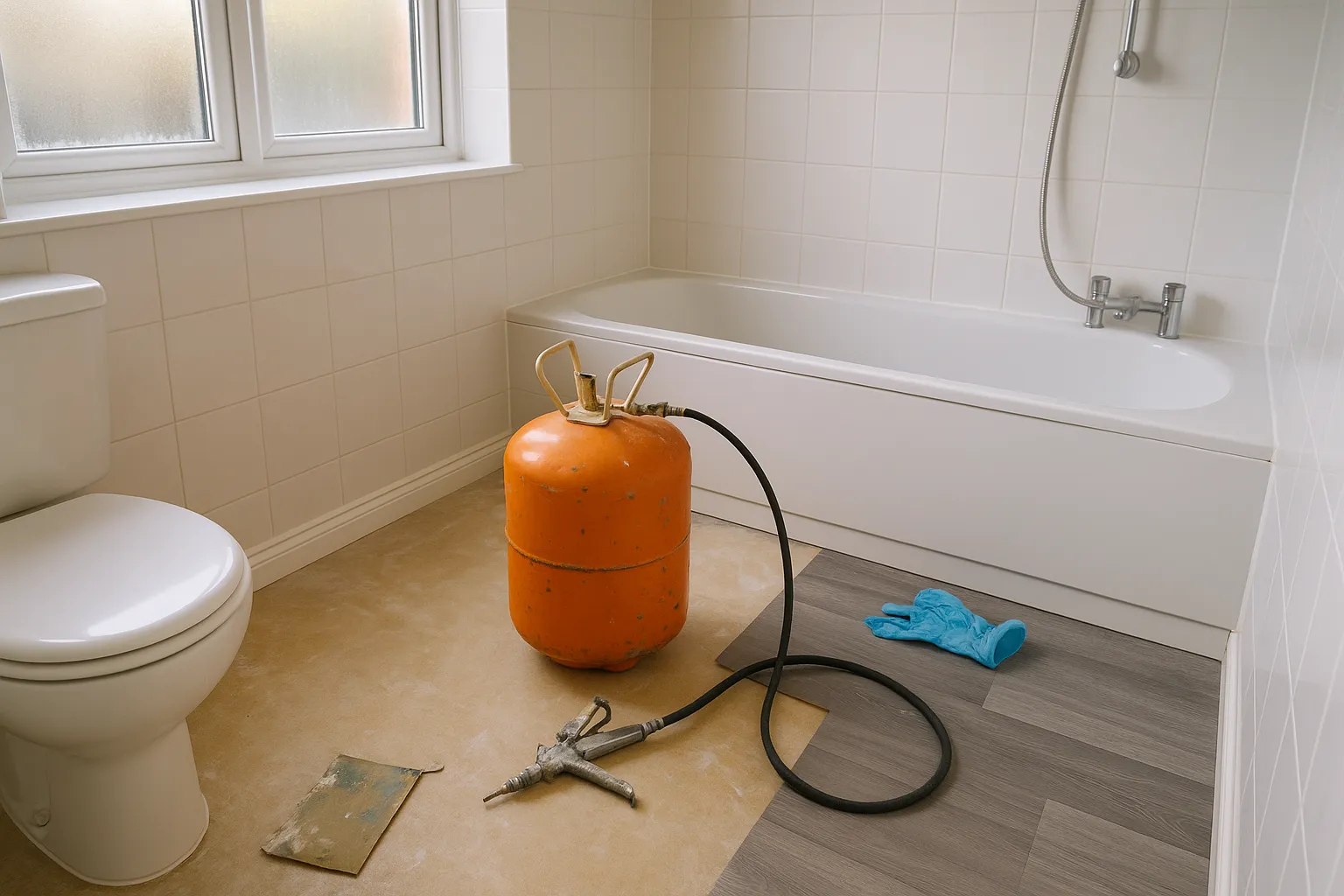
The incident occurred on 9 December 2020, when Darren Nevill, a 38-year-old worker, was engaged in laying a vinyl floor in a bathroom at a residence located in Hoddesdon, Hertfordshire. The adhesive he used during the job contained Dichloromethane (DCM), a solvent known for its volatility and potential health risks.
According to reports, on the day of the incident, a malfunction in the hose connected to a pressurised canister of adhesive led to a substantial release of vapours within the poorly ventilated bathroom. Mr Nevill was exposed to the hazardous atmosphere, leading to him losing consciousness and eventually collapsing. Emergency services were forced to gain entry to the bathroom in order to provide the necessary assistance.
An investigation conducted by the Health and Safety Executive (HSE) highlighted serious lapses in safety procedures at Connect Property Services Limited, which is based at Ealing Gateway, 26-30 Uxbridge Road, London. The HSE’s findings indicated that the company did not implement adequate measures to ensure that hazardous substances were not employed when safer alternatives existed.
Guidance provided by the HSE points out that the use of products containing DCM should be avoided whenever feasible. In situations where these products are necessary, they must be utilized in environments with sufficient ventilation to prevent vapour accumulation. Examples of spaces that are at high risk for poor ventilation include bathrooms, stairwells, cellars, and enclosed areas.
At Stevenage Magistrates Court on 26 January 2026, Connect Property Services Limited pleaded guilty to breaching Section 2(1) of the Health and Safety at Work etc Act 1974. The court ordered the company to pay not only the substantial fine but also additional costs amounting to £9,676.81 and a court surcharge of £190.
Prosecutor Jon Mack provided compelling evidence during the hearing, detailing the calculations made by HSE scientists. They determined that the maximum permissible exposure limit for DCM would have been exceeded within a mere 2-13 seconds. By the time Mr Nevill was found, the concentration of DCM in the bathroom was reported to be 84.5 times higher than the legal exposure limit, a figure described as being three times the quantity considered fatal.
Following the proceedings, Rauf Ahmed, an inspector with the HSE, expressed condolences to Mr Nevill’s family, emphasising the preventable nature of the tragedy. “Our thoughts today are with the family of Mr Nevill, who was just setting out on his career in construction,” he remarked. “He should have returned home safely to his family at the end of his working day but, because of the failings of Connect Property Services Limited, he did not.”
The enforcement action was led by HSE enforcement lawyer Neenu Bains and paralegal officer Helen Jacob, who underscored the gravity of the company’s negligence in safeguarding its workforce.
This case serves as a salient reminder of the crucial need for rigorous health and safety standards across all industries, particularly those involving hazardous materials. The role of organisations like the HSE is vital in enforcing regulations that protect not only workers but also public health and safety.
The HSE, as the national regulator for workplace health and safety in Britain, has reiterated its commitment to ensuring that all workplaces adhere to the necessary legislation designed to safeguard employees from potential dangers. More information on the health and safety laws and guidance regarding hazardous substances can be accessed through their official channels.
In the wake of this incident, there is a renewed call within the industry for increased awareness and training concerning chemical safety. Employers are urged to not only comply with existing regulations but to actively seek out safer alternatives to harmful substances.
As debates surrounding workplace safety and regulatory compliance continue, this tragic incident highlights the impact of corporate responsibility in protecting lives. Ensuring that employees are kept safe should always remain a priority, reflecting a commitment to fostering a workplace culture where safety is paramount.
The repercussions of neglecting these responsibilities can be dire, as illustrated by Mr Nevill’s untimely death. It serves as an urgent reminder to all sectors about the importance of rigorous adherence to safety protocols and the need for continual training and assessment regarding hazardous materials in the workplace.
Our Thoughts
Connect Property Services Limited failed to implement adequate safety measures, resulting in the tragic death of an employee due to toxic vapours from flooring adhesive. To prevent this incident, the company should have avoided using Dichloromethane (DCM)-based products in confined and poorly ventilated spaces such as bathrooms, as guided by HSE recommendations. Safer alternatives should have been considered, adhering to the Control of Substances Hazardous to Health Regulations 2002 (COSHH).
Key lessons include the importance of thorough risk assessments and the provision of proper training on handling hazardous substances. Regular checks on equipment integrity, such as the hose to the pressurised canister, could have mitigated the risk of accidents.
The breach of Section 2(1) of the Health and Safety at Work etc Act 1974 highlights the duty of employers to ensure the health and safety of their employees. To avoid similar incidents, companies must prioritize ventilation in work areas and adhere strictly to HSE guidance regarding the use of hazardous substances. Regular safety audits and an emphasis on a culture of health and safety would further protect employees.