
















Story Highlight
– Electric Toothbrush Charger banned for fire and explosion risks.
– Product failed UK safety standards; from China, model WY-3757.
– Amazon product identifiers: X002A68Z4D, FBA15KTM0VDKU000003.
– Plug fuse too small; risks fire or explosion.
– Recent recalls include craft kit and shampoo for safety issues.
Full Story
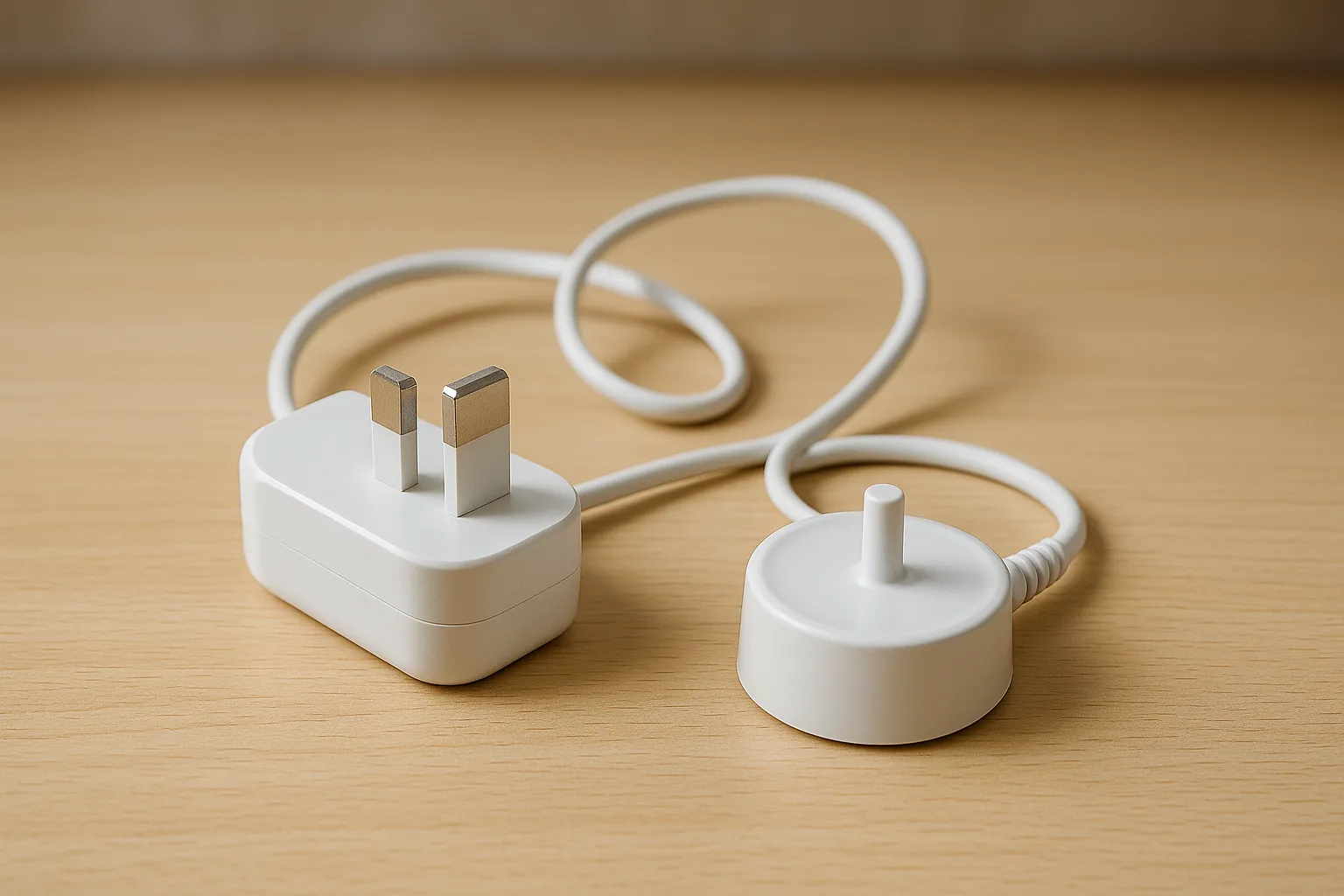
A widely used electrical device designed for bathroom use has recently been prohibited from sale due to significant fire and explosion hazards. The Office for Product Safety and Standards (OPSS) has issued an urgent safety notification regarding the item, which has been intercepted before entering the UK market.
The product in question is the Electric Toothbrush Charger, model WY-3757, which was previously available for purchase through Amazon. Concerns have arisen regarding its compliance with essential safety standards mandated for goods sold in the UK. The charger, identifiable by its white casing and compatibility with British wall sockets, has been assigned the product identifiers X002A68Z4D and FBA15KTM0VDKU000003, as reported by the Express.
Experts have raised alarming concerns regarding the charger’s safety features. A spokesperson from OPSS stated, “The product presents a high risk of fire as the plug fuse does not conform to the dimensional requirements of BS 1362. It is too small and as such cannot function properly. If there is a surge in the current or a fault with the product, the plug could catch fire and/or explode.” Furthermore, deficiencies were noted in the product’s labelling and instructional materials, indicating that improvements are necessary. It was also highlighted that the product fails to meet the specifications outlined in the Electrical Equipment (Safety) Regulations 2016 and the Plugs and Sockets (Safety) Regulations 1994.
The OPSS plays a crucial role in safeguarding the public from products that may pose risks to health and safety within home environments. Their monitoring and enforcement actions are meant to foster confidence among consumers and businesses in the marketplace.
In recent days, the watchdog has taken steps to withdraw several products from retail outlets following safety evaluations. One notable mention is the Hobbycraft Giant Box of Craft, which was removed from the shelves due to health concerns after it was discovered that the included sand vials might contain trace amounts of asbestos. The guidance issued by OPSS encouraged consumers to cease usage of the product promptly and to ensure it is kept away from children. They provided specific instructions on how to dispose of and return the potentially hazardous item.
Alongside these actions, there has been a recent recall of specific shampoo and conditioner products due to potential health risks, highlighting the OPSS’s proactive approach to consumer safety.
Such developments bring to light broader issues surrounding product safety and regulatory compliance. Experts suggest that manufacturers must prioritise meeting safety standards to prevent hazardous situations. Violations not only pose risks to consumers but can also lead to significant financial repercussions for companies found in breach of regulations.
The OPSS continues to remind consumers of the importance of being vigilant regarding the safety of electrical items they use daily. A proactive approach to product research and awareness about recent safety alerts can empower individuals to make informed decisions regarding their purchases.
Consumers are encouraged to remain updated on product recalls and safety communications from the OPSS. The agency’s website serves as a reliable resource where individuals can find information on recalled items and general safety tips.
As the situation evolves, the OPSS remains dedicated to monitoring and defending against unsafe products entering the market. Their ongoing efforts are vital for ensuring that household items, especially those with an electrical component, adhere to required safety regulations.
In light of these recent safety concerns, consumers are reminded to proceed with caution when using electrical devices. Ensuring that products are compliant with safety standards not only protects individual users but also safeguards families from potentially life-threatening hazards.
The implications of such bans and recalls extend beyond the immediate risks posed by faulty products. They also serve to highlight the importance of integrity in consumer product manufacturing and sales alike. Regulatory bodies like OPSS are critical in maintaining the balance between consumer trust and corporate responsibility.
In summary, vigilance and adherence to safety standards are essential in the ongoing effort to protect consumers from hazardous products. Authorities, manufacturers, and consumers all play an integral role in fostering a safe environment for product use. The recent actions by OPSS reflect a commitment to continuous improvement in product safety, a principle that resonates deeply with consumers across the UK.
Our Thoughts
The recent banning of the Electric Toothbrush Charger (model WY-3757) highlights significant breaches of UK health and safety regulations, specifically the Electrical Equipment (Safety) Regulations 2016 and the Plugs and Sockets (Safety) Regulations 1994. Key lessons include the necessity for thorough product compliance before market entry. Manufacturers must ensure that their products, particularly electrical items, meet British safety standards such as BS 1362, which outlines the requirements for plug fuses.
To prevent similar incidents, enhanced due diligence in pre-market testing and stringent labelling requirements are vital. Improved quality control in manufacturing, particularly regarding the dimensions and functionality of electrical components, would mitigate risks. Furthermore, greater oversight by regulatory bodies at import stages and online marketplaces is critical to ensuring that non-compliant products do not reach consumers.
In summary, adherence to safety standards and rigorous pre-market testing are crucial actions that could significantly reduce the risk of fire and explosion associated with faulty electronic devices.