














Story Highlight
– FSA report highlights future food technology trends.
– Controlled environment agriculture to transform crop production.
– Cellular agriculture grows food without traditional farming.
– Edible insects could become mainstream food ingredients.
– 3D food printing and reverse manufacturing are conceptual.
Full Story
The Food Standards Agency (FSA) has released a significant thematic report outlining key technological advancements expected to influence food safety and regulatory landscapes in Great Britain over the next ten years. This document is expected to serve as a cornerstone for industry stakeholders and government bodies, providing insights into emerging innovations in the food sector.
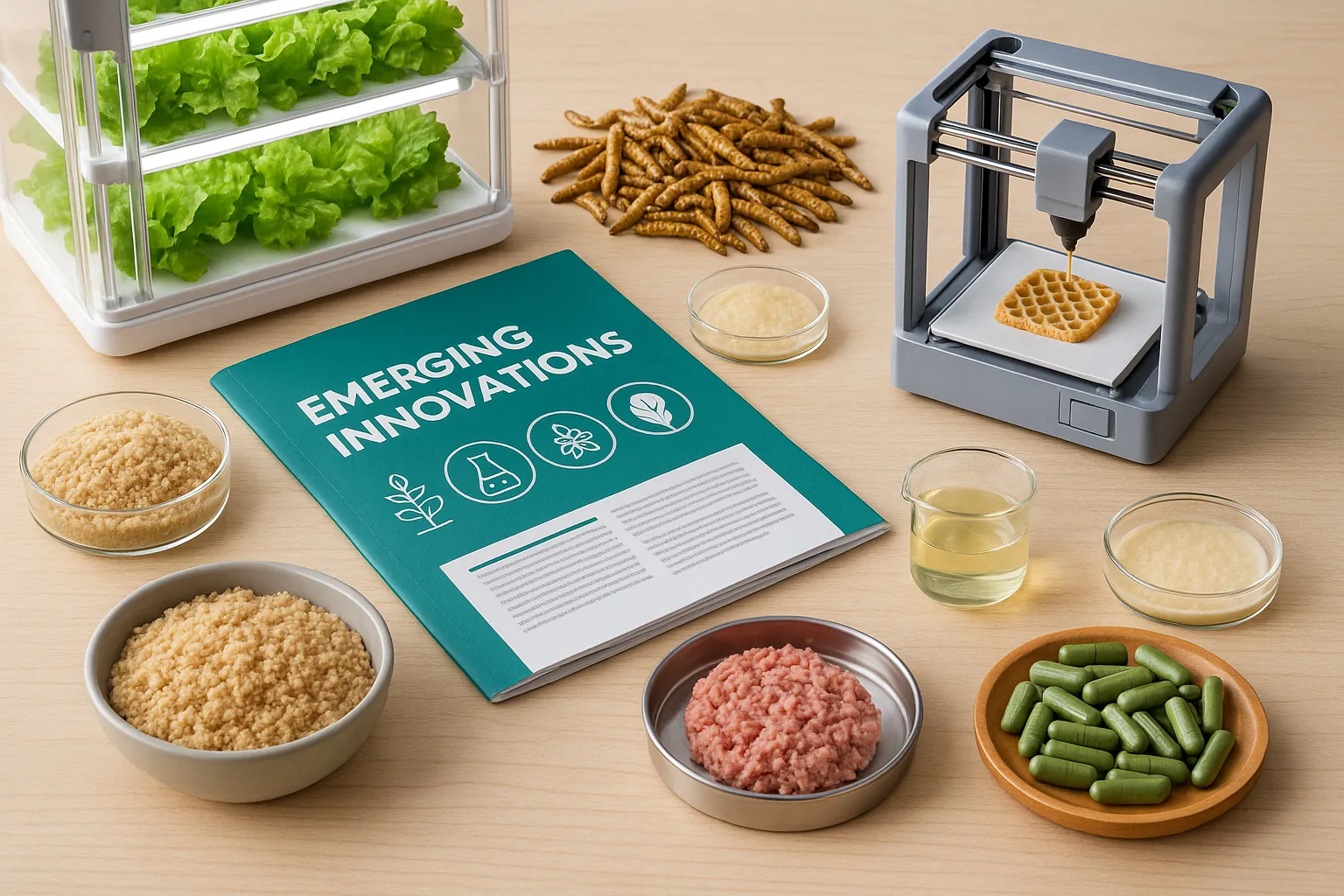
The report highlights various technological developments poised to transform the food production and consumption process. Among the most impactful are controlled environment agriculture (CEA) and precision farming techniques. Controlled environment agriculture, commonly referred to as vertical farming, involves cultivating crops within tightly monitored indoor environments, where factors such as humidity, temperature, and nutrient delivery are precisely managed to optimise growth conditions.
Another critical area of focus in the report is precision and biomass fermentation. This innovative approach utilizes accelerated microbial growth to generate protein-rich biomass, which can serve as a valuable food source. Additionally, cellular agriculture is highlighted, which encompasses the production of food via cellular processes rather than traditional methods involving livestock or crop cultivation. This category includes cell-cultivated foods, which offer new possibilities beyond conventional agriculture.
The report also addresses the potential of edible insects, which can be marketed either as whole products or as ingredients in various foods, such as powders incorporated into familiar recipes. This emerging protein source is gaining attention for its sustainability and nutritional benefits.
Moreover, the concept of molecular farming is introduced, where plants or plant cells are employed as factories to create specific food ingredients—such as enzymes and proteins—tailored to meet diverse culinary needs. In addition to these innovations, gas fermentation is examined, whereby microbes utilise captured gases like carbon dioxide and hydrogen to produce single-cell proteins and other valuable food components.
3D food printing has also been identified as a groundbreaking technology that allows for the creation of foods such as chocolate and mashed potatoes through a layering technique using edible ingredients. Furthermore, reverse food manufacturing is explored, a process that extracts nutrients from food by-products, converting them into new ingredients—an approach that could enhance food sustainability and reduce waste.
While some of these emerging technologies, like molecular farming, remain in nascent stages of development, others, such as reverse food manufacturing and 3D food printing, still represent conceptual ideas and are part of a long-term agenda for monitoring and analysis.
“Emerging technologies are reshaping how our food is produced and sourced,” remarks a spokesperson from the FSA. “This report gives industry and government clear sight of what is coming, and what is required to ensure these products meet the UK’s high standards.”
The report is not only an analysis of technological trends; it also points to a commitment from the FSA to bolster regulatory frameworks in response to these innovations. The agency, alongside its Innovative Food Guidance Hub, aims to deliver updated guidelines, carry out public consultations, and enhance support services for businesses. This multi-faceted approach is designed to help ensure that the UK continues to maintain its reputation as a trusted and innovation-friendly environment for companies involved in the development of new food technologies.
The emphasis on public consultation highlights the FSA’s recognition of the importance of engaging diverse stakeholders in the conversation about food safety and innovation. As these technologies evolve, it is imperative that the regulatory landscape adapts accordingly to accommodate new practices while upholding safety and quality standards.
Experts in food technology have noted that while the UK is well-positioned to lead in food innovation, it must remain vigilant to the challenges that accompany these advancements. There is a growing need for robust frameworks that can effectively integrate new technologies into the existing food system. Furthermore, as consumer demands shift towards sustainability and transparency, the FSA’s proactive measures will be essential in aligning innovation with public expectations.
The report also stresses the urgency of continued investment in research and development to propel these technologies from concept to reality. Collaboration between governmental bodies, academia, and the food industry is deemed essential to foster the development of safer and more sustainable food production methods.
As the food landscape continues to evolve, the implications of these technological innovations will likely resonate widely across society—impacting everything from farming practices and food production to consumer choices and regulatory obligations. The FSA’s focus on emerging technologies signals a pivotal moment in the UK’s food revolution, one that holds the potential to reshape the very foundation of the nation’s food system for years to come.
Our Thoughts
The FSA’s report on emerging food innovations highlights the need for stringent safety measures as new food technologies evolve. To prevent potential safety issues associated with these innovations, companies should prioritize compliance with the Food Safety Act 1990 and the General Food Law Regulation (EC) 178/2002, which mandate a proactive approach to food safety management.
Key safety lessons include the importance of rigorous risk assessments for new technologies, such as controlled environment agriculture and 3D food printing, as these may present unique hazards not fully covered under existing regulations. Establishing robust HACCP (Hazard Analysis and Critical Control Points) systems tailored to these innovations is essential to ensure food safety.
Furthermore, public consultations and industry collaboration, as indicated in the report, are crucial for identifying potential risks early in the development phase. Therefore, establishing clear guidelines and training on emerging technologies will be vital to prevent incidents. Consistent monitoring and adaptation of safety practices in line with advancements will bolster the UK’s commitment to maintaining high food safety standards amidst evolving methodologies.