









Story Highlight
– Building on King Street collapsed 23 days after concerns raised.
– Three people injured; two hospitalized but not life-threatening.
– Structural survey deemed building ‘not in immediate danger’.
– Scaffolding erected; no repairs done before collapse occurred.
– Investigation ongoing to determine cause of the incident.
Full Story
Concerns surrounding the structural integrity of a building on King Street, Oldham, have escalated following the dramatic collapse of the premises on March 24, 2026. This incident occurred mere weeks after a council surveyor deemed the building to be in “no immediate danger,” raising questions about safety assessments and emergency responses.
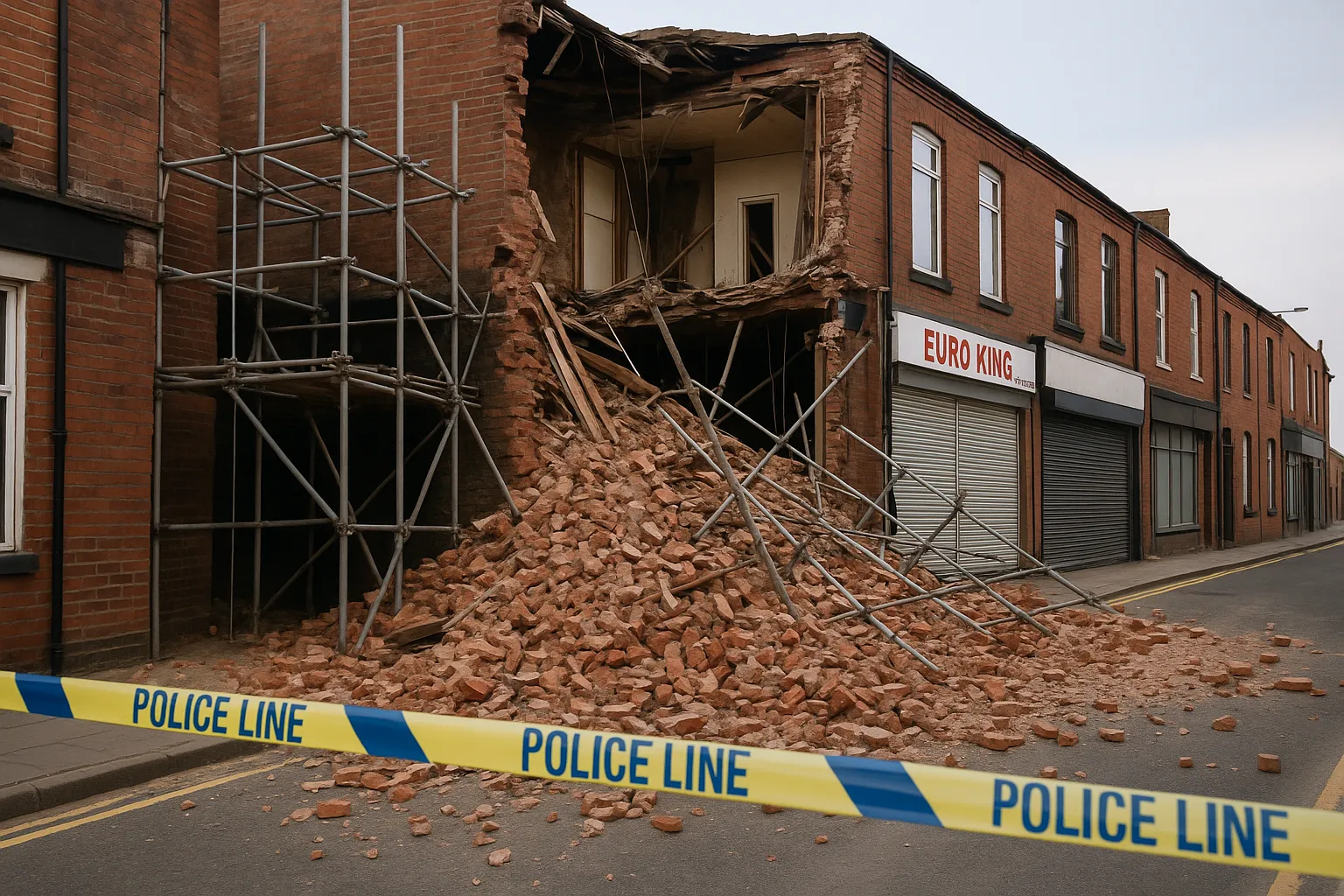
The collapse happened shortly after midday, sending bricks and scaffolding tumbling to the ground. Witnesses, including those waiting at a nearby bus stop, were forced to evacuate the area for their safety. Five individuals had exited the premises at 31 King Street moments before the structural failure took place. Fortunately, only three injuries were reported, with two individuals requiring hospital treatment, though none were life-threatening.
In the wake of the incident, the area has remained cordoned off for several days as investigations led by the local authority and Greater Manchester Fire and Rescue Service continue. The building housed Euro King Mini Market and a privately rented flat above, and was partially owned by Kamran Ghafoor, a councillor for Oldham, alongside his business partner, Sameer Zulqurnain, under the company KKS Investors.
Reports indicate that on March 1, concerns regarding the building’s condition were formally raised with local authorities. The Fire Service confirmed their response to these reports, which described the structure as potentially dangerous. Following an assessment, the situation was handed back to the landlord, as the surveyor did not classify the building as being in imminent danger of collapse.
A local individual, who works in close proximity to the building, recounted how he contacted emergency services weeks prior to the collapse, stating, “It was visually obvious the building wasn’t stable. If one brick was gone the whole building would’ve gone like a domino effect.” Despite these observations, emergency measures were not employed, as the assessment indicated the building could be safely occupied at that time.
Under UK property law, it is primarily the landlord’s responsibility to maintain the condition of the building. The property has been owned by KKS Investors since 2019, yet questions have arisen about prior remedial measures pursued for the structure. Ghafoor stated that a structural engineer was engaged shortly after the initial concerns were voiced, and they applied for a building notice to the council on March 9, intending to undertake necessary repairs.
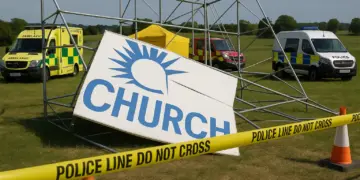
Scaffolding was erected around the building in preparation for external wall reconstruction, but no actual repair work took place from the time of the engineer’s assessment until the collapse. Ghafoor defended his company’s actions, asserting, “KKS Investors Ltd would like to reassure residents and the wider public that the company has acted responsibly at all times, following all appropriate rules, regulations, and safety procedures.”
Following the incident, he expressed relief that there were no serious injuries and emphasized the company’s commitment to safety protocols. “We did everything in our power, everything legally, and followed the right protocols,” he added, extending his best wishes to those affected.
Witness reports indicate that preliminary structural works were being conducted at the time of the collapse, aimed at addressing issues related to a side wall that had been left vulnerable following the demolition of an adjacent building years prior. Ghafoor stated that these works were being overseen by a qualified professional and that safety measures were a priority.
“It’s crucial to highlight that experienced contractors were brought in for this project, and scaffolding was installed by professionals,” he said, insisting the enterprise took all necessary precautions throughout the process.
As a direct result of the collapse, approximately 40 individuals required temporary lodging for the night, including residents from the affected building and others living nearby. The council has since prioritised providing support to these residents as clean-up and investigation efforts unfold.
Oldham Council has confirmed an investigation is underway to uncover the cause of the building’s collapse. A representative stated, “Right now, our focus is to support the people most affected by the collapse of the building. We are hopeful that the majority of the residents who live in the properties outside of the safety cordon will return home as soon as possible.”
Furthermore, the council is collaborating with the Health and Safety Executive to conduct a comprehensive assessment of the building and the circumstances leading up to the incident. Inspectors from the HSE, alongside Greater Manchester Police, are actively involved in the ongoing investigation.
As the investigation progresses, the community seeks answers regarding the events that led to the collapse, as well as assurances that adequate safety measures will be enforced in the future to prevent such incidents from occurring again. The situation remains under close scrutiny, reflecting broader concerns about building safety standards in the region.
Our Thoughts
The recent building collapse on King Street, Oldham, highlights significant lapses in safety protocols and regulatory compliance. Despite concerns reported to local authorities about the structural integrity of the building 23 days prior to the collapse, the response from the council surveyor deemed it “not in immediate danger,” which ultimately led to insufficient immediate action to secure the site under the Health and Safety at Work Act 1974.
Key lessons include the necessity for rigorous assessments in cases where structural issues are reported. The Construction (Design and Management) Regulations 2015 impose duties on duty holders to ensure safety throughout the project lifecycle; this incident suggests a failure to adequately address potential risks and maintain a safe working environment during remedial efforts.
Moreover, the lack of timely and effective communication between the local council, the fire service, and the building owners resulted in dangerous conditions persisting for too long. Moving forward, stricter enforcement of regulations regarding immediate hazard assessments and enhanced collaboration between engineering professionals and local authorities is crucial to prevent similar incidents. The incident underscores the need for owners to promptly act on safety recommendations, especially when dealing with structurally compromised buildings.