














Story Highlight
– NHS plans to close children’s A&E at Ormskirk Hospital.
– Critics argue it jeopardizes vulnerable children’s safety.
– MP calls for government intervention against the decision.
– Local residents express outrage over consultation process.
– Financial pressures cited as reason for service consolidation.
Full Story
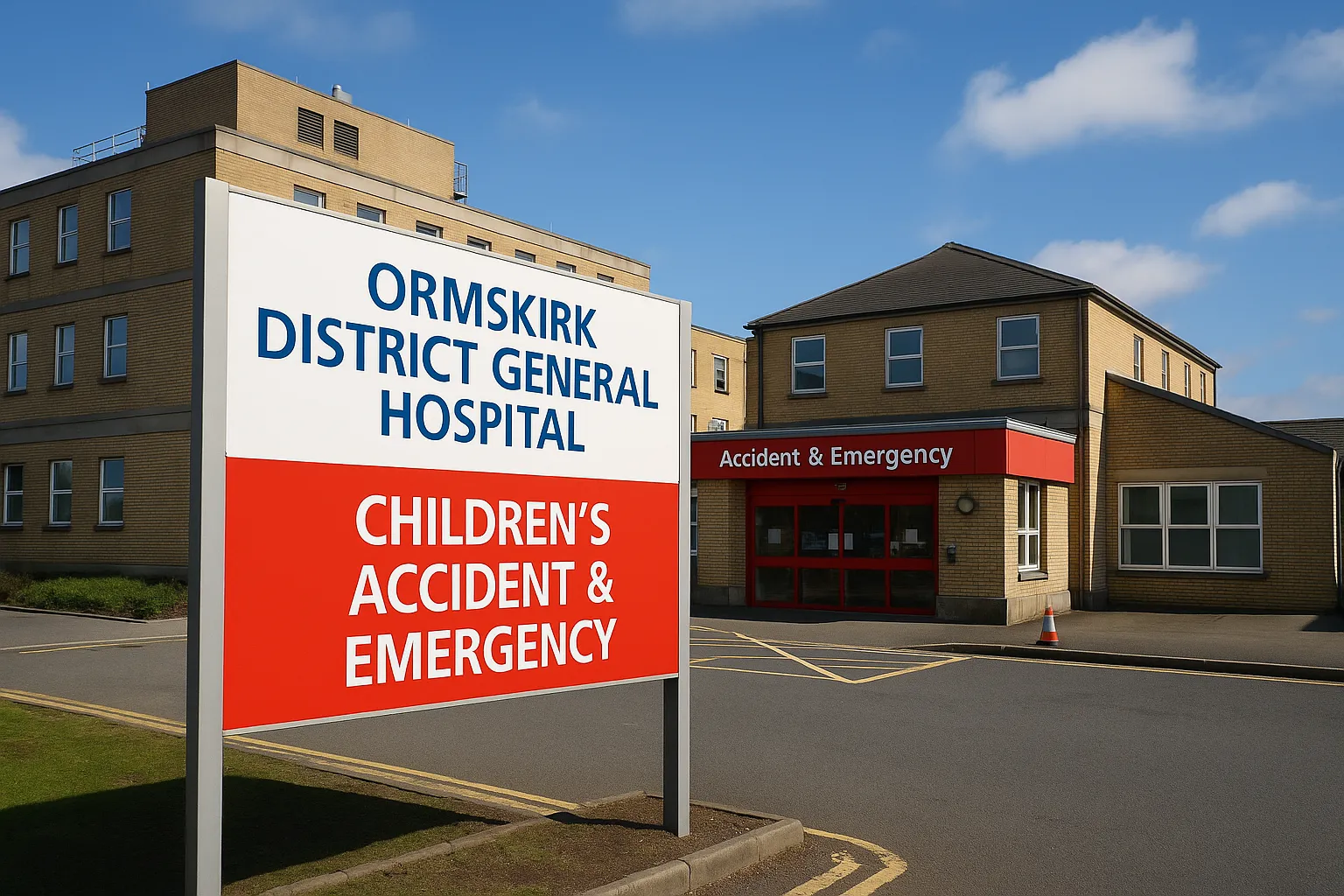
Residents in West Lancashire are expressing deep concern and anger following the approval of plans to shut the children’s Accident & Emergency (A&E) unit at Ormskirk Hospital. Community campaigners argue that such a move could have severe implications for the health and safety of vulnerable children in the area. Critics have labelled the decision, which involves relocating the service to Southport Hospital, as a disturbing prioritisation of financial considerations over patient welfare.
Ashley Dalton, the Member of Parliament for West Lancashire, has publicly denounced the plans, calling on Wes Streeting, the Secretary of State for Health and Social Care, to intervene. Her strong stance reflects a growing discontent within the local community, where many believe that the decision was effectively predetermined. The discussion surrounding the future of A&E services in the region came to a head during a meeting held on March 13, where the integrated care boards (ICBs) of NHS Lancashire and South Cumbria, alongside NHS Cheshire and Merseyside, resolved to consolidate the children’s A&E services at Southport. The change is intended to ensure that both children’s and adult A&E services are available at a single 24-hour facility in Southport.
Ms. Dalton took to social media to voice her disapproval, stating, “This is devastating news for all of us here in West Lancashire. We’ve been clear throughout this process that A&E should be co-located at Ormskirk, but this isn’t the end.” Following this, she authored a letter urging Streeting to reconsider the decision, asserting, “I simply do not accept that this decision is in the best interests of my constituents.” She emphasised the potential deterioration in health outcomes for local residents should services be moved.
Community members like Mary Whitby, a vocal opponent of the proposed changes, have argued passionately for the need to maintain and enhance services at both Ormskirk and Southport hospitals. “Eliminating A&E and associated services increases travel times and risks, particularly for children, the elderly, and disabled individuals,” she explained. Whitby went on to highlight the inconsistency in the NHS management’s rationale, questioning why merging hospitals was acceptable in one context but not another. “They simply pitted people in Southport and Ormskirk against each other,” Whitby added, calling for a more unified approach to healthcare delivery.
The Shaping Care Together (SCT) consultation process has faced substantial backlash. Despite assurances that all options were being considered, many in the community felt that the decision to close Ormskirk’s children’s A&E was a foregone conclusion. Residents noted that the SCT report, released just prior to the announcement of the closure, failed to reflect genuine engagement with public concerns about A&E services.
Barrie French, a local resident, described the aftermath of the consultation process as akin to a “banana republic,” lamenting that the government had not heeded the voices of the community. He stated, “They told us the consultation would be ‘best in class,’ but what’s transpired is what everyone expected.” French expressed his frustration over the apparent lack of attentiveness to the pleas from both towns for maintaining essential services.
In light of these developments, some individuals, including French, are contemplating legal action to challenge the consultation process and call into question the financial projections that have underpinned decision-making. “They didn’t listen to anything we said in Ormskirk or Southport,” he remarked, emphasising a perceived disconnect between residents’ needs and management decisions.
Healthcare providers have acknowledged the emotional response from the community. Craig Harris, chief commissioning officer of NHS Lancashire and South Cumbria, indicated that the decision was made after meticulous deliberation involving public feedback and various clinical and financial considerations. “This decision was about ensuring we have a 24/7 emergency department for both adults and children at the same location,” he stated, highlighting the necessity for sustainable emergency care.
Community sentiment remains critical of the perceived financial motivation behind service consolidation. Earlier in March, the British Medical Association (BMA) raised alarms that the financial targets imposed on trusts risked undermining patient safety, with a staggering 88% of surveyed doctors voicing concern over funding cuts affecting care quality. In reaction to these claims, NHS representative statements have underscored the financial pressures the healthcare system is facing nationwide, highlighting a need for responsible resource management.
For many in West Lancashire, the closure of the children’s A&E facility at Ormskirk Hospital represents a significant loss. Sharron Wright, a grandmother of a child with complex medical needs, articulated her fears, stating that the closure will endanger children’s lives. Her testimony is echoed by many who rely on immediate access to A&E services due to existing health conditions. “This news is a huge blow. It’s going to leave vulnerable children in a situation that is untenable,” Wright remarked, outlining the unnecessary risks involved with increased travel times to Southport Hospital.
Local residents are deeply aware that better access to health services can mean the difference between life and death. Neil Dunne, a Kirkby resident, voiced similar worries, stressing the historical reliance on Ormskirk’s facilities and the implications for communities beyond West Lancashire. He questioned, “Why is a busy hospital treating sick people seen as financially unsustainable?”
In response to the uproar, Harris reassured residents that Ormskirk Hospital would remain operational, continuing to provide other essential health services, and that plans to upgrade the Skelmersdale urgent care centre are underway. However, for many concerned locals, such reassurances do little to alleviate fears linked to the impending closure of crucial emergency services and the long-term effects on community health standards.
Our Thoughts
The decision to close the children’s A&E at Ormskirk Hospital raises significant health and safety concerns under UK legislation. Key issues include inadequate risk assessments regarding the impact on vulnerable populations, particularly children and those with complex medical needs. The Health and Safety at Work Act 1974 mandates that employers ensure, as far as is reasonably practicable, the health and safety of employees and others affected by their work activities. In this scenario, the NHS management’s prioritization of financial savings over patient safety may have contravened this legal obligation.
Additionally, the Management of Health and Safety at Work Regulations 1999 require that employers assess risks and implement appropriate measures to mitigate them. A failure to adequately consult with stakeholders during the Shaping Care Together process led to perceptions of a predetermined outcome, potentially breaching the duty to consult and involve public health considerations.
Preventative measures include maintaining A&E services in both locations to ensure timely access to emergency care, particularly for those in remote areas. Comprehensive and transparent consultations must also be conducted to align service changes with community health needs and safety imperatives. Emphasizing patient safety over financial constraints is essential to comply with legal responsibilities and protect vulnerable populations.