













Story Highlight
– Ely Car Valeting Limited served notice by HSE.
– Company breached health and safety regulations.
– Inadequate first aid equipment and expired supplies noted.
– Insufficient trained personnel for first aid available.
– Violations of safety assessment and chemical regulations found.
Full Story
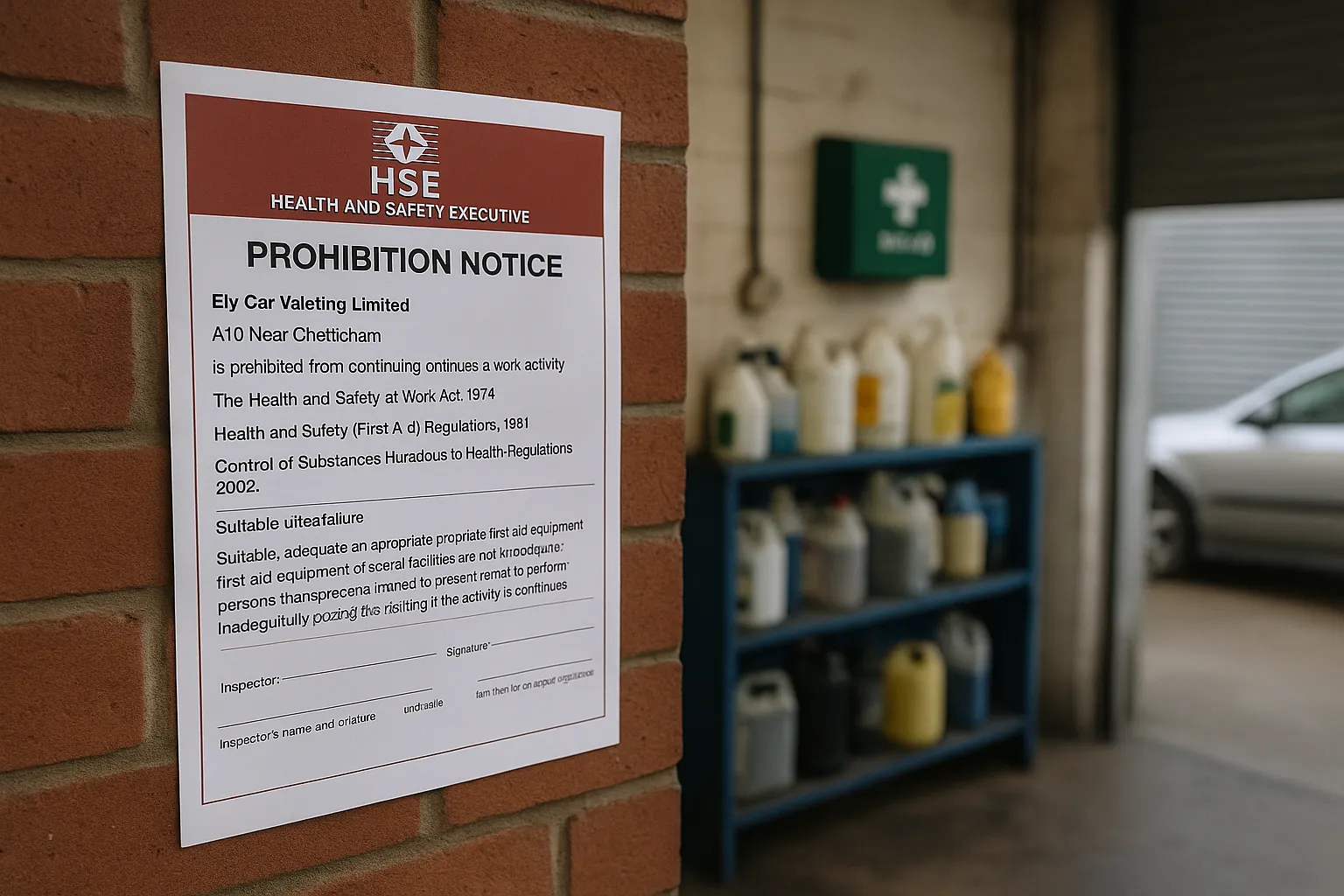
Ely Car Valeting Limited has received a formal notification of breaches from the Health and Safety Executive (HSE), following an inspection on February 24. The business, situated along the A10 close to Chettisham, has been cited for failing to comply with various health and safety regulations.
The HSE’s findings indicated that the company did not supply what it described as “suitable, adequate and appropriate” first aid supplies necessary for its employees. In the detail of the notice, it was highlighted that there was a notable absence of essential first aid equipment, including an eye wash station, and that other medical supplies on-site had expired.
Further scrutiny revealed that Ely Car Valeting Limited lacked an adequate number of staff members trained in first aid, which raised significant concerns about the safety and wellbeing of the workforce. The HSE emphasized the obligation of employers to ensure that there are enough trained individuals available to respond effectively in emergencies.
Additionally, the HSE noted that the company had not conducted a thorough assessment of the chemicals used at its premises, particularly those that may be classified as irritants. This oversight risks exposing employees to hazardous substances without appropriate safety measures in place.
Ely Car Valeting Limited has been found in violation of the Health and Safety at Work Act 1974, along with regulations specifically related to first aid. Moreover, infractions concerning the Control of Substances Hazardous to Health Regulations were also documented.
It is crucial for businesses to adhere to health and safety legislation to maintain a secure working environment. The HSE’s rigorous inspections are a key part of this, ensuring that companies prioritize the health and safety of their employees. In this case, Ely Car Valeting Limited has been urged to address these deficiencies promptly to comply with the legal requirements and ensure the safety of those who work there.
As these developments unfold, concerns remain about the potential implications for employees and the broader community. Health and safety experts have reiterated the importance of proper training and equipment in preventing workplace injuries and illnesses. It is imperative that businesses take heed of such notices to rectify issues before they potentially lead to more serious incidents.
Stakeholders and community members are encouraged to remain vigilant regarding health and safety practices and to report any concerns they may have about local businesses. Engaging with health professionals and safety experts can provide additional insights into best practices and compliance standards that should be adopted by all organisations.
For anyone with information or a personal story related to health and safety practices within their workplace, contributions can be shared via email at oliver.murphy@newsquest.co.uk or newsdesk@elystandard.co.uk.
Our Thoughts
Ely Car Valeting Limited failed to comply with several UK health and safety regulations, notably the Health and Safety at Work Act 1974 and the Health and Safety (First Aid) Regulations. Key deficiencies included inadequate first aid provisions, such as expired supplies and the absence of eye wash stations. The company also lacked a sufficient number of trained first aiders and had not conducted a proper assessment of hazardous chemicals on site, which violates the Control of Substances Hazardous to Health (COSHH) Regulations.
To prevent similar incidents, organizations should ensure the provision of an adequate and updated first aid kit tailored to the specific risks associated with their operations. Regular training for staff in first aid, along with routine assessments of workplace hazards, are essential. Implementing a robust health and safety management system, including risk assessments for hazardous substances, could facilitate compliance with legal obligations and enhance workplace safety. Regular audits and an emphasis on continuous safety education would further mitigate potential breaches and improve overall health and safety standards.