
















Story Highlight
– HSE investigation revealed safety failures at ICL sites.
– Employee lost leg due to caustic soda exposure.
– Second worker required skin grafts from similar burns.
– ICL fined £3.8 million for hazardous negligence.
– Lack of risk assessments contributed to both incidents.
Full Story
A recent investigation by the Health and Safety Executive (HSE) has revealed significant failures at Industrial Chemicals Limited (ICL), leading to severe injuries for two workers exposed to caustic soda, a highly corrosive substance. The Essex-based manufacturer has been fined £3.8 million due to these incidents, which occurred at separate sites in West Thurrock and Grays.
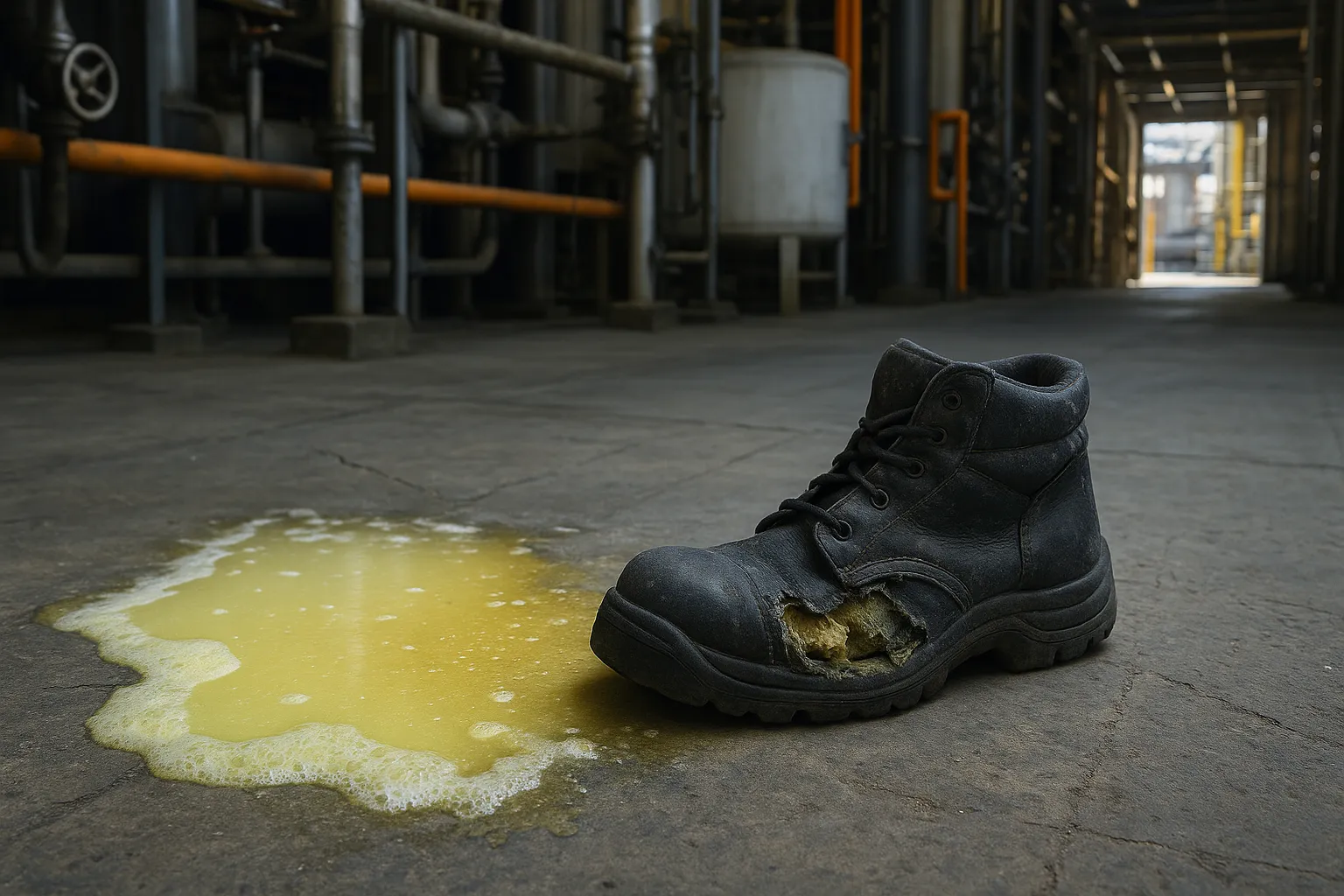
The first incident took place on 6 December 2019, when Michael Bartholomew, then a 60-year-old chemical loader, suffered life-altering injuries after stepping into a puddle of caustic soda at ICL’s West Thurrock facility. Bartholomew’s safety boots, which were deemed inadequate and were not compliant with British Standards, failed to protect him from the hazardous chemical, resulting in the amputation of his leg below the knee. This incident has left Bartholomew unable to return to work, significantly impacting his life and his ability to support his family.
Following the incident, an HSE investigation uncovered a series of systemic failures at the West Thurrock site. There were multiple leaks from various pieces of equipment, including pipework, valves, and hoses, highlighting a lack of appropriate measures to inspect and maintain these critical systems. The ground around the area where Bartholomew was working was unmade, which allowed caustic soda to accumulate in puddles. Furthermore, there were no designated walkways or effective systems in place to manage spillages, illustrating a grave oversight in worker safety at ICL.
In a personal statement reflecting on the trauma of his injuries, Bartholomew expressed the profound loss of his independence and the emotional toll of his situation. “I felt that this was game over for me. I would not be able to work or support my family. I miss my work and my work colleagues,” he stated. He described the impact on his personal life as well, noting how he could no longer engage in activities he once enjoyed, such as fishing or playing football with his grandchildren.
The second incident occurred on 30 August 2022 at the Titan Works site in Grays, which is now closed. An employee was injured while manually decanting a 50% concentration of caustic soda into 25-litre containers. After noticing drips of the hazardous substance on his foot, he sustained burns that necessitated skin grafts for recovery. This incident similarly revealed a lack of risk assessment or safe working procedures for the task at hand, demonstrating a noteworthy gap in the company’s operational safety protocols.
The HSE’s findings indicated that there were viable options to automate the decanting process by reintroducing an existing automatic IBC dosing plant, which would have significantly reduced the risks associated with manual handling of caustic soda. Following the incident, ICL took corrective action by halting the use of smaller containers, instead opting for pre-mixed IBCs, effectively eliminating the risk of exposure in that context.
Sodium hydroxide, commonly referred to as caustic soda, is widely used in the production of cleaning products and is notorious for its corrosive properties. The substance poses a serious threat to human health, causing severe burns upon contact with skin. Under existing HSE guidelines, employers have a clear obligation to mitigate exposure to such hazardous materials. The primary focus should be on eliminating risk altogether by revising work practices and ensuring that all equipment undergoes rigorous maintenance.
In addition to the fines imposed by the court, ICL has faced scrutiny regarding its compliance with the Control of Substances Hazardous to Health Regulations 2002. The company’s plea of guilty to two charges of violating these regulations showcases a troubling disregard for worker safety and regulatory standards.
HSE Inspector Julia Gebauer commented on the severity of the situation, stating, “This was a company operating with significant volumes of a highly corrosive material but had manifestly failed to put proper measures in place to protect their workers and prevent exposure.” She described the incidents as indicative of a broader pattern of avoidable risks that ICL not only should have recognised but could have prevented through adequate safety systems.
The prosecution was led by HSE enforcement lawyer William Bodiam and paralegal officer Chidimma Elechi, representing a commitment to holding companies accountable for neglecting the health and safety of their employees.
The case has prompted calls for improved safety practices across the chemical manufacturing industry in the UK, as it highlights the potentially dire consequences of insufficient risk management. Workers who are exposed to harmful substances deserve to have their safety prioritised, with robust systems implemented to protect them on the job.
This incident serves as a stark reminder of the essential nature of workplace safety and the responsibility employers bear to safeguard their employees’ well-being. The hope is that the outcomes of this case will not only provide some closure for the affected workers but will also inspire a renewed commitment to health and safety practices across all industries handling hazardous materials.
Our Thoughts
The incidents at Industrial Chemicals Limited (ICL) highlight significant breaches of the Health and Safety at Work Act 1974 and the Control of Substances Hazardous to Health Regulations 2002 (COSHH). Key failures include inadequate risk assessments and lack of effective control measures for handling caustic soda, leading to severe injuries.
To prevent similar incidents, ICL should have established stringent maintenance protocols for equipment and ensured proper training for workers on safe handling practices. Additionally, prioritizing automation over manual handling could have eliminated exposure risks. The absence of effective spill management systems contributed to unsafe conditions; therefore, implementing stringent housekeeping protocols is crucial.
Workers should have been provided with appropriate PPE that met British Standards, as inadequate protective gear failed to prevent injuries. Regular inspections and condition assessments of protective equipment are essential.
Ultimately, these incidents underscore the importance of robust risk management systems and adherence to health and safety legislation to protect employees from hazardous substances.