Story Highlight
– Multiple nationwide product recalls due to health risks.
– Marks & Spencer’s yoghurt recalled for undeclared gluten.
– Aldi’s salmon fillets have incorrect use-by date warning.
– Tesco dessert may contain harmful plastic pieces.
– MOMA porridge products recalled over potential mouse contamination.
Full Story
A recent announcement from the Food Standards Agency (FSA) has alerted customers across various major supermarkets to several product recalls, amid concerns about potential health hazards related to their consumption. Shoppers are urged to immediately avoid these items, with specific instructions provided for those who have purchased them.
The recalls span multiple supermarkets, with diverse products being affected by various health risks. For instance, certain brands of porridge have been flagged due to the troubling discovery of potential contamination from mice. This concerning find has prompted MOMA Foods to recall a variety of its porridge options, which were found to be unsafe for consumption. Customers are advised to adhere to the recall guidance and refrain from eating any of these products.
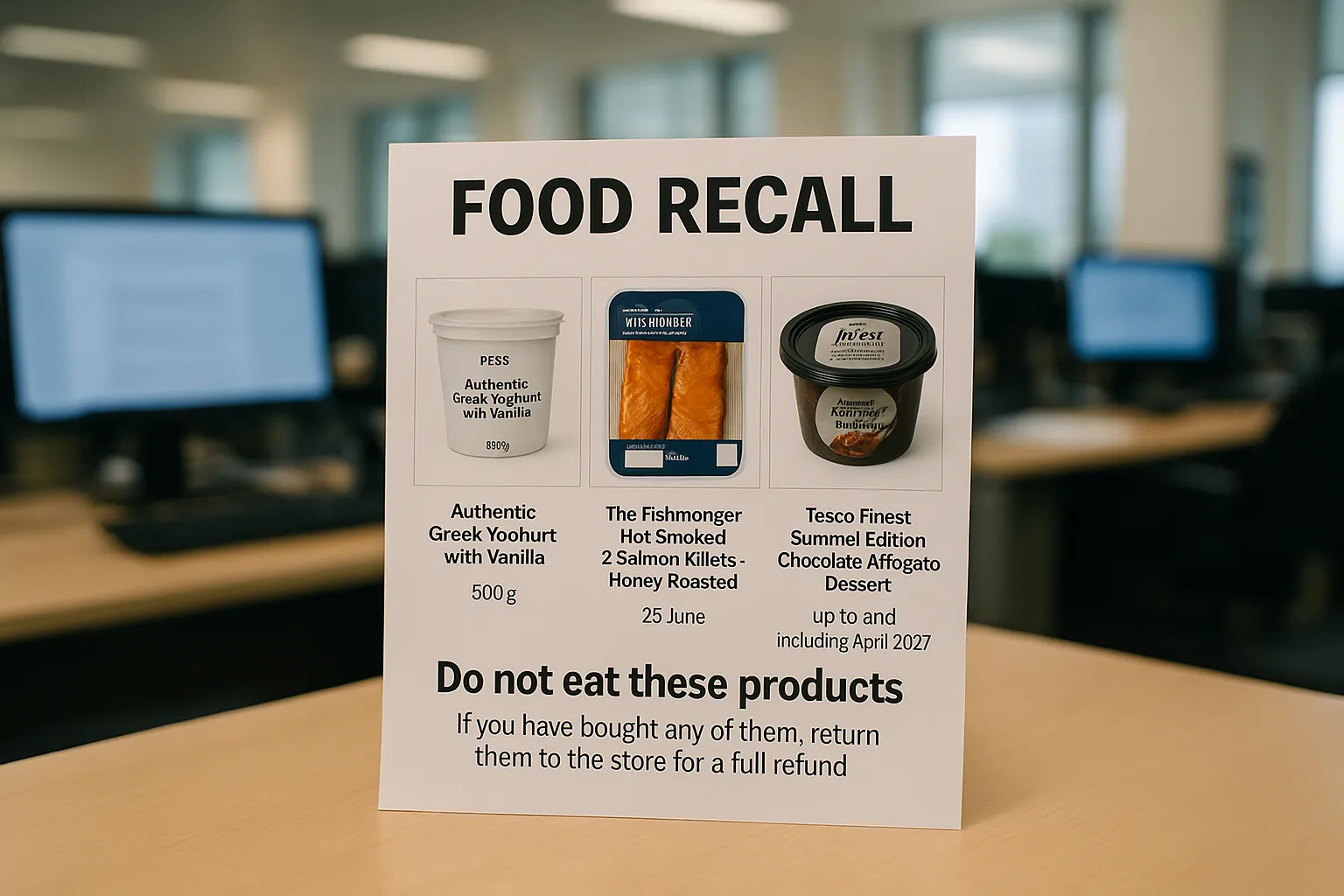
One significant recall involves Marks & Spencer, which has taken the precautionary step of recalling its Authentic Greek Yoghurt with Vanilla. The yoghurt is being withdrawn from shelves due to the presence of gluten, which has not been declared on the product’s label. This oversight poses a serious risk to individuals with gluten allergies, intolerances, or coeliac disease. Marks & Spencer customers who have purchased this item, which has a pack size of 500g and a use-by date of 12 May 2026, are advised to return it to the store for a full refund.
In a similar vein, Aldi shoppers had a “do not eat” warning issued regarding its The Fishmonger Hot Smoked 2 Salmon Fillets. A packaging error resulted in a mislabelled use-by date, causing the fish to be deemed unsafe to consume as it could potentially be unfit for consumption two months earlier than customers would anticipate. The affected products carry a use-by date of June 25, while the correct use-by date should have been April 25. Aldi has encouraged customers to return this product, assuring that they will receive a full refund upon doing so.
The FSA has also issued a warning on Tesco’s Finest Summer Edition Chocolate Affogato Dessert, which has been found to potentially contain pieces of plastic. All date codes up to and including April 2027 are included in the recall, as it poses a risk to health. Tesco has implored customers to refrain from consuming the affected dessert and to seek a refund at any Tesco store.
Another alarming recall concerns multiple porridge products distributed by MOMA Foods, which were pulled from shelves due to the risk of mouse contamination. This announcement affects multiple varieties of their porridge pots and sachets, including flavours such as Almond Butter & Salted Caramel and Apple, Cinnamon & Brown Sugar. MOMA Foods reassured consumers that while the risk of any single product being contaminated was low, it chose to take this precautionary step to prioritise consumer safety. Shoppers who possess these items should return them for a refund in line with FSA directives.
On another note, Walkers crisps has issued a recall for its six-pack of Hot Honey crisps after concerns arose regarding possible allergens. The specific batch may contain Mild Cheese & Onion seasoning that is not correctly mentioned on the label, thus constituting a potential health risk for those allergic to milk. Customers who purchased this affected batch with a best-before date of May 16, 2026, are advised not to consume these products. They are encouraged to contact the Consumer Care Line to facilitate a full refund.
The significance of these recalls cannot be overstated, as they highlight ongoing concerns regarding food safety and the rigorous measures that must be taken to ensure consumer health. The FSA routinely issues Product Withdrawal and Recall Information Notices to inform both consumers and local authorities about any food safety issues that arise. These documents serve as crucial communication tools, detailing the nature of the problem and the necessary actions consumers should take. In instances where a product is deemed unsafe, it may be officially withdrawn from sale or recalled, creating a crucial process aimed at protecting public health.
Consumers are urged to pay close attention to these alerts, remain informed of any recalls affecting the products they might have purchased, and take the necessary steps to ensure their safety. It is also important for shoppers to understand their options should they inadvertently purchase any of the recalled products. Following the instructions provided by retailers and the FSA not only aids in ensuring personal safety but also contributes to a collective effort in maintaining high food safety standards across the market.
As these incidents unfold, the importance of transparency and prompt action in the food industry becomes clear. Both supermarkets and food producers play a vital role in actively communicating with customers about potential health risks and recalls, reflecting their commitment to consumer safety and satisfaction.
Our Thoughts
To avoid the incidents detailed in the article, several improvements can be made in food safety practices. Firstly, enhanced quality control measures during production should ensure accurate labeling of allergens and use-by dates, aligning with the Food Information Regulations 2014 and the General Food Regulation (EU) 178/2002, which mandate that food labeling be clear and not misleading.
Regular inspections of manufacturing facilities can help mitigate risks such as contamination incidents, as seen with the porridge recalls due to potential mouse contamination. This aligns with the hygiene requirements set out in the Food Safety and Hygiene (England) Regulations 2013.
Moreover, implementing better communication systems for recalling products could ensure that customers are promptly informed, reducing health risks associated with consuming contaminated or mislabeled products. The proactive notifications by companies about recalls are steps in the right direction, but adherence to clear guidelines for consumers in line with the Consumer Rights Act 2015 is critical.
These incidents highlight the importance of stringent adherence to safety regulations and the need for improved oversight in food production to prevent similar occurrences in the future.