















Story Highlight
– UK to experience unusually warm temperatures this weekend.
– Hull to reach highs of 27°C on Monday.
– Hull City fans face warm weather at Wembley.
– Yellow heat-health alert issued for Yorkshire and Humber.
– Safety tips provided for enjoying warm weather outdoors.
Full Story
As thousands of Hull City supporters prepare for their imminent journey to Wembley for the Championship play-off final against Middlesbrough, they can expect an exceptionally warm weekend across the UK, with temperatures likely to rise to staggering levels. The Met Office has informed the public of an “unusual warm spell,” with many parts of the UK set to experience what is being described as a “notable heatwave.”
Official forecasts indicate that the coming days will usher in some of the warmest weather of the year so far, with temperatures hitting record highs for May. Steve Kocher, deputy chief forecaster at the Met Office, shared that Saturday could see highs of around 30°C, escalating to an anticipated 32°C on Sunday. Notably, Monday may witness temperatures peak at 33°C in southern regions, including the Midlands. These predictions suggest that the May temperatures could surpass the existing records, which currently stand at 32.8°C, promising clear skies and dry conditions throughout most of the UK.
The local weather forecast for Hull and East Yorkshire is particularly promising, featuring uninterrupted sunshine throughout the bank holiday weekend. Saturday’s temperatures are expected to reach 23°C, rising to a pleasant 25°C on Sunday. The following Monday will see an even warmer day, with temperatures projected to hit 27°C. The week ahead offers little reprieve from the heat, as temperatures are predicted to hover between 22°C and 25°C from Tuesday to Thursday.
For Hull City fans traveling to Wembley on Saturday, conditions are expected to be ideal for a day of footballing excitement. The match is scheduled to kick off at 3.30pm, and temperatures around that time are likely to range between 26°C and 27°C. Fans remaining overnight in London will find oppressive warmth, with temperatures settling in the mid-20s during the evening, only dipping to around 17°C overnight. As supporters return to East Yorkshire, they should anticipate more comfortable conditions, with temperatures expected to fall to about 15°C by 11pm and down to 12°C by early Sunday morning.
In light of the rising temperatures, health officials have issued a yellow heat-health alert for the Yorkshire and Humber areas. This advisory, which will be in effect from 2pm on Friday until 5pm on Wednesday, has been implemented due to potential health risks stemming from extreme heat conditions, particularly for vulnerable populations. Dr Anya Gopfert, a consultant in health protection at the UK Health Security Agency (UKHSA), cautioned that even moderate temperatures can have severe health implications, urging individuals to take simple precautions while enjoying the warm weather. She emphasized the importance of checking on friends, family, and neighbours who may be at greater risk.
As people flock to outdoor venues and coastal areas, the Met Office has called upon the public to be “WeatherReady.” With more individuals expected to head to the beach, safety measures have become imperative. The Royal National Lifeboat Institution (RNLI) reported a 100% increase in lifeguard rescues last year, underscoring the necessity for awareness of local conditions when enjoying outdoor activities. It is vital to note that although air temperatures may be warm, sea surface temperatures remain significantly cooler, ranging from 9°C in Scotland to around 13°C in the south-west of England.
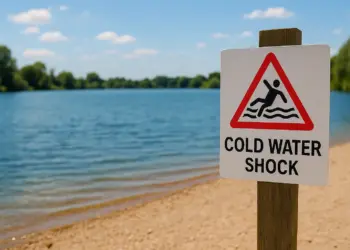
Ashley Jones, head of water safety and education at the Royal Life Saving Society UK (RLSS UK), expressed concerns about the dangers associated with entering open water during heatwaves. He warned that, despite higher air temperatures, water temperatures can lead to cold water shock—a perilous condition that can affect even experienced swimmers. Jones recommended choosing lifeguarded locations for any activities involving water, highlighting the vital role of safety measures in preventing accidents.
In addition, the British Red Cross has outlined essential safety tips for the summer months. Dafydd Beech, the national community education manager at the charity, emphasized the importance of taking precautions against dehydration, sunburn, and heat stroke during peak temperatures. He encouraged building good habits early on—such as wearing sunscreen, drinking sufficient fluids, and taking regular breaks from the sun—to better equip individuals for longer spells of heat.
As supporters gear up for the Championship play-off final and bask in the warm May weather, it becomes crucial to balance enjoyment of the outdoors with awareness of potential health risks. With the excitement of a significant match on the horizon, fans are reminded to stay safe and informed as they navigate both the warmth and the thrill of their team’s big day.
Our Thoughts
To mitigate risks associated with extreme heat, several key measures could have been emphasized in the context of UK health and safety legislation. The implementation of the Health and Safety at Work Act 1974 and the Management of Health and Safety at Work Regulations 1999 highlight the employer’s responsibility to ensure employee safety during adverse weather conditions.
In this situation, awareness campaigns could have been promoted ahead of the heatwave, particularly targeting vulnerable groups, to provide guidance on hydration, sun protection, and heat-related illness prevention to mitigate health risks. Additionally, infrastructure such as shaded areas and adequate cooling systems at venues could have been developed to protect fans.
The yellow heat-health alert indicates a breach of the duty of care owed by employers and event organizers to safeguard attendees from potential health issues. Similar incidents could be prevented by ensuring comprehensive risk assessments are conducted in accordance with the Control of Substances Hazardous to Health Regulations (COSHH) to account for environmental factors like extreme temperatures.
Ultimately, enhancing public awareness about the risks of heat exposure and providing necessary resources would align with best practices in health and safety management.