
















Story Highlight
– DWP to launch public consultation on workplace temperature.
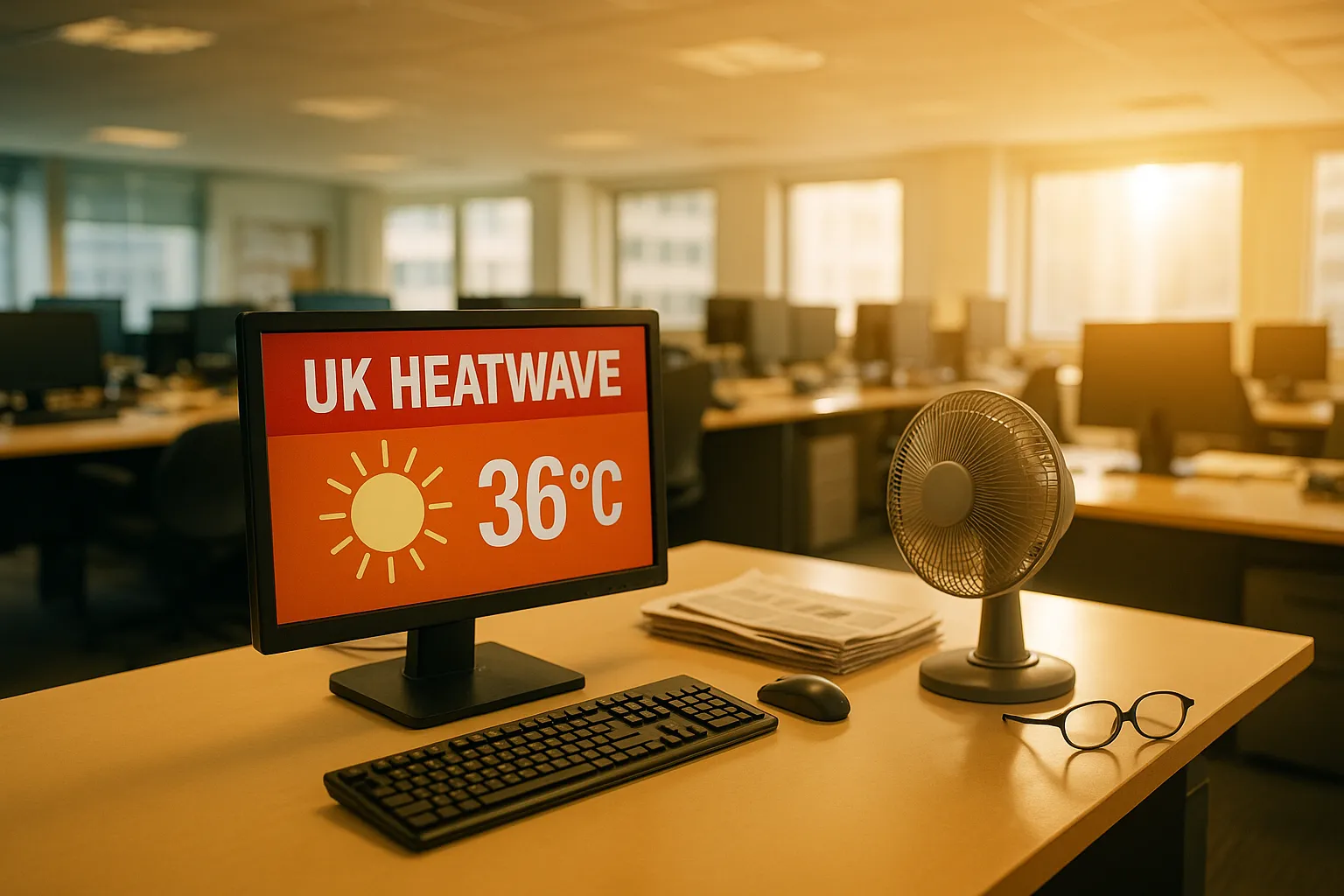
– UK experiences third heatwave of 2026, temperatures rising.
– No legal maximum workplace temperature currently in the UK.
– Employers must ensure health and safety during extreme heat.
– TUC proposes temperature limits for worker safety adjustments.
Full Story
The Department for Work and Pensions (DWP) has announced plans to initiate a public consultation regarding workplace temperature guidelines, coinciding with a significant heatwave affecting the UK. This heatwave marks the third of 2026, with predictions suggesting that temperatures could reach up to 36 degrees Celsius this week. The UK Health Security Agency (UKHSA) has issued yellow and amber heat-health alerts, highlighting the potential health challenges posed by these extreme conditions, applicable throughout England until Saturday evening.
As soaring temperatures become more commonplace, concerns are growing around workplace conditions, especially as there is currently no legally mandated maximum temperature for workplaces in the UK. The Health and Safety Executive (HSE) notes that while there is no established upper limit for working temperatures, employers are still legally required to protect the health and safety of their employees. This responsibility remains crucial, particularly during periods of excessive heat.
The forthcoming public consultation, as confirmed by the DWP, aims to review current practices surrounding workplace temperatures. The announcement follows a parliamentary inquiry from Alex Mayer, the Labour MP representing Dunstable and Leighton Buzzard, who sought clarity on the government’s assessment of heatwave impacts on workers, especially in outdoor and high-temperature job roles. Sir Stephen Timms, the Minister for Social Security and Disability, responded by affirming the DWP’s commitment to reviewing existing regulations and practices.
The Labour MP for East Ham, Sir Stephen Timms, remarked on the importance of the HSE as the national regulator for workplace health and safety, emphasising that employers have a legal obligation to evaluate the risks posed to workers by extreme heat conditions. On June 19, HSE had issued a press release aimed at raising awareness about the health dangers faced by workers during periods of extreme weather, reiterating the importance of guidance for managing the risks associated with high temperatures.
In June, a House of Commons research briefing highlighted the government’s recognition of “regularly unacceptably high” temperatures in various sectors, prompting a commitment to update health and safety regulations concerning temperature extremes. The Trades Union Congress (TUC) has voiced the need for HSE to reassess and update its guidance. They suggest that employers should take action to mitigate temperatures exceeding 24 degrees Celsius if employees express discomfort. The TUC additionally proposed that workers should have the right to halt work when temperatures reach 30 degrees Celsius, or 27 degrees Celsius for those engaged in physically demanding tasks.
The question of maximum workplace temperature has been part of broader discussions in recent years, with a notable debate in the House of Lords in June of the previous year. During this exchange, while the government representative, Baroness Anderson, did not commit to requesting the HSE to set a maximum workplace temperature, she stated that employers are required to ensure a “reasonable indoor temperature” for their staff.
In light of ongoing heat conditions, the Met Office has provided updates suggesting a gradual decrease in temperatures across southeastern England over the weekend. However, a prolonged period of warm weather is expected to persist. Deputy Chief Forecaster Tom Crabtree explained that while cooling is anticipated, it will not signify an abrupt end to warm conditions. High atmospheric pressure is predicted to remain influential next week, shifting northwards while establishing an easterly wind in the south—a move that will shift the hottest weather conditions toward the southwestern regions of the UK.
Mr. Crabtree highlighted the evolving nature of current weather patterns, confirming that areas previously experiencing high temperatures are likely to begin cooling. Nevertheless, it will still be uncomfortably warm, particularly in the southwest, where heatwave criteria may still be met. Looking ahead, the forecast indicates continued dry and warm conditions across many regions, albeit with the possibility of thunderstorms impacting parts of the south and southwest.
This announcement from the DWP arrives at a critical time when employees are coping with the challenges posed by soaring temperatures. As the government prepares to engage with the public on the matter of workplace temperature regulations, many will be keenly anticipating the outcomes of this consultation and its potential implications for worker safety and health in the face of increasingly frequent extreme weather events.
Implementing effective temperature guidelines not only serves to uphold the well-being of employees but also reflects a progressive step towards modernising health and safety practices to meet the demands of a changing climate. The dialogue initiated by this consultation could lead to significant changes in workplace regulations, ensuring that employee welfare remains a priority amid rising temperatures. As the DWP prepares to gather public input, it underscores the need for a balanced approach, considering both economic impacts and the health of the workforce in the face of environmental challenges.
Our Thoughts
The article discusses the UK’s response to extreme heat in workplaces during ongoing heatwaves in 2026. Currently, UK law does not stipulate a maximum workplace temperature, which could lead to inadequate responses by employers to ensure worker safety. Employers must comply with the Health and Safety at Work Act 1974 and the Management of Health and Safety at Work Regulations 1999, which require risk assessments and preventive measures for employee health.
To avoid heat-related incidents, employers should proactively assess heat risks, implement measures to reduce temperatures, and allow workers to rest or stop work under extreme conditions. The TUC’s proposal for action at certain temperature thresholds should be considered to formalize guidelines and expectations.
Relevant regulations that may be breached include the HSE’s guidelines for maintaining a reasonable indoor temperature and ensuring worker well-being. The consultation on the “Approved Practice for the Workplace” could lead to necessary legislative updates, ensuring a more robust framework that better protects employees during heatwaves. Similar incidents could be prevented through timely assessments, effective heat management strategies, and clear policies on maximum temperature limits in the workplace.