













Story Highlight
– U.K. proposes midnight social media curfew for older teens.
– Infinite scrolling and autoplay features to be disabled.
– Trial showed improved health and well-being among teens.
– Overnight curfew favored for balancing health and social needs.
– Tech giants face scrutiny over child protection measures.
Full Story
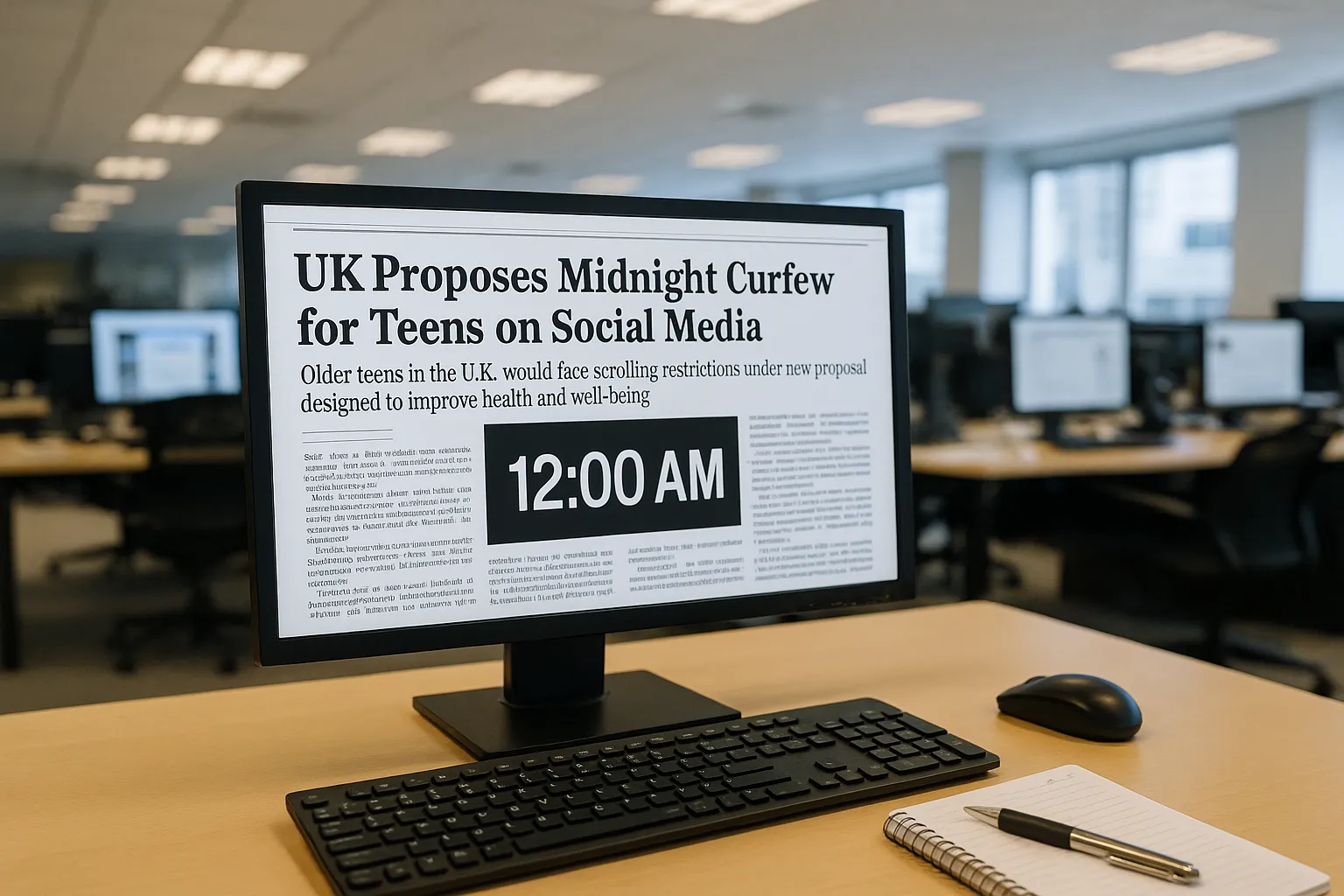
New measures intended to improve the online safety of older teenagers in the UK are set to introduce a midnight curfew for social media use and restrictions on features designed to promote endless scrolling. These proposals, announced by the UK government, follow the results of a trial that highlighted the potential health benefits of curbing social media use among this demographic.
The government’s plan focuses on teenagers aged 16 and 17, who will be subject to a default prohibition on accessing social media from midnight to 12 a.m. Furthermore, features that encourage prolonged app usage, such as infinite scrolling and autoplay, will be automatically disabled, although users will retain the option to re-enable these settings if they choose. The implementation of these measures is anticipated by Spring 2027.
The impetus for these changes stems from findings of an extensive social media restriction trial involving over 300 teenagers and their parents across the UK. Conducted over a month, the study examined various interventions aimed at reducing social media usage. Participants experienced different conditions, which included restrictions limiting app use to just 15 minutes daily, a nightly curfew from 9 p.m. to 7 a.m., and the complete removal of specific social media applications from their devices.
Outcomes from the trial indicated numerous psychological benefits for the teenagers involved. Participants reported enhancements in their overall mood, decreased levels of stress, and an increase in energy during the day. However, they also expressed concerns about the influence of social media on their social lives, highlighting a “social and emotional trade-off.” Although social media was recognised as crucial for connectivity with peers, the overnight curfew emerged as the preferred intervention option; it appeared to adeptly balance health advantages with social interaction needs.
In a broader context, this initiative aligns with recent moves from the UK government to tighten regulations on social media access for younger users. This past June, former Prime Minister Keir Starmer announced a comprehensive ban on social media for those under 16 years of age. This initiative followed Australia’s pioneering step in December 2022, marking it as the first nation to impose such restrictions. The proposed UK ban covers prominent platforms, including Snapchat, TikTok, Instagram, Facebook, YouTube, and X, reinforcing the government’s commitment to safeguarding children online.
Globally, tech companies are under increasing pressure as various governments examine ways to enhance child safety on social media platforms. European Union (EU) Commission President Ursula von der Leyen suggested on Monday that the EU will pursue age restrictions on social media to mitigate youth engagement, highlighting a wider push towards protective measures.
Responding to these growing concerns, Ali Law, TikTok’s Director of Public Policy and Government Affairs for Northern Europe, defended the platform’s features designed for younger users. In a recent interview with CNBC, he emphasised that TikTok incorporates numerous safety protocols aimed specifically at children under 16. These include a one-hour daily screen limit and reminders that encourage users to take breaks, particularly at 10 p.m.
“These default options provide gentle nudges to help young users maintain a balanced and healthy interaction with our app,” Law explained, adding that ensuring users have a positive experience is crucial for TikTok’s interests. He remarked, “If people are exceeding their healthy usage levels and feeling burnt out, they will not be able to derive value from the platform.”
As discussions continue around the viability of imposing social media bans or restrictions for younger users, experts warn that such measures could be a simplistic solution to a complex issue. While these initiatives may contribute to improved wellbeing for some, analysts argue that they should not overlook the multifaceted realities of teenagers’ lives, including the integral role social media plays in fostering friendships and community ties.
In this context, any proposed changes must be carefully evaluated to ensure they address the underlying challenges without inadvertently isolating young users from vital social interactions. The notion of social media as a primary means of connection underscores the delicate balance that policy-makers must navigate in their efforts to protect young people.
As the government prepares to roll out these new regulations and technology companies evolve their safety practices in response, the ongoing discourse surrounding online safety for teenagers remains as relevant as ever. Ultimately, moving forward will require collaboration among all stakeholders—including governments, parents, and tech companies—to forge realistic and effective solutions that safeguard the wellbeing of young social media users.
Our Thoughts
The proposed measures in the article highlight the need for greater accountability among tech companies regarding the health and safety of users, particularly adolescents. Key lessons include the importance of implementing robust safety features that mitigate addictive behaviors, such as setting defaults for usage curfews and limiting infinite scrolling.
Relevant UK regulations that could have been breached include the Health and Safety at Work Act 1974, which mandates that employers (including tech companies) ensure the safety and wellbeing of their users. Additionally, the Children Act 1989 emphasizes the welfare of children, suggesting that tech giants should proactively protect young users from potential harm caused by excessive screen time.
To prevent similar incidents, tech companies could adopt a precautionary principle, conducting thorough impact assessments on their features before release. This would align with the objectives of the UK’s Online Safety Bill, aimed at protecting users from harmful content and fostering a safer online environment. Ongoing collaboration with health professionals and the implementation of stricter regulations are also essential to enhance safety measures for social media platforms targeting adolescents.