















Story Highlight
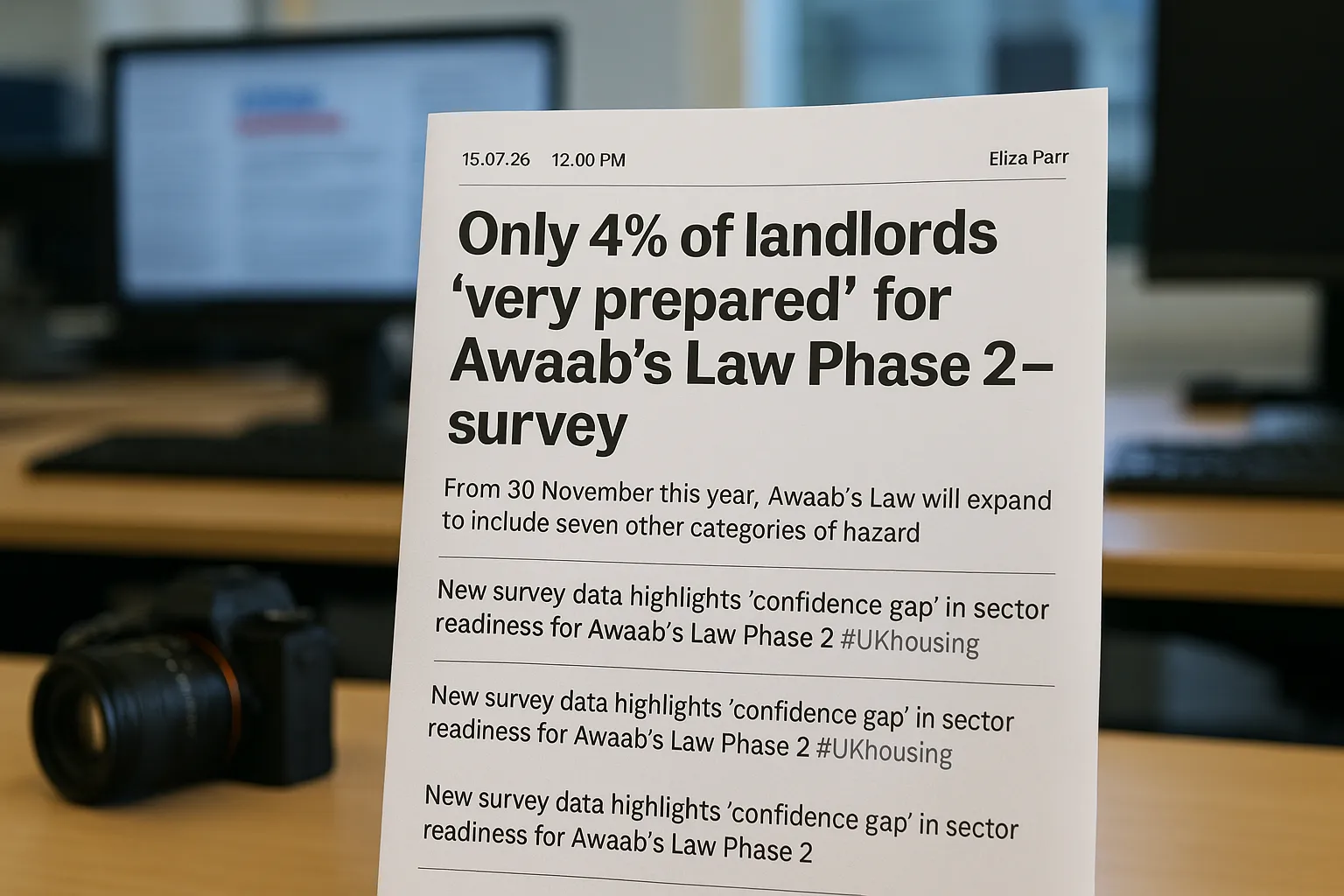
– Only 4% of landlords feel “very prepared” for Phase 2.
– Awaab’s Law expands on 30 November to include more hazards.
– 82% of landlords resolve 90% of emergency hazards promptly.
– 57% report effective IT systems for Awaab’s Law data.
– Final phase of Awaab’s Law expected in 2027.
Full Story
A recent survey has revealed that only a small fraction of social landlords feel fully equipped to meet the upcoming requirements of Awaab’s Law Phase 2, set to take effect on 30 November of this year. Conducted by Housemark in May, the findings suggest a pressing need for increased preparedness within the housing sector, as only 4% of respondents characterised themselves as “very prepared” for the expanded regulations.
The initial phase of Awaab’s Law, which mandates that landlords address emergency hazards within a strict 24-hour timeframe, was implemented in October 2022. As of late November 2023, the law will broaden its scope to encompass seven additional categories of hazards, including risks related to excess cold, excess heat, fire, and electrical issues. Despite such substantial changes, the survey indicates that a significant proportion of landlords—over 25%—are presently “unprepared to some degree” for these enhanced requirements.
These observations by Housemark underline what they describe as a “confidence gap in sector readiness”. The survey also highlighted that while 80% of landlords affirm they have made necessary investments in the necessary skills and resources to effectively implement the requirements of the law, only 57% believe their information technology systems are capable of adequately collecting and reporting data as required by Awaab’s Law.
In terms of response efficiency, the data presents a somewhat optimistic view, with 82% of social landlords managing to resolve over 90% of emergency hazards within the designated timeframe of 24 hours as of May. Additionally, 70% of landlords stated they were able to investigate more than 90% of significant damp and mould cases within ten working days.
Jonathan Cox, Chief Data Officer at Housemark, commented on the findings, stating, “Landlords are taking the requirements of Awaab’s Law seriously, with many investing in the skills and capacity needed to strengthen their response to housing hazards.” However, he expressed concern about the overall confidence in preparedness for Phase 2, noting, “Many organisations are still working through what wider compliance will mean in practice and whether they have the systems and reporting capabilities needed to demonstrate compliance consistently.”
Cox emphasised the urgency of action, urging housing providers to review their operational processes and to ensure they are adequately prepared for the broader array of hazards that the new regulations will necessitate managing.
In light of these findings, a new set of guidelines has been published to assist social landlords in their preparations for the expanded regulations. This guidance stresses the importance of prioritising tenant vulnerability when assessing whether a situation should be classified as an emergency. For instance, scenarios involving young children with respiratory issues or pregnant individuals living in mould-infested conditions should be considered critical.
The upcoming Phase 3 of Awaab’s Law is scheduled for implementation in 2027, which will extend the regulations to encompass all remaining hazards identified within the Housing Health and Safety Rating System, with the exception of overcrowding.
In connection with the pressing issues facing the housing sector, the HOMES UK 2026 event will take place on 24-25 November at Excel London. This gathering aims to connect key stakeholders involved in the delivery and management of housing across the UK. Attendees can explore various topics from planning and development to building safety, asset management, and maintenance, with the goal of creating safer, more sustainable housing solutions that improve outcomes for communities and residents.
With increased awareness of housing hazards and legislative changes, it is imperative for social landlords to enhance their readiness and responsiveness. As Awaab’s Law continues to evolve, the focus on tenant safety and well-being remains paramount in the housing sector. As the deadline approaches for the implementation of Phase 2, it will be crucial for landlords to actively engage in necessary preparations and adapt to the new requirements to ensure compliance and, ultimately, the safety of their tenants.
Our Thoughts
To avoid the identified gaps in readiness for Awaab’s Law Phase 2, social landlords must prioritize comprehensive training and development of their staff to enhance their understanding of hazard identification and management. Key safety lessons include the importance of investing in reliable IT systems for effective data collection and reporting, essential for compliance with regulations under the Housing Health and Safety Rating System (HHSRS).
The survey indicates a lack of preparedness, with only 4% of landlords feeling “very prepared.” This suggests a breach of the Health and Safety at Work Act 1974, which requires employers to ensure the health, safety, and welfare of employees and others affected by their activities. Inadequate management of hazards like damp and mould could contribute to serious health issues, particularly for vulnerable residents.
To prevent similar incidents, landlords should conduct regular reviews of their processes, implement robust IT solutions for hazard tracking, and prioritize communication with residents about their rights and the status of reported hazards. Ensuring a culture of proactive health and safety management is crucial for compliance and resident safety, particularly as regulations evolve.