









Story Highlight
– Drivers advised to avoid roads during Wednesday evening eclipse.
– Experts warn of dangerous driving conditions from distraction.
– Significant solar coverage to occur, first in 25 years.
– Drivers could slow down, risking tail-end collisions.
– Penalties for using phones while driving during eclipse.
Full Story
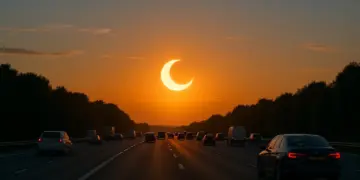
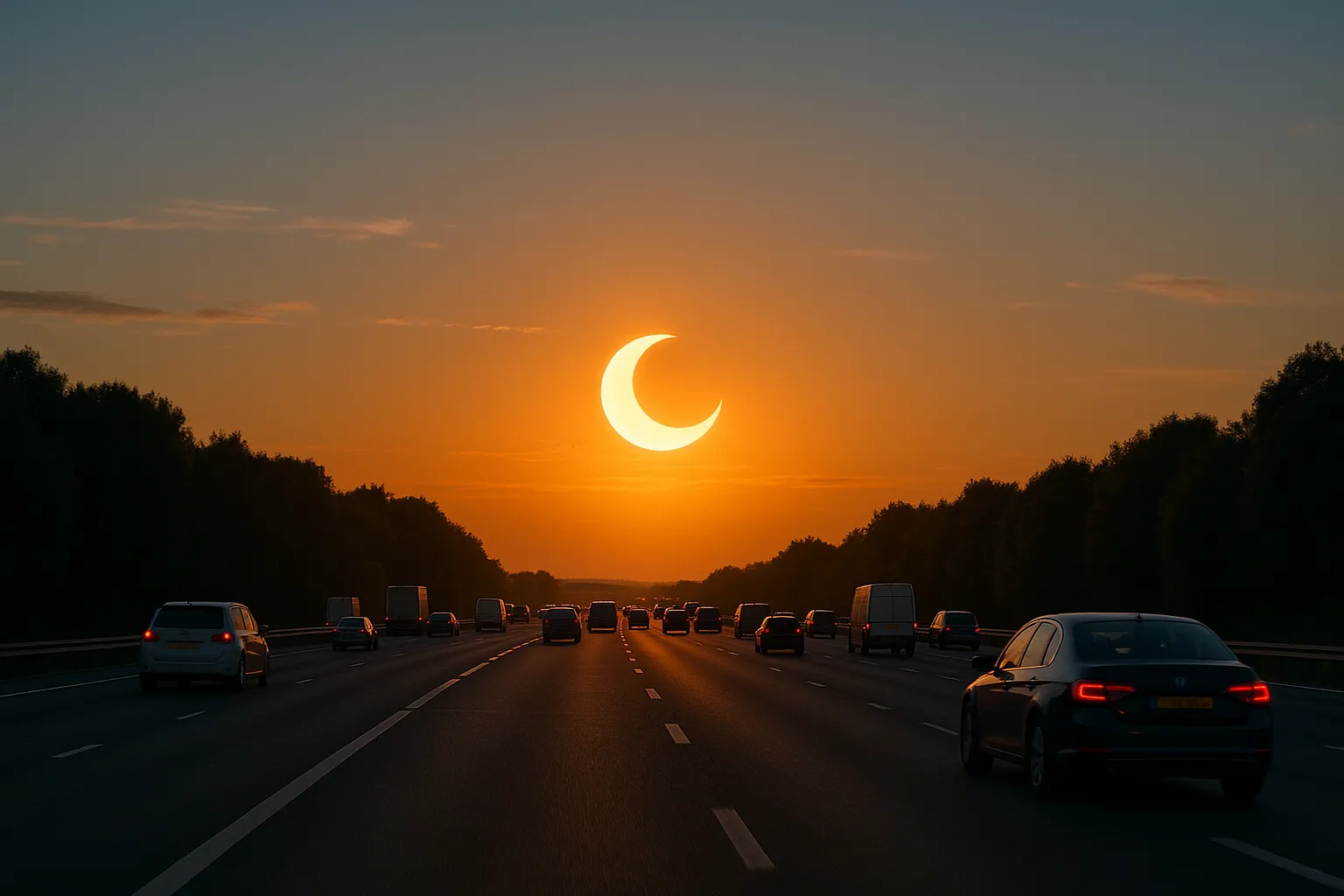
Motorists across the UK are being warned to stay off the roads during the evening of Wednesday, as a partial solar eclipse is expected to create potentially hazardous driving conditions. Road safety experts are urging drivers to reconsider their travel plans and avoid major highways during the midweek rush hour when the eclipse occurs.
The UK is poised to experience a significant celestial event, the first of its kind in over 25 years, as indicated by officials from the Royal Museums Greenwich. This partial solar eclipse will see the moon partially obscure the sun, creating unusual twilight conditions that can pose serious risks to drivers.
In light of these warnings, GEM Motoring Assist, a road safety charity, has issued a stark reminder to motorists. They advise against attempting to view the eclipse, emphasizing the dangers of using eclipse glasses or any digital device, like phones and cameras, while behind the wheel. “It takes only a second of distraction for a routine journey to become a tragedy,” the charity stated, highlighting the serious implications of even brief inattention.
The UK Health Security Agency has also issued guidance regarding the eclipse, noting that the sudden darkening of skies can greatly affect human perception, impairing spatial awareness and depth judgment on fast-moving roads. As the eclipse approaches, drivers could be tempted to glance upwards, increasing the likelihood of mishaps on busy thoroughfares.
Additionally, the Met Office has reported that conditions will be generally clear across much of England and Wales on that evening, enhancing the chance that commuters might look skyward. This could lead to a slowdown in traffic as drivers take caution, yet experts from the RAC warn that such slowdowns during astronomical events often result in sudden braking, raising the risk of rear-end collisions in congested motorway conditions.
Meanwhile, the AA has pointed out that some drivers may be tempted to pull off onto hard shoulders to catch a view of the eclipse. This behaviour not only poses risks to traffic flow but could potentially hinder emergency services responding to incidents, especially during peak hours on the roads.
National Highways officials have advised that motorists plan their journeys around the eclipse, suggesting that essential travel should be completed well before the event begins. They also recommended parking safely in designated service areas in advance to avoid unnecessary risks.
The Department for Transport has reiterated its stance on driver distractions, warning that those who choose to film the eclipse while driving could face significant penalties, including hefty fines and points on their driving licences. The implications of such behaviour could lead to serious legal repercussions, underscoring the importance of remaining focused while driving.
As this rare astronomical event draws near, authorities are hopeful that drivers will heed the warnings and make adjustments to their travel plans to ensure safety. The unprecedented nature of the eclipse, coupled with the heightened risks it poses on the roads, has prompted these nationwide advisory measures.
Experts emphasize that preparation for the eclipse must not overshadow the need for road safety. Prioritising safe driving, particularly during such a unique event, is crucial. The unexpected alteration in daylight can surprise drivers, leading to potentially dangerous situations if they are not adequately prepared.
Thus, as millions of road users across the UK debate their travel plans, the overarching message is clear: safety must come first. The extraordinary nature of the solar eclipse is undoubtedly intriguing, but it is essential that this curiosity does not lead to perilous driving behaviours that could have severe consequences.
Reflecting on these considerations, the call for drivers is to prioritise road safety over momentary fascination with the sky. In doing so, motorists will contribute to maintaining order on the roads while enjoying this spectacular natural phenomenon as spectators rather than participants behind the wheel.
Our Thoughts
To avoid the hazards associated with the solar eclipse, several proactive measures could have been implemented. Firstly, the UK government could have issued a formal advisory for all road users about the potential dangers of driving during the eclipse. This could include specific guidance on avoiding travel during the peak hours of the event, especially during rush hour.
Additionally, greater public awareness campaigns could have been conducted in advance to educate drivers about the risks of distraction, particularly with regard to looking at the eclipse or using mobile devices. The Charity GEM Motoring Assist’s advice should have been widely publicized in media and transport networks to ensure compliance and promote safe driving practices.
Relevant regulations breached include the Health and Safety at Work Act 1974, which mandates ensuring the safety of employees and the public. If distractions lead to accidents, it could indicate failures in risk management processes. To prevent similar incidents in the future, traffic management strategies during significant celestial events could be put in place, such as temporary traffic lights or road closures, and increased presence of traffic law enforcement to deter dangerous behaviors on the roads.