





Story Highlight
– Government advises safe viewing methods for solar eclipse.
– Partial solar eclipse visible across the UK on 12 August.
– South West will see up to 95% sun coverage.
– Experts warn against using ordinary sunglasses for viewing.
– Royal Observatory will livestream the eclipse for viewers.
Full Story
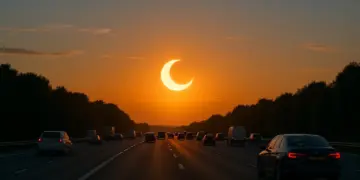
Britons have been advised to take precautionary measures when witnessing the partial solar eclipse slated for today, 12 August, to avoid risking serious eye damage. As the moon moves directly between the Earth and the sun, the eclipse will significantly obscure sunlight, marking it as the most substantial eclipse to grace the UK since the notable event of 1999.
Royal Museums Greenwich, which oversees the Royal Observatory, has highlighted that citizens in the South West of England will experience the highest level of obscuration, with approximately 95 per cent of the sun’s surface covered. In contrast, those situated in London can expect about 90 per cent coverage.
In light of the potential hazards, the UK Health Security Agency (UKHSA) has issued vital safety guidelines. They caution that without proper eye protection, irreversible damage to the eyes can occur in mere seconds. The agency’s recommendations emphasize that traditional methods of viewing, such as using ordinary sunglasses, fall short of providing the necessary protection.
Experts underscore the importance of using specialised eclipse glasses or methods like a pinhole projector to witness the event safely. According to UKHSA, “During an eclipse, the sun appears dimmer than usual. This makes it easier to look at directly – and that’s precisely the problem.” The organisation warns that the diminished brightness can inhibit the body’s instinct to avert the gaze from the sun, thus permitting intensive sunlight to penetrate and injure the retina. Alarmingly, such damage may occur without any immediate discomfort, which can leave viewers oblivious to the harm until too late.
Historical data following the 1999 solar eclipse revealed about 70 documented cases of vision impairment due to improper viewing. Notably, nearly 40 per cent of those affected had only glanced at the sun for less than a minute, highlighting the rapid risk posed by unprotected viewing.
To ensure safety during this phenomenon, the UKHSA advises individuals to either purchase or borrow eclipse glasses specifically designed to filter out harmful solar radiation. These specialized glasses should bear the safety mark ‘ISO 12312-2’ or ‘ISO 12312-2:2015’ as proof of their efficacy. Caution is urged, particularly for those considering reusing old eclipse glasses; the Royal Museums Greenwich warns that outdated or damaged glasses—especially if they show signs of wear like creases or scratches—may compromise eye safety.
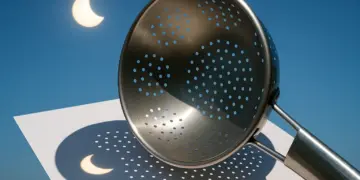
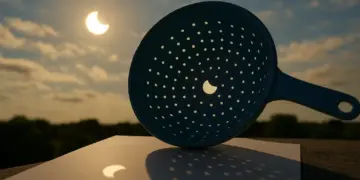
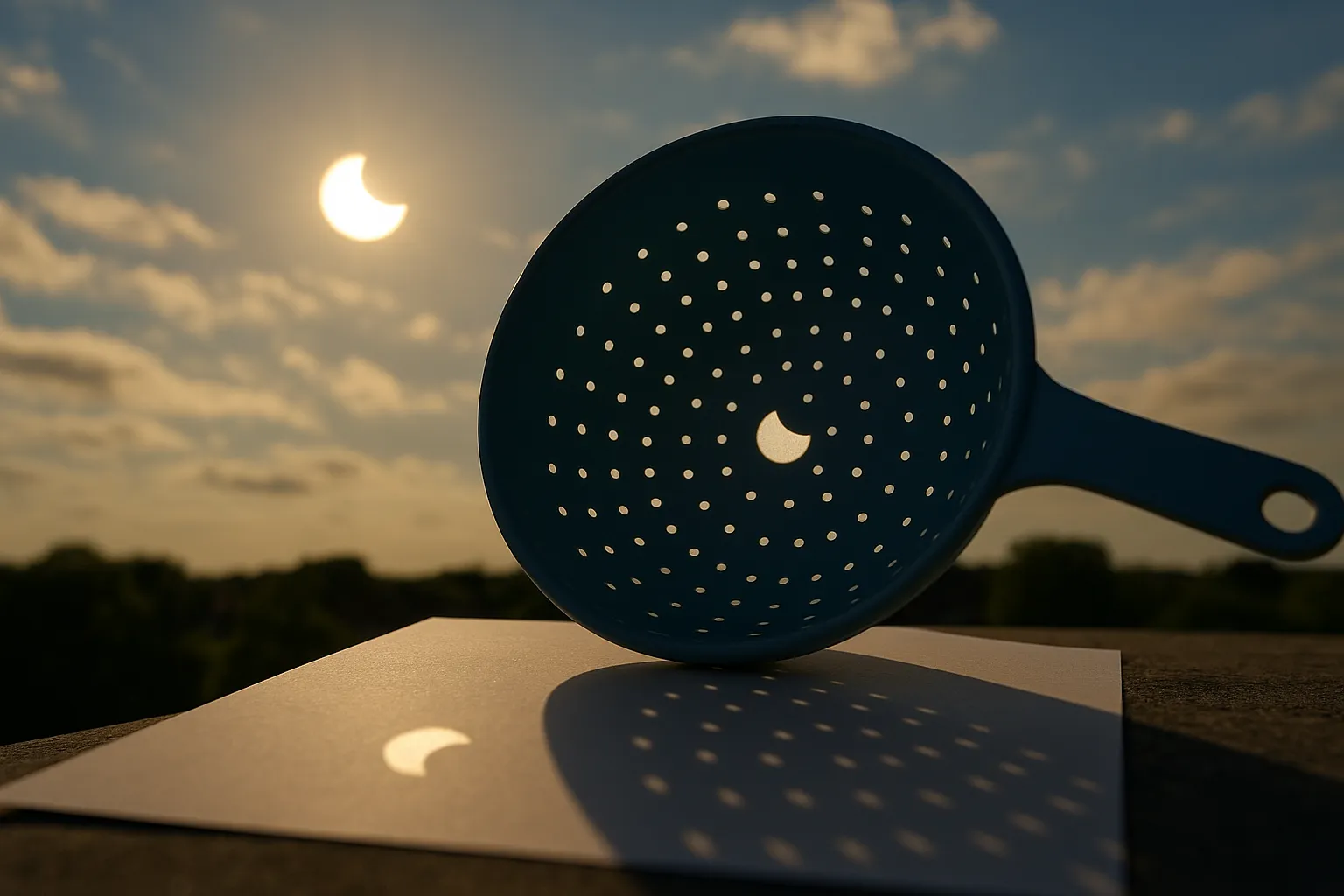
For those unable to obtain eclipse glasses, there are alternative viewing methods endorsed by the UKHSA. A pinhole projector is a safe way to observe the eclipse, allowing individuals to project an image of the sun onto a flat surface, such as paper. Another practical approach involves using a colander or strainer to observe the shadows cast on the ground. The small apertures in the colander create natural pinhole projections, providing a unique yet safe viewing experience.
In preparation for the event, the Royal Observatory will provide a livestream of the solar eclipse, ensuring that those unable to witness it in person can still engage with this celestial occurrence. The eclipse will first be visible in Scotland as the moon begins to obscure the sun at 6.08pm, marking the moment known as ‘first contact’. This phenomenon will then spread across the UK, with ‘first contact’ occurring at 6.13pm in both Manchester and Liverpool, and at 6.17pm in London, Bristol, and Cardiff. Cornwall will see the initial coverage at 6.18pm.
The apex of the eclipse is set to occur between 7.05pm and 7.16pm, varying slightly based on geographical location. All viewers across the UK can expect the eclipse to conclude by 8.10pm.
As anticipation builds for this remarkable astronomical event, it is imperative for observers to adhere to safety recommendations to ensure a pleasurable and, most importantly, safe experience. By preparing with the right equipment and knowledge, Britons can enjoy this rare natural occurrence while safeguarding their vision.
Our Thoughts
The article highlights a critical safety issue related to viewing solar eclipses, illustrating a potential breach of the Health and Safety at Work Act 1974, which mandates that risks to health must be managed effectively. To avoid future eye damage incidents during solar eclipses, clearer public guidance could have been provided, emphasizing the importance of ISO-certified eclipse viewing glasses or safe viewing techniques like pinhole projectors.
Lessons learned include the need for enhanced public education on the risks associated with viewing solar eclipses and the inadequacies of commonly held beliefs about ordinary sunglasses. Encouraging the use of appropriate certified equipment prior to such events can significantly reduce risks.
Preventative measures might involve regulatory oversight to ensure that vendors of eclipse viewing glasses meet safety standards and conducting public safety campaigns ahead of astronomical events. Establishing a systematic approach to inform the public through educational programs and safety alerts can ensure that past mistakes are not repeated and that attendees are fully aware of the potential hazards involved in viewing celestial phenomena.