

















Story Highlight
– Company fined £72,000 for health and safety violations.
– Worker John Duncan crushed by 2.6-tonne stone saw.
– Incident occurred during dismantling at Tradstocks yard.
– Saw toppled due to inadequate prop and securing.
– Company admitted breaches led to Duncan’s fatal injury.
Full Story
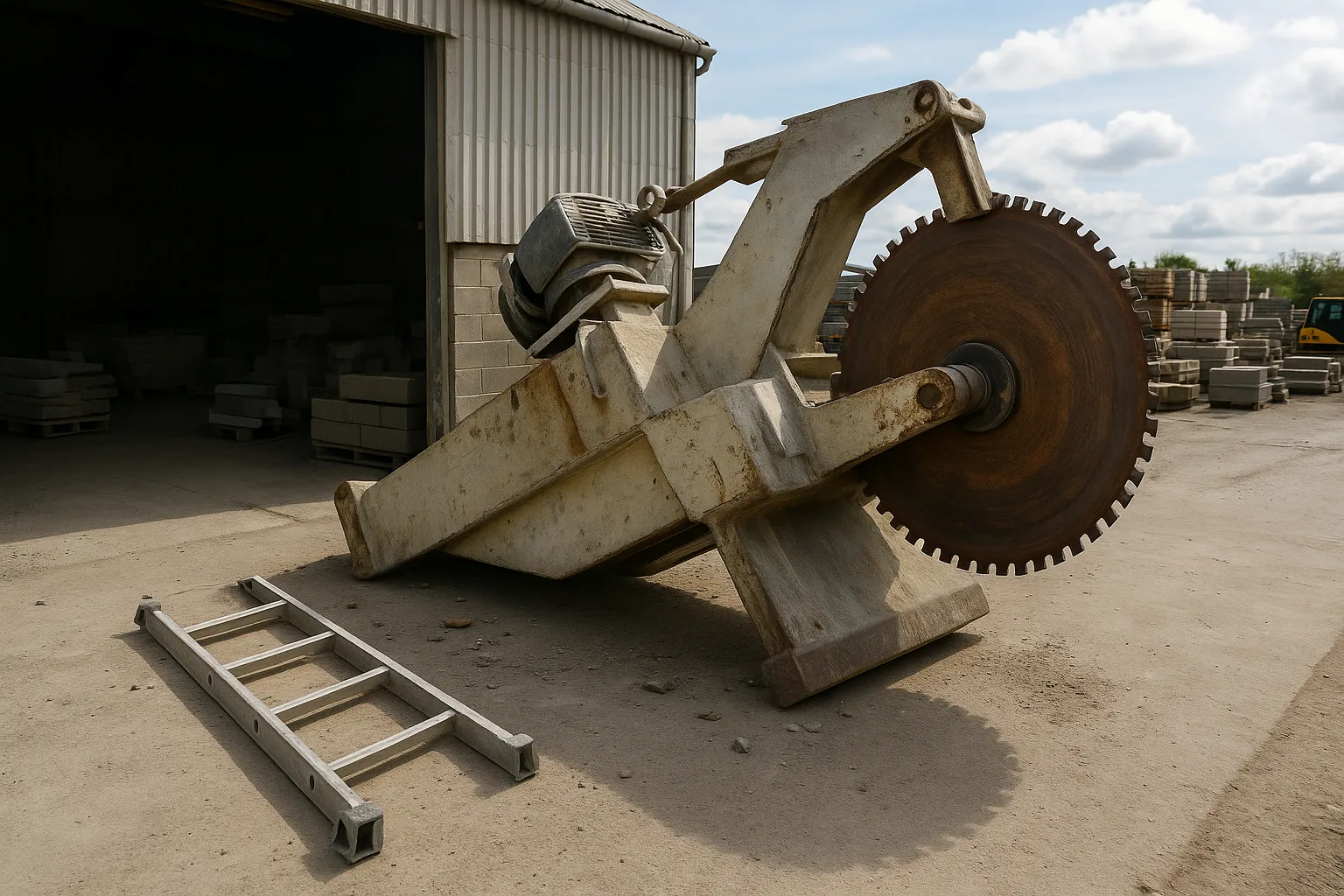
A West Lothian company has been fined £72,000 following serious health and safety violations linked to the tragic death of a maintenance engineer. John Duncan, 39, was fatally injured when a 2.6-tonne stone saw he was dismantling fell over at Tradstocks’ facility in West Calder. At the time of the incident, Mr Duncan was working alone.
Tradstocks, a prominent supplier of natural stone for various construction and landscaping needs across the UK, entered a guilty plea at Livingston Sheriff Court, acknowledging their part in exposing their employees to significant safety risks. The court heard that the breaches in health and safety regulations directly contributed to Mr Duncan’s fatal injury, which he sustained through “traumatic asphyxia” when the saw toppled.
On the day prior to the fatal incident, Mr Duncan and his father had worked together to lower the large saw from its steel frame. Unfortunately, Mr Duncan returned to the area alone the next day to finish the dismantling process. Depute Fiscal Gail Adair provided crucial details in her address to the court, pointing out that the machine’s design made it particularly unstable: “The machine was top-heavy and was not adequately propped up and secured and, because the saw had a high centre of gravity, it was not very stable.”
The court heard that discussions regarding the disassembly of the saw had reportedly occurred between Mr Duncan and a director of Tradstocks, nonetheless, it seemed the father and son had not received the guidance necessary for such a complex task. Kevin Duguid, representing the company, noted that Mr Duncan and his father possessed a collective experience of 60 years in the field, yet they were left without oversight while handling what proved to be a potentially dangerous operation.
Further compounding the circumstances of the tragedy, a broken ladder was discovered near where Mr Duncan’s body was found. Duguid mentioned that it was uncertain whether the ladder was meant for the task at hand, stating that “It’s unclear as to the use or intended use of the ladder at the side of the body.” He proposed the possibility that Mr Duncan could have used it to reach a height necessary to loosen a shackle used with a crane, although he stressed that this action did not pertain to the job he was responsible for.
Throughout the court proceedings, the defence underscored that Tradstocks had maintained an otherwise unblemished safety record prior to this incident and had actively engaged with the subsequent investigations. The case has highlighted the critical importance of rigorous health and safety protocols in the workplace, particularly in environments where heavy machinery is operated and risks are inherently higher.
The tragedy has not only impacted the Duncan family, who are mourning the loss of a beloved son, but it has also raised awareness about the overarching responsibilities of employers in ensuring the safety and well-being of their staff. The Health and Safety Executive (HSE), which oversees workplace safety in the UK, has advocated for continual improvements in safety standards within the construction and manufacturing sectors. It is paramount that companies recognise their duty to provide adequate training, resources, and oversight to prevent such devastating incidents from occurring in the future.
Experts in occupational health and safety have emphasised that complacency around established safety protocols can lead to catastrophic outcomes, as demonstrated in this case. With increasing calls from the public and advocacy groups for stricter enforcement of safety regulations, this case serves as a reminder of the essential need for a proactive approach to health and safety.
Moving forward, it is crucial for businesses to reassess their safety practices and ensure that all employees, regardless of their experience level, feel supported and secure while handling dangerous equipment. Regular safety training sessions, maintenance checks on equipment, and a culture that encourages open communication about safety concerns are pivotal steps in safeguarding the workforce.
The tragic death of John Duncan has sparked discussions on workplace safety standards throughout Scotland and beyond, highlighting the necessity for companies to evaluate their operational procedures continually. As the industry reflects on this case, it is hoped that both regulatory bodies and businesses will take the opportunity to enhance safety measures, thus preventing further tragedies in the workplace.
Tradstocks’ case illustrates the highest importance of accountability in the workplace, as well as the need for comprehensive safety management systems that include clear guidance and support for employees engaged in potentially hazardous tasks. The outcome of this case reinforces the message that health and safety cannot be compromised and must remain a priority for all employers in the industry.
Our Thoughts
The tragic incident involving the death of John Duncan highlights significant health and safety failings under UK legislation. Key lessons to be learned include the necessity of effective risk assessments in complex tasks and ensuring proper safety procedures are adhered to, particularly when dealing with heavy machinery. Specifically, the Health and Safety at Work Act 1974 mandates that employers must ensure so far as is reasonably practicable the health and safety of their workers.
Tradstocks failed to provide adequate training and supervision for disassembling the stone saw, which resulted in the engineer working alone without proper support or safety measures in place. The lack of appropriate propping and securing of the saw, given its high centre of gravity, constitutes a breach of Regulation 11 of the Lifting Operations and Lifting Equipment Regulations 1998 (LOLER), which requires that lifting equipment is used safely and adequately maintained.
To prevent similar incidents, companies should implement stringent safety protocols that include detailed procedures for dismantling heavy equipment, mandatory team operations during high-risk tasks, and continuous training for all personnel involved in maintenance work. Regular safety audits and immediate repairs of any defective equipment, such as the mentioned broken ladder, are also essential.