












Story Highlight
– Chris Keegan died tragically while operating a forklift.
– Hessle Plant Ltd fined £433,550 for safety violations.
– Investigation revealed forklift defects and lack of inspections.
– Many employees rarely wore seatbelts while operating forklifts.
– HSE emphasizes importance of equipment maintenance and seatbelt use.
Full Story
A tragic incident involving the death of a delivery driver has led to a significant financial penalty for a West Yorkshire company, revealing grave lapses in workplace safety protocols. Chris Keegan, who was employed by Hessle Plant Ltd, lost his life in an accident while handling a forklift on November 20, 2023. The details surrounding this incident were presented in a recent session at Leeds Magistrates’ Court.
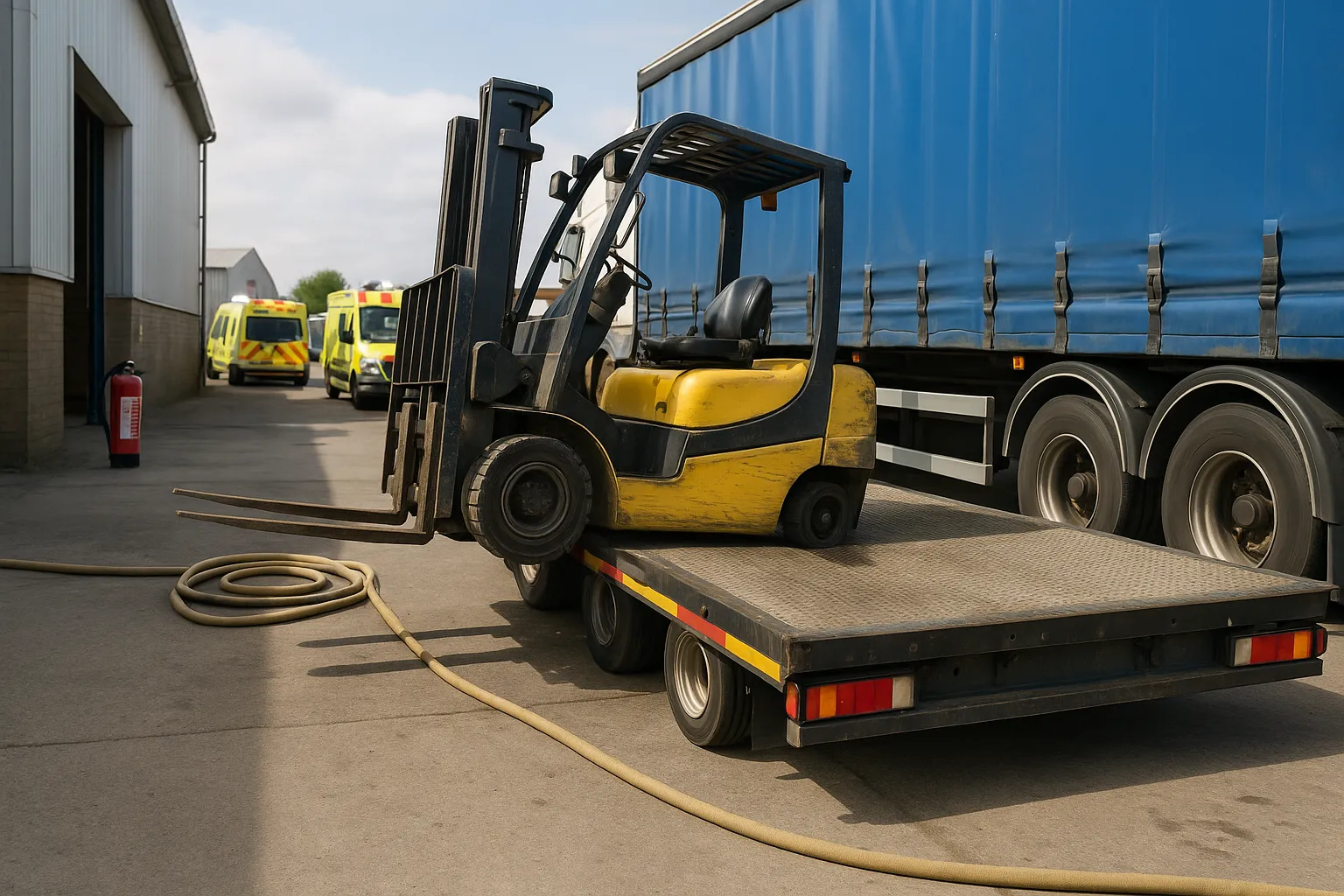
According to the Health and Safety Executive (HSE), Keegan was undertaking a routine task of returning a forklift truck to a customer site in Sheffield after it had undergone transmission repairs. While reversing the vehicle onto the trailer shortly after 6am, the forklift tragically toppled off the edge of the trailer bed. Keegan was thrown from his seat and became wedged between the forklift’s chassis and a nearby trailer.
Emergency services arrived swiftly, but despite their efforts, Keegan was pronounced dead at the site. His widow, Dianne, expressed her deep sorrow and disbelief over the incident, stating, “Chris was a wonderful, kind and generous man, who would do anything he could for anyone. He especially did anything he could for me. My heart is broken, and I will never get over losing my husband in such a horrific way. He never deserved to die in such tragic circumstances.”
An investigation by the HSE following the incident revealed that the forklift had not undergone a comprehensive safety inspection prior to its operation. A physical examination of the machine post-accident uncovered multiple defects that should have been identified and corrected beforehand.
The findings indicated that although Hessle Plant Ltd conducted thorough pre-delivery inspections for new customer deliveries, there was no similar protocol in place for equipment being returned to existing customers. This inconsistency in safety checks raised concerns about the company’s overall adherence to health and safety regulations.
Additionally, the HSE noted a worrying trend in the workplace: a significant proportion of employees at Hessle Plant rarely wore seatbelts while operating forklifts. Alarmingly, no systems were instituted to monitor or enforce the use of safety harnesses on site. The HSE emphasised that employers are responsible for ensuring that machinery is well-maintained and inspected regularly, including the protocols surrounding the mandatory use of seatbelts, particularly in equipment like counterbalance forklifts.
Hessle Plant Ltd, based at Carrwood Road Industrial Estate in Glasshoughton, Castleford, faced legal repercussions for failing to safeguard its employees, pleading guilty to breaching Section 2(1) of the Health and Safety at Work etc. Act 1974. The court imposed a fine of £433,550 and ordered the company to pay additional costs amounting to £8,146.80, as well as a victim surcharge of £2,000.
In a statement following the court ruling, HSE inspector David Beaton reflected on the avoidable nature of Keegan’s death. He remarked, “This was a tragic and preventable death. Mr Keegan was placed at undue risk by operating a machine with underlying maintenance defects, which he would have been unaware of when attempting to reverse the forklift in the dark onto a trailer with an exposed edge.” Beaton added that had Keegan been wearing the provided seatbelt, the outcome of the accident might have been significantly different.
The case underscores a troubling narrative within the industry, where improper maintenance of machinery and negligence regarding safety equipment has been linked to numerous fatalities each year. As Beaton highlighted, “Every year there are fatal accidents caused by machinery which has not been properly maintained or inspected, and forklift truck drivers not wearing seatbelts.” He stressed the need for businesses that operate or hire out forklifts to comprehend the importance of maintaining machinery in optimal working conditions and to rigorously supervise the adherence to seatbelt policies for drivers.
The sad loss of Chris Keegan serves as a stark reminder of the critical importance of health and safety practices in the workplace. In light of this incident, there may be increased calls for further regulatory scrutiny and improved safety practices within the construction and logistics sectors. Analysts and safety advocates have pointed out that while penalties can be severe, the lasting impact of workplace accidents ripples through families and communities, suggesting that the focus must shift towards preventive measures and a culture of safety.
As discussions surrounding workplace safety continue, Keegan’s death highlights the necessity for businesses to prioritise their employees’ well-being over operational expediency. Ensuring rigorous training, consistent maintenance of equipment, and fostering a culture of safety awareness could potentially save lives and prevent tragic outcomes like that faced by Chris Keegan’s family.
Our Thoughts
The tragic death of Chris Keegan underscores significant failures in health and safety practices by Hessle Plant Ltd. To prevent such incidents, companies must adhere to the Health and Safety at Work etc. Act 1974, ensuring that work equipment is correctly maintained and inspected. In this case, the forklift was not subject to a full inspection before returning it to service, breaching Section 2(1) of the Act.
Key safety lessons include the critical importance of routine maintenance and inspection protocols for machinery, particularly when returning equipment to service. Implementing a robust system for inspecting all machinery, regardless of its history with the company, could have identified defects that contributed to the accident. Additionally, the lack of enforcement regarding seatbelt use represents a critical safety oversight. Effective measures should have been in place to ensure that seatbelts were worn at all times, as failure to do so directly contributed to the fatality.
To avoid similar incidents, businesses should prioritize training and monitoring adherence to safety practices, including regular safety audits and proper use of personal protective equipment. This incident highlights the essential nature of a proactive safety culture within the workplace.