

















Story Highlights
– Worker suffered life-changing injuries from scaffolding fall.
– Premier Property and Construction failed to manage safety.
– Axis Europe did not properly supervise construction work.
– Both companies fined for health and safety breaches.
– HSE emphasizes importance of planning and monitoring projects.
Full Story
A recent court case has resulted in significant penalties for two construction firms following a serious workplace accident in London that left a worker with life-altering injuries. The incident occurred on 15 April 2024, while the worker was engaged as a general labourer for Premier Property and Construction Limited. The project was overseen by Axis Europe Limited at a site located on Cathcart Hill.
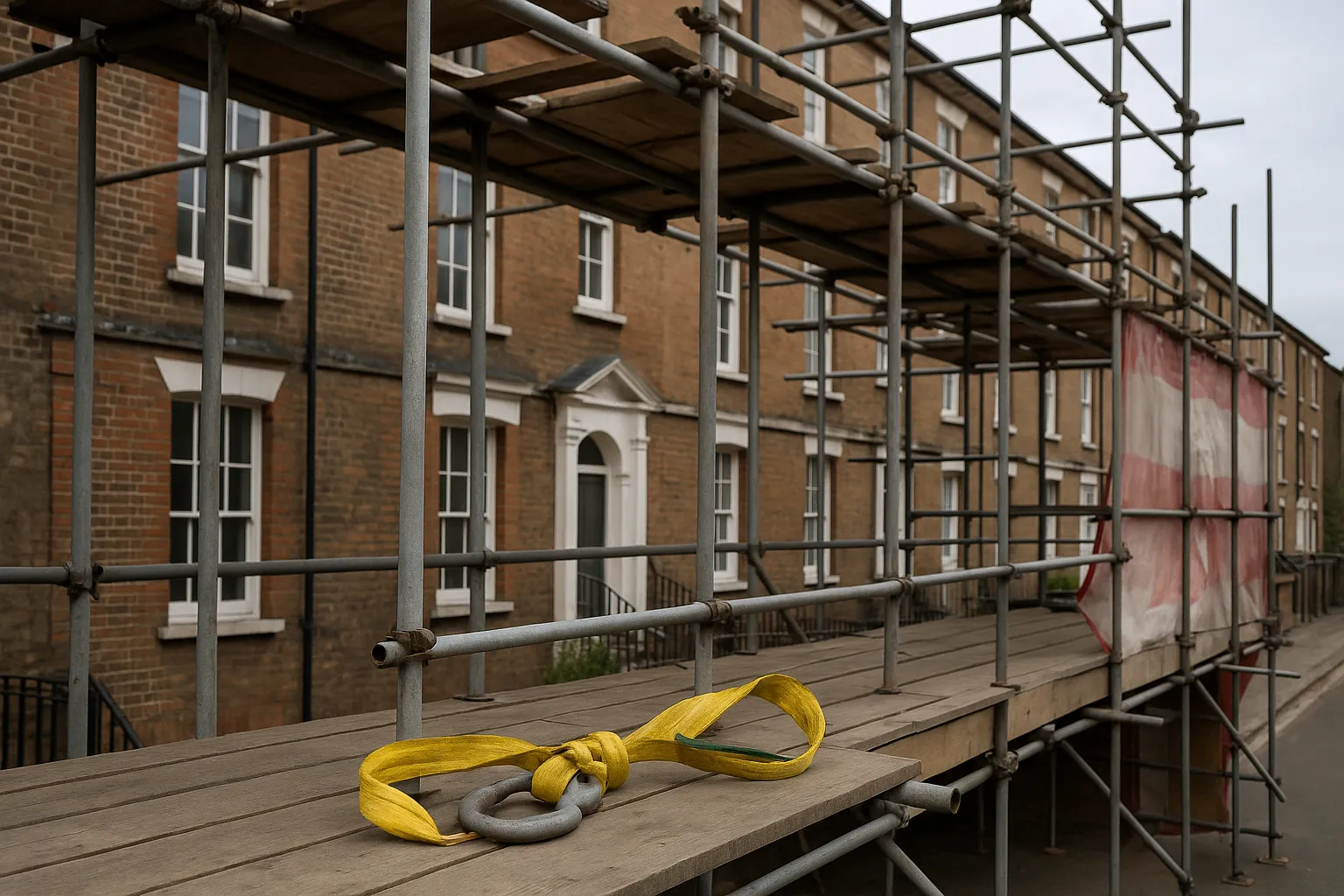
According to the Health and Safety Executive (HSE), the incident arose during an unexpectedly complicated lifting operation. As the employee attempted to free a load that had become trapped, he was inadvertently pulled from the scaffolding when the load was released.
An investigation into the accident revealed critical failures in safety protocols from both companies involved. The HSE determined that Premier Property and Construction Limited did not adequately plan or oversee the work, particularly in relation to lifting procedures and the use of appropriate lifting equipment. The lack of sufficient planning and management exposed workers to unnecessary risks.
In addition, Axis Europe Limited, which served as the principal contractor for the project, was found to have inadequately monitored the operations carried out by Premier Property. The firm failed to identify and challenge unsafe lifting practices, including the use of untested lifting accessories, which directly contributed to the circumstances of the fall.
The HSE emphasised that contractors have an essential duty to plan, manage, and monitor construction activities under their control to mitigate risks associated with health and safety. This includes aligning their safety practices with the size, complexity, and specific risks involved in each project. Resources and guidance on this subject can be accessed on the HSE’s official website, specifically regarding the Construction (Design and Management) Regulations of 2015.
During court proceedings at Highbury Corner Magistrates’ Court on 5 December 2025, Axis Europe Limited, based in Tramway Avenue, London, pleaded guilty to violating regulation 13(1) of the Construction (Design and Management) Regulations 2015. As a result, the company was handed a hefty fine of £640,000, alongside costs amounting to £4,787.59 and a victim surcharge of £2,000.
Meanwhile, Premier Property and Construction Limited, registered in Sevenoaks, Kent, but operating from a site in East Tilbury, Essex, was also found guilty of breaching regulation 15(2) of the same legislation. This firm was fined £160,000 and ordered to pay the same costs and victim surcharge as Axis Europe Limited.
HSE inspector Andrew Pipe remarked on the case, noting that many construction accidents, particularly those that result in serious injury or even fatalities, stem from poorly planned, managed, or supervised work activities. He labelled this incident as preventable, asserting that had the companies adhered to proper safety measures, the worker’s significant injuries could have been avoided.
“The implications of the penalties imposed on Axis Europe Limited and Premier Property and Construction Limited should serve as a stern reminder to those in the construction sector,” Pipe stated. “The courts and HSE regard non-compliance with safety regulations with the utmost seriousness. We are unequivocal in our commitment to taking action against businesses that fail to prioritise the safety of their employees.”
The case was prosecuted by HSE lawyers, including enforcement lawyer Arfaq Nabi and paralegal officer Mellisa Wardle, underscoring the regulatory body’s serious approach to enforcing health and safety standards.
This incident highlights a crucial aspect of the construction industry, where safety regulations are not merely guidelines but essential protocols that protect workers. Observations from experts suggest that the construction sector must forge a stronger culture of accountability regarding health and safety practices.
Construction accidents carry profound consequences, not just for the workers involved, but also for their families and communities. As such, it is vital for all firms within the industry to commit to continuous improvement in health and safety management practices.
Moreover, this case poses significant implications for the industry’s future. As companies strive to regain public trust, there is a pressing need for robust safety culture that prioritises worker protection above all. Lessons learned from incidents like this must galvanise the construction sector to adopt more rigorous measures.
For those interested in further details about regulations and responsibilities within the construction industry, the HSE offers comprehensive guidance on its website. The HSE, as the UK’s national regulating body for workplace health and safety, remains dedicated to fostering a safer working environment across all sectors.
In the aftermath of this case, industry stakeholders are urged to reassess their compliance strategies and safety protocols to ensure incidents like this become a rarity rather than a recurring theme. The escalation of consequences for companies neglecting their responsibilities stands as a warning of the legal ramifications they may face should they fail to act adequately in protecting their workforce.
Our Thoughts
The incident involving a worker who fell from scaffolding highlights critical failures in health and safety management in the construction sector. Both Premier Property and Construction Limited and Axis Europe Limited breached key regulations under the Construction (Design and Management) Regulations 2015. The lack of adequate planning and monitoring of lifting operations points to a failure in risk assessment as required by regulation 13(1) and regulation 15(2).
To prevent such incidents, it is essential to implement a robust risk management strategy, particularly concerning lifting operations. Proper training and the use of tested lifting equipment should be mandated, as outlined in HSE guidance.
Key safety lessons include:
1. Ensuring all lifting operations are meticulously planned with clear procedures.
2. Verifying that lifting accessories are tested and appropriate for use prior to operations.
3. Regularly monitoring on-site activities to ensure compliance with health and safety regulations.
These measures not only align with the legal requirements but are vital for safeguarding worker health and safety, potentially averting life-changing accidents like the one that occurred.