

















Story Highlight
– Women’s health research historically excluded women from trials.
– Digital health technologies enhance accessibility and engagement.
– Inclusivity in research designs requires innovative methodologies.
– AI and machine learning can improve women’s health diagnostics.
– Systemic barriers must be addressed for equitable participation.
Full Story
The landscape of women’s health research is experiencing a transformative shift as scholars and healthcare professionals advocate for more inclusive practices. Historically, women have often been sidelined in clinical trials and health research due to various concerns, including perceived risks during pregnancy and the misconception that male bodies represent the norm in medical studies. This long-standing bias has yielded a significant gap in understanding women’s health needs and outcomes.
Despite recent strides toward greater inclusion, challenges remain in ensuring women’s active participation across a variety of health conditions. Contributing factors to this issue include barriers related to access, education, and socio-economic status, in addition to practical difficulties such as transportation and time commitments. To effectively address the inequities that persist in women’s health, a multifaceted approach is essential. This involves innovations not only in treatment modalities and technologies but also in the methodologies and designs underpinning research.
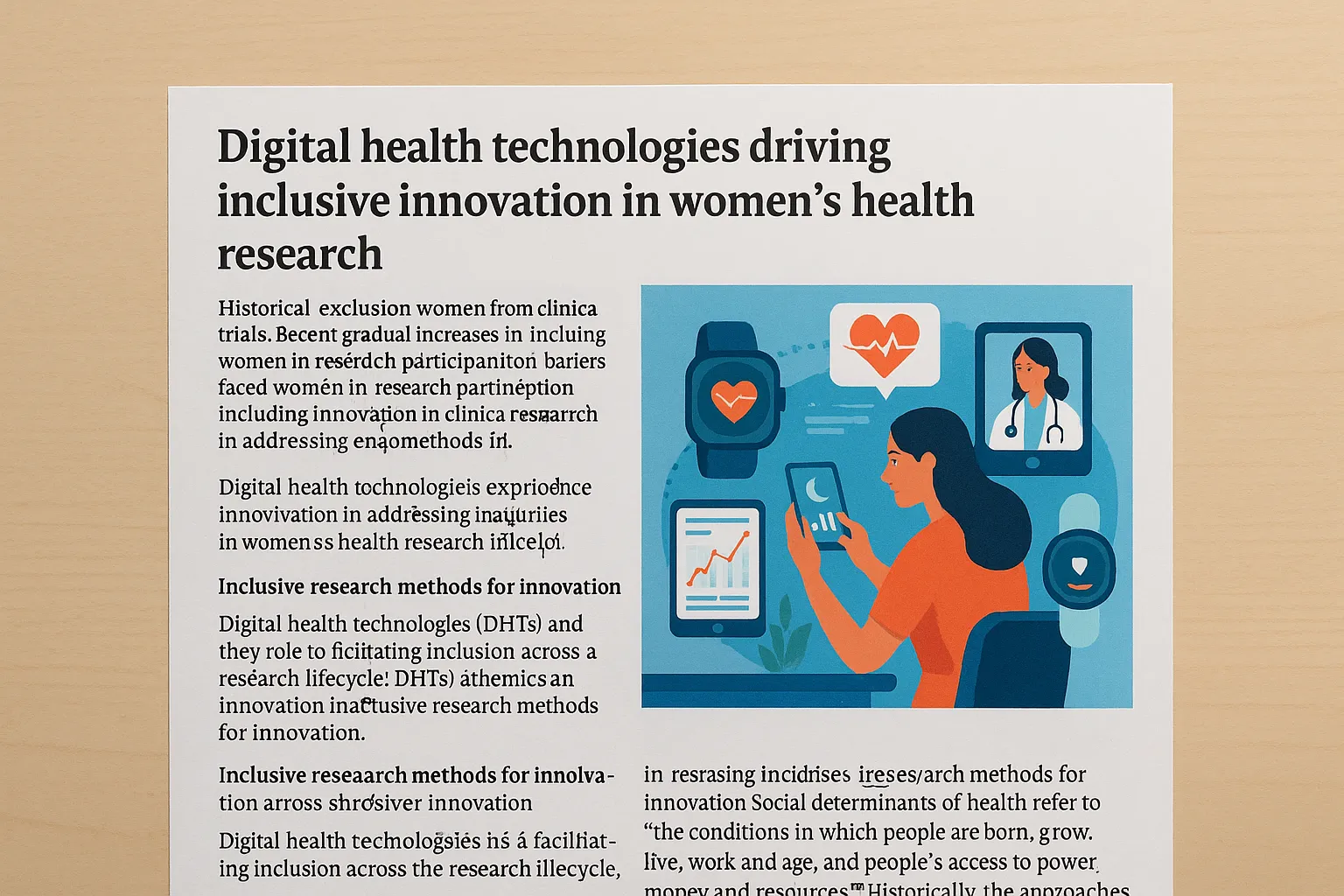
Digital health technologies (DHTs), which are defined as systems utilising computing platforms, connectivity, and software to enhance health management, present an unprecedented opportunity to engage diverse populations in the research process. By improving accessibility and personalisation of healthcare interventions, DHTs can shift research dynamics from a top-down, extractive model to one that emphasises collaboration and inclusion.
In the context of health research, social determinants play a crucial role. These determinants encompass the living conditions that affect individuals from birth through their lifespan, and they significantly influence both health outcomes and access to resources. Historical research methodologies typically fail to account for the unique experiences of women, leading to exclusion and a lack of applicable findings. There is a pressing need to adopt research designs that prioritise inclusivity and actively involve women in the development of solutions that affect their health.
The concept of inclusive innovation advocates for the participation of end users in the design, deployment, and development of healthcare solutions. Implementing such principles throughout the research lifecycle can enable a comprehensive understanding of the distinct needs of women, particularly in addressing barriers faced by those in underserved communities.
Emerging DHTs are particularly promising for promoting inclusivity within research settings. Established technologies, such as telehealth and mobile health applications, have already demonstrated their ability to bridge gaps in access, particularly for women who may face mobility constraints, caregiving responsibilities, or reside in remote areas. The Covid-19 pandemic expedited the embrace of these technologies, allowing for more decentralised research initiatives that can engage diverse populations more effectively.
Moreover, the creation of mobile health applications for critical areas such as menstrual cycle tracking and fertility management has skyrocketed, with millions of downloads indicating a demand for digital solutions tailored to women’s health. Notably, a growing number of women are using tools designed to assist them in making informed reproductive choices, highlighting an opportunity for researchers to incorporate these technologies into their frameworks.
However, implementation challenges remain. Research has indicated that while DHTs provide significant advantages for participation, disparities persist in the access to these technologies, especially in rural or economically disadvantaged communities. For example, a study focused on maternal health in sub-Saharan Africa revealed that while mobile health initiatives have made strides in improving access to care, significant barriers remain, including the limited availability of mobile devices and the necessity for tailored applications that account for the diverse cultural contexts of users.
The role of artificial intelligence (AI) and machine learning (ML) in this field also garners attention due to their potential to analyse vast datasets and uncover health disparities. AI, when applied thoughtfully, can identify underserved populations and provide insights that are tailored to specific needs. However, caution is advised to prevent biases intrinsic to non-representative data, which can lead to skewed conclusions and recommendations in women’s health research.
A further trend within this realm is the development of digital twins—virtual models of real-world scenarios that can enhance predictive analytics. This innovative approach has begun to find applications in understanding complex health conditions and tailoring treatments accordingly, thereby offering a new paradigm for personalised healthcare.
Nonetheless, as researchers explore these advanced technologies, ethical considerations surrounding data privacy and the potential for exacerbating existing inequalities must be at the forefront of discussions. The digital divide continues to present a significant hurdle, with many women lacking the necessary access to high-speed internet and digital literacy to take full advantage of these innovations.
Particularly within politically charged environments, where policies can drastically shape access to reproductive health technology, understanding the implications of regulatory decisions on women’s choices and health landscapes is crucial. For example, the Dobbs decision in the United States significantly influenced user comfort in sharing fertility app data, illustrating how external factors can hinder the effectiveness of digital health technologies.
In conclusion, the potential for DHTs to reshape the landscape of women’s health research is substantial. To harness this potential effectively, stakeholders must commit to addressing the barriers that impede equitable access and ensure that women are central to the conversation. This includes engaging women from diverse backgrounds in research efforts, adapting technologies to meet varied needs, and ensuring robust ethical standards that prioritise their safety and privacy. Moving forward, the aim should be to foster an environment that empowers women through inclusive health research and leverages technology to enhance their health outcomes on a global scale.





Important to ensure digital tools are accessible and safe for all participants. Addressing connectivity, digital literacy and consent processes will help reduce barriers for underserved groups. Data quality and algorithm fairness need ongoing oversight so findings reflect diverse populations. Involving communities in study design and ensuring clear governance on data use will strengthen trust and participation.