

















Story Highlight
– Over 1 billion people suffer from mental health issues.
– UK reports 1 in 6 diagnosed with depression/anxiety.
– Digital Mental Health Technologies market expected to grow.
– New UK regulations classify DMHTs as medical devices.
– Reimbursement challenges hinder widespread adoption of DMHTs.
Full Story
Recent statistics published by the World Health Organization (WHO) reveal that more than 1 billion individuals globally are currently contending with various mental health challenges. Among these, conditions such as depression and anxiety are estimated to impose a staggering annual economic burden of around $1 trillion. In the United Kingdom, an ongoing national survey indicates that approximately one in six individuals has been diagnosed with depression at some point in their lives, while one in seven has experienced anxiety. Additionally, around 10% of respondents reported facing moderate to severe depressive symptoms within the last two weeks, underscoring a significant and escalating mental health crisis.
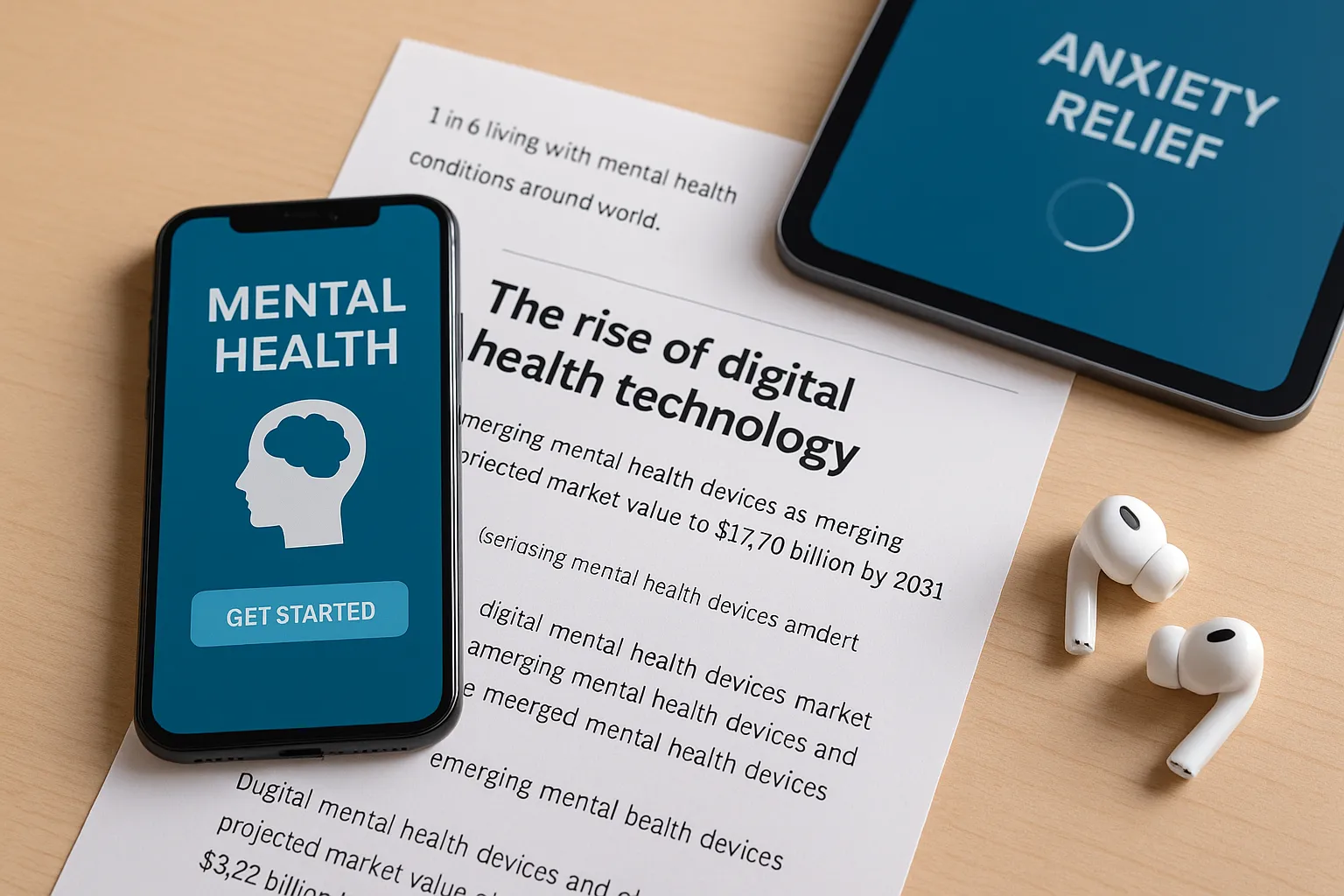
These alarming figures highlight a profound and increasing strain on traditional mental health services, which are already struggling to meet the rising demand for treatment. As a response, there is a noticeable shift towards exploring more scalable and accessible alternatives. Digital Mental Health Technologies (DMHTs)—which encompass a range of tools including mobile applications, online platforms, and AI-assisted solutions—are gaining traction as potential resources to help bridge the existing treatment gap. Recent market evaluations suggest that the value of the global market for innovative mental health technologies was approximately $3.22 billion in 2023, with projections estimating it could soar to $17.7 billion by 2031.
DMHTs are diverse, ranging from smartphone apps and web-based platforms to wearable devices and virtual reality therapies. These innovative tools promise to provide users with more flexible, accessible, and personalised mental health support, whether accessed independently or through clinician referrals. As the urgency for mental health assistance surpasses the capabilities of conventional healthcare systems, the adoption of DMHTs is becoming increasingly common among both individuals and healthcare providers.
In addition to addressing mental health issues, DMHTs are part of a broader trend towards employing digital health technologies to manage a variety of health conditions. For example, devices such as smart inhalers assist with asthma management, Continuous Glucose Monitors (CGMs) support diabetes care, and wearable cardiac monitors facilitate heart health monitoring.
However, this rapid proliferation of digital tools raises important regulatory questions: At what point does a digital tool qualify as a medical device? What standards for safety, efficacy, and regulation are applicable?
In February 2025, the Medicines and Healthcare products Regulatory Agency (MHRA) issued new guidance specifically focused on DMHTs and their categorisation as medical devices. This directive forms part of a larger initiative funded by the UK government, contributing to the establishment of a suitable regulatory framework tailored for digital mental health tools. This guidance is groundbreaking, as it offers definitive criteria for determining when such tools should be classified as medical devices according to UK legislation.
The classification hinges on two primary considerations: the intended purpose of the tool, which relates to the developer’s claims regarding its application (such as general wellbeing versus the diagnosis or treatment of a mental health condition), and its functionality, particularly regarding how it operates. For instance, a tool that purely provides educational materials may be viewed differently from one that utilises AI to conduct assessments or influence treatment strategies.
Consequently, if a DMHT is designed for medical purposes and possesses intricate functionality, it must adhere to the regulatory standards for Software as a Medical Device (SaMD). This entails meeting rigorous criteria for safety, effectiveness, and clinical validation. Conversely, simpler tools that focus merely on general wellbeing may not require such stringent compliance and can self-certify as Class I medical devices.
The MHRA’s guidance also specifies that classification will take into account promotional materials and other information that can influence intended use and functionality. This clarity is particularly vital as DMHTs become more advanced, frequently incorporating adaptive user assessments and AI-driven recommendations.
One significant implication of this guidance is its relevance to existing products in the market, not just new innovations. Some DMHTs have increased their functionalities since their initial launch, with many integrating AI capabilities or redefining their claims from general wellbeing tools to clinical aids. This evolutionary process might cause such products to fall outside their initial regulatory assumptions.
For instance, a mental health application that began as a simple resilience tool might have originally self-certified as a Class I medical device. However, the introduction of AI features that provide mood analysis or inform treatment choices may necessitate reclassification to a higher risk category, prompting manufacturers to undergo a reassessment and potentially involve additional clinical validation.
This evolving landscape is part of a larger regulatory reform initiative led by the MHRA, known as the Software and AI as a Medical Device Change Programme, established in late 2022. This programme aims to modernise the regulation of software-based medical devices, particularly those with AI components. In the US, the Food and Drug Administration (FDA) has initiated its own set of guidelines to facilitate a more predictable regulatory environment for AI-powered medical software, preferring a case-by-case review based on each device’s risk profile and intended application.
In Europe, the forthcoming EU AI Act, set to come into effect on 1 August 2024, has introduced a wide-ranging regulatory structure for AI technologies in healthcare. This framework classifies AI systems incorporated into medical devices as high-risk, subjecting them to strict obligations around risk management and data governance.
As the landscape for DMHTs continues to mature, it is evident that sound commercial strategies will be critical to their success. One of the primary hurdles remains the issue of reimbursement. Unlike traditional medical devices, many DMHTs currently lack a clear pathway to national reimbursement, often facing adoption based on pilot schemes or local budgets rather than established funding routes.
Where reimbursement is secured, it tends to hinge on demonstrable value to the healthcare system, such as reductions in clinician workloads, better patient outcomes, or decreased hospital admissions. This environment means that the most effective DMHTs will not only need to be proficient digital solutions but also demonstrate how they can alleviate systemic pressures within healthcare.
For innovators in the field, a clear focus on defined purposes, safety, and proactive engagement with regulatory frameworks will be essential. For patients, the evolution of these technologies carries the promise of improved mental health support, extending beyond conventional care avenues. Yet, capitalising on this potential will require prudent development practices, transparent governance, and rigorous assessment protocols. As digital mental health solutions proliferate and AI becomes integral, consistent oversight and adaptive regulations will be paramount in ensuring that innovation translates into substantial positive outcomes for both individuals and the healthcare system at large.
Our Thoughts
The article highlights significant concerns regarding the regulation and safety of Digital Mental Health Technologies (DMHTs) in the UK. One critical area for improvement involves ensuring that developers rigorously assess the classification of their products as medical devices, according to the guidance from the Medicines and Healthcare products Regulatory Agency (MHRA). Many DMHTs could potentially deploy AI features that classify them under higher-risk categories, requiring compliance with stringent safety regulations.
A key safety lesson is the need for continuous oversight and reassessment of products as their functionalities evolve. Developers should implement robust quality management systems and post-market surveillance to ensure ongoing compliance with UK health and safety legislation, such as the UK Medical Devices Regulations.
Failing to comply with these regulations can lead to serious breaches, including the use of unregulated medical devices, which poses risks to users’ safety. To prevent similar incidents, it is essential for developers to engage in early dialogue with regulatory bodies, undertake adequate clinical evidence generation, and maintain transparency in the intended use of their technologies to ensure patient safety and system integrity.