









Story Highlight
– 40% of employees experience accidents at work parties.
– Common incidents include spills, falls, and cold chills.
– 2 million call in sick post-party due to hangovers.
– One in ten employees face discipline after Christmas parties.
– Arts and Education sectors report highest accident-free parties.
Full Story
As the festive season gains momentum, the importance of ensuring safety during office Christmas parties has come to the forefront. Experts in employee wellbeing from Stribe are encouraging businesses to take a proactive stance in planning these events to safeguard their staff. Although these celebrations aim to enhance workplace morale, they also pose inherent health and safety risks. Recent statistics reveal that an alarming 40% of employees have experienced minor accidents during office celebrations, resulting in not just physical injuries but also heightened stress and anxiety in the aftermath.
To underscore the scale of these issues, Stribe has conducted research to identify common incidents that occur during office parties and has provided guidance on how to mitigate these risks.
Data from Stribe highlights that office festive gatherings can significantly amplify everyday hazards. Approximately 3.6 million adults in the UK have reported falling while attending a work-related event. Such mishaps often transform an evening of merriment into one fraught with injury, potential sick leave, and emotional strain in the recovery process. Contributing factors include crowded venues, inappropriate footwear, and the consumption of alcohol, all of which play a role in the concerning statistics regarding workplace injuries across the UK.
The Health and Safety Executive (HSE) indicates that around 680,000 non-fatal injuries occur annually in Great Britain. Notably, slips, trips, and falls on level surfaces account for a staggering 30% of these incidents.
An examination of some of the most prevalent accidents at office parties reveals distinct patterns of risk:
**Spills**
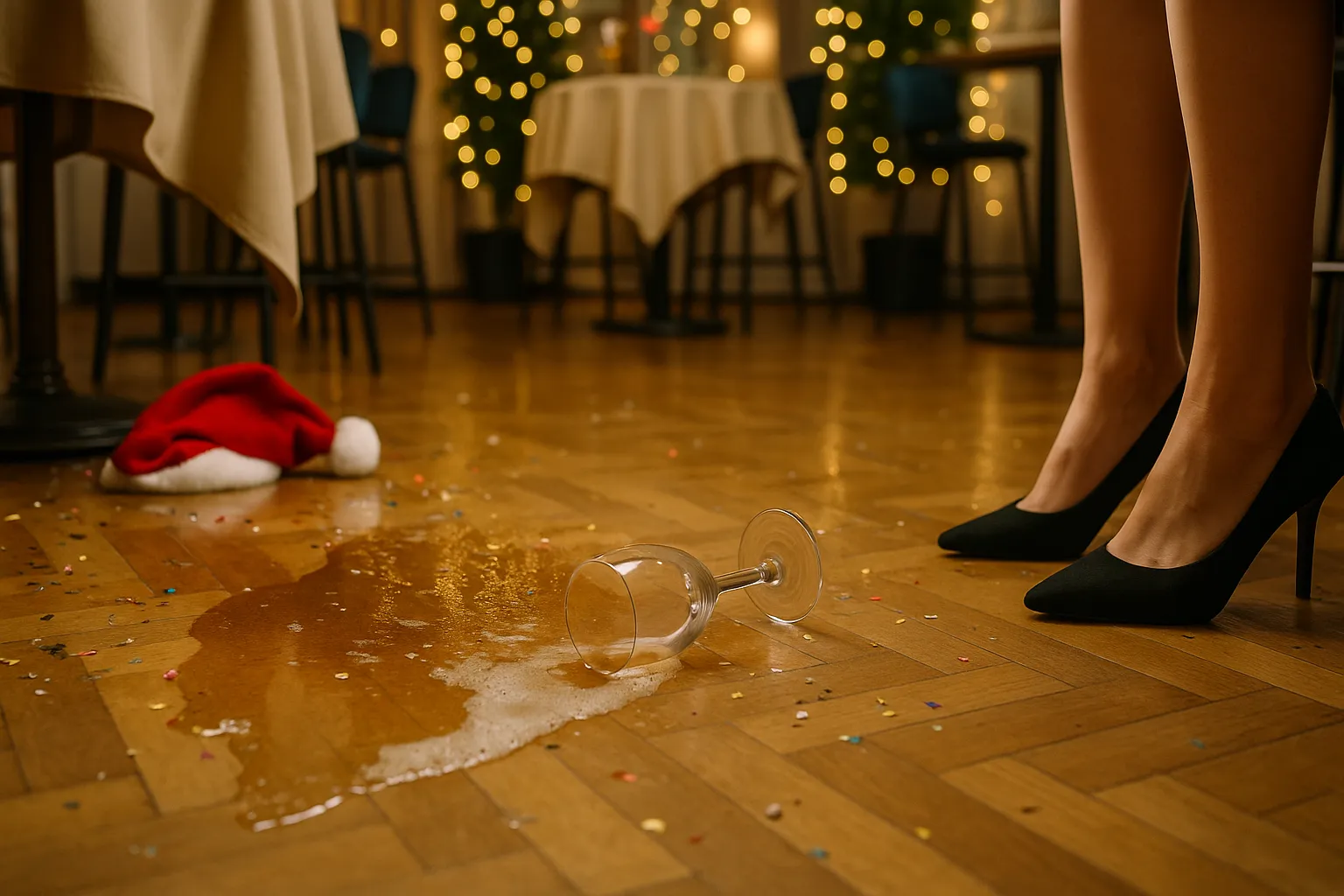
An estimated 3.7 million individuals have reported spilling drinks on colleagues at work events. This not only has the potential to lead to disputes but also presents practical dangers, as spilled beverages can result in slips and further injuries. Unintentional spills may create underlying tensions among coworkers that linger long after the event.
**Falls**
The same research indicates that about 3.6 million adults have experienced falls during office events. The repercussions can range from minor injuries to serious ones, and the embarrassment associated with such incidents may cause ongoing anxiety for affected staff members.
**Cold-related Illnesses**
Significantly, around 2.1 million workers have caught a chill at a work function due to inadequate clothing. The pressure to conform to a specific dress code often leads employees to prioritise style over comfort, which can have adverse health effects from mild colds to more severe illnesses.
**Alcohol-related Absences**
Approximately 2 million people have reported taking a sick day following excessive drinking at Christmas parties, with hangovers, social anxiety, and fatigue being common reasons. If employers do not adequately prepare for the possibility of next-day disruptions, they may find their workforce diminished.
Lucy Harvey, Chief Operating Officer at Stribe, has emphasized the need for employers to directly address these persistent issues. “Employers should design these events with health and safety as a priority. It is essential to select venues that can provide secure environments and mitigate risks associated with slippery floors and falls,” she stated. Additionally, she suggests that managers set an example when it comes to responsible alcohol consumption. In situations where the party is hosted at work, careful consideration should be given to the provisions made regarding alcoholic beverages. To reduce post-event anxiety, she recommends that managers conduct one-on-one check-ins with their teams, as these quick conversations can provide reassurance and help alleviate any growing concerns.
**Other Risks**
Among the leading dangers at office Christmas parties are:
– **Burns from Lighters**
Around 1.5 million people have suffered burns while lighting cigarettes in crowded smoking areas, often requiring immediate medical assistance.
– **Ankle Injuries**
These frequently occur when individuals wear high heels in unfamiliar environments, leading to sprains and other injuries that may necessitate medical intervention and rehabilitation.
– **Transportation Incidents**
Cases of staff falling from taxis upon arrival or departure are not uncommon, and impaired balance often exacerbates these situations, sometimes resulting in significant injuries.
– **Food Poisoning**
Caterers failing to maintain adequate food safety standards contribute to approximately 2.4 million cases of foodborne illness yearly in the UK, leading to sudden and severe illnesses which necessitate time away from work.
Harvey reiterated the importance of anticipating these outcomes, stating, “These hazards are not anomalies; they are patterns that recur every year. Employers should ensure venues have visible signage, sufficient smoking areas, and trained first-aiders to foster a safe atmosphere. Event coordinators should also verify the hygiene ratings of catering services and proactively address evident risks before events commence.”
The stakes of office parties are high; consequences stemming from accidents or misconduct can be severe. Data indicates that one in ten employees has faced disciplinary action or termination following a workplace Christmas party. Notably, certain professions are more vulnerable to mishaps:
– Lawyers and HR professionals are at the forefront when it comes to falls, with lawyers also being prone to spilling drinks on sensitive documents.
– Nearly 24% of employees in sales, marketing, and media have admitted to spilling drinks on colleagues, a figure significantly higher than the national average of 7%.
– Those in finance are particularly prone to missing the last train home, as 15% reported such incidents compared to 4% nationally.
– Interestingly, the arts and education sectors boast the highest odds of hosting accident-free events, with 55% reporting no incidents.
Harvey concluded, “The office Christmas party should be a time of enjoyment, providing a break from the stresses of the year. Yet, employers must also prioritise safety and employee wellbeing. It isn’t sufficient for companies to merely meet health and safety regulations; they must actively support their staff in navigating the social pressures that can lead to accidents or regrettable behaviour. The ramifications of a significant incident far outweigh the expense of preventive measures. By taking thoughtful actions, businesses can ensure their festive celebrations proceed smoothly and safely.”
Our Thoughts
To prevent incidents at office Christmas parties, employers should proactively incorporate health and safety measures in line with UK regulations. Key actions could include conducting risk assessments prior to events, as required under the Management of Health and Safety at Work Regulations 1999, to identify potential hazards such as slips, trips, and falls.
Employers must ensure venues are safe, with adequate signage and trained staff available to mitigate risks associated with crowded spaces and alcohol consumption. This aligns with the responsibilities outlined in the Health and Safety at Work Act 1974 to maintain a safe working environment.
Setting clear expectations around alcohol consumption can notably decrease workplace incidents and related absences. Employers should also implement policies to manage the risks of food poisoning by ensuring caterers are compliant with food safety regulations.
Regular communication and support for employee wellbeing can reduce post-event stress and anxiety. Engaging in these preventative measures not only complies with legal obligations but also fosters a culture of safety and care, helping to avert accidents during festive celebrations and throughout the year.