















Story Highlight
– 1,700 L of flammable solvent spilled at Fujifilm facility.
– No injuries reported; HSE issued improvement notice.
– Spill detected after overnight uncontrolled release.
– Fujifilm has faced eight improvement notices since acquisition.
– HSE noted concerns about compliance with safety regulations.
Full Story
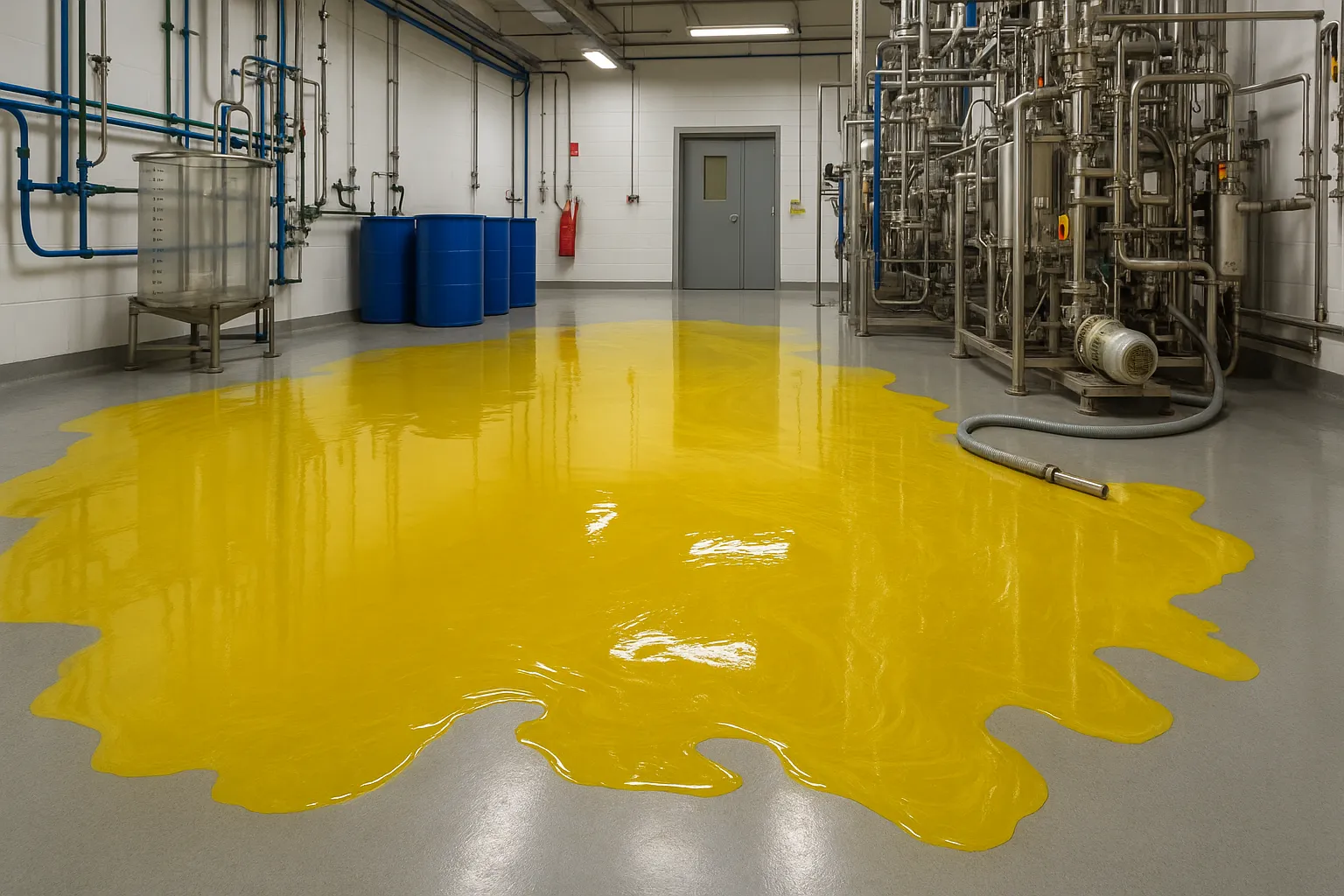
In July 2025, a significant incident occurred at a semiconductor production facility in Alfreton, Derbyshire, owned by Fujifilm, resulting in a spill of 1,700 litres of flammable solvent, ethoxy propanol. This event was revealed through a freedom of information request, highlighting serious lapses in operational management and safety protocols.
The incident, which unfolded overnight between shifts on the 16th and 17th of July, went unnoticed until workers arrived for the morning shift, suggesting an alarming lack of detection mechanisms. Fortunately, no injuries were reported as a consequence of the spill. However, the Health and Safety Executive (HSE) took notice of the event and issued an improvement notice to Fujifilm Electronic Materials in August, describing the incident as an “uncontrolled release” of the hazardous solvent.
The investigation by HSE uncovered that the spill originated following routine operations involving drum filling but that a failure in end-of-shift isolation combined with inadequate handover practices allowed the system to run unchecked throughout the night, culminating in the substantial spill. Once identified, the area was promptly secured and cleaned; however, there remains uncertainty regarding whether any of the spilled solvent entered the environment or sewer systems.
The HSE’s findings noted deficiencies in both oversight and procedural control at the facility, asserting that the plant suffered from “inadequate supervision”. Since the issuance of the improvement notice, Fujifilm has indicated compliance with the HSE’s directives.
Fujifilm’s Alfreton facility plays a critical role in the semiconductor industry, specialising in high-purity chemical formulation. This location operates under the stringent control of the Control of Major Accident Hazards Regulations (COMAH) and has been under Fujifilm’s management since its acquisition in October 2023.
The spillage incident is part of a broader pattern of regulatory concerns at the site; since Fujifilm’s takeover from Entegris, the facility has received eight improvement notices. Notably, in November 2024, the HSE flagged serious issues, stating that operators had not effectively managed risks involving hazardous substances. In particular, they highlighted problems related to the improper overfilling of an acetone tank, a volatile chemical known for its explosiveness. Fujifilm’s adherence to safety requirements was verified in November 2025.
Andy Mackiewicz, a Chartered chemical engineer and director of safety consultancy AMPA Associates, pointed to a worrying trend where businesses in sectors outside traditional chemical operations frequently overlook their obligations under the Dangerous Substances and Explosive Atmospheres Regulations 2002 (DSEAR). According to Mackiewicz, requests for help regarding DSEAR compliance have dramatically increased, reflecting a growing gap in safety assessments among non-chemicals companies that handle flammable materials.
Fujifilm addressed the incident in a statement, describing the spill as “minor” and attributing it to deficiencies within the filling system, assuring that there were no injuries sustained. The company confirmed that a thorough investigation into the spill has been completed and that both preventive and corrective measures have been implemented. These improvements have been acknowledged by the HSE following a subsequent site inspection, reinforcing Fujifilm’s commitment to ensuring safety at the workplace.
In recent months, the HSE has reportedly expressed a degree of encouragement regarding the progressive measures taken by Fujifilm to enhance the site’s safety standards. Since Fujifilm’s acquisition, the company has actively sought ways to bolster safety measures, indicating a proactive approach towards addressing and rectifying any operational shortcomings that have emerged during its management of the facility.
As Fujifilm continues to navigate the complexities of operating within a highly regulated environment, the incidents at the Alfreton plant stand as a reminder of the critical importance of maintaining rigorous safety protocols, particularly in operations involving hazardous substances. The HSE’s ongoing oversight emphasizes the need for constant vigilance in safety practices within the chemical and semiconductor sectors, ensuring that incidents such as this do not recur. The comprehensive nature of the investigation and subsequent improvements illustrates a commitment to maintaining safety and fulfilling regulatory responsibilities within the industry.
The ongoing scrutiny faced by the Alfreton facility raises questions about the broader implications for the semiconductor industry and its adherence to safety regulations. Stakeholders are now more aware of the necessity for industries handling volatile chemicals to prioritise safety and regulatory compliance, highlighting the need for robust systems to manage risks effectively. As Fujifilm moves forward, the lessons learned from the July incident may serve as a catalyst for improved safety practices not only at the Alfreton site but also across the semiconductor materials sector as a whole.
Our Thoughts
The spill of 1,700 L of ethoxy propanol at Fujifilm’s Derbyshire facility highlights several critical failures in health and safety management. Key failures included inadequate control systems for managing hazardous substances and poor handover procedures between shifts. Compliance with the Dangerous Substances and Explosive Atmospheres Regulations 2002 (DSEAR) was lacking, contributing to both the spill and previous incidents at the site.
To prevent such occurrences, Fujifilm could have implemented stricter end-of-shift isolation procedures and enhanced supervision protocols during high-risk operations like drum filling. Regular DSEAR assessments are essential, especially in facilities handling flammable materials. Additionally, effective training for employees on risk assessment and spill response would improve situational awareness and operational safety.
The Health and Safety Executive (HSE) improvement notice underscores a breach of regulations relating to the management of dangerous substances, and ongoing failures in oversight could lead to more serious incidents. Establishing a robust culture of safety compliance and continuous training would be crucial in mitigating similar risks in the future.