
















Story Highlights
– Chris Keegan died in forklift accident on 20 November.
– Hessle Plant Ltd fined £433,550 for safety violations.
– Forklift lacked full inspection before operation and repairs.
– Employees often did not wear seatbelts while operating.
– HSE emphasized importance of equipment maintenance and seatbelt use.
Full Story
The tragic workplace death of Chris Keegan, a delivery driver for Hessle Plant Ltd, has prompted serious questions about safety practices within the West Yorkshire plant hire industry. Following legal proceedings, Hessle Plant Ltd has been fined £433,550 after being found guilty of multiple safety violations connected to the incident that took place at their depot in Castleford on 20 November 2023.
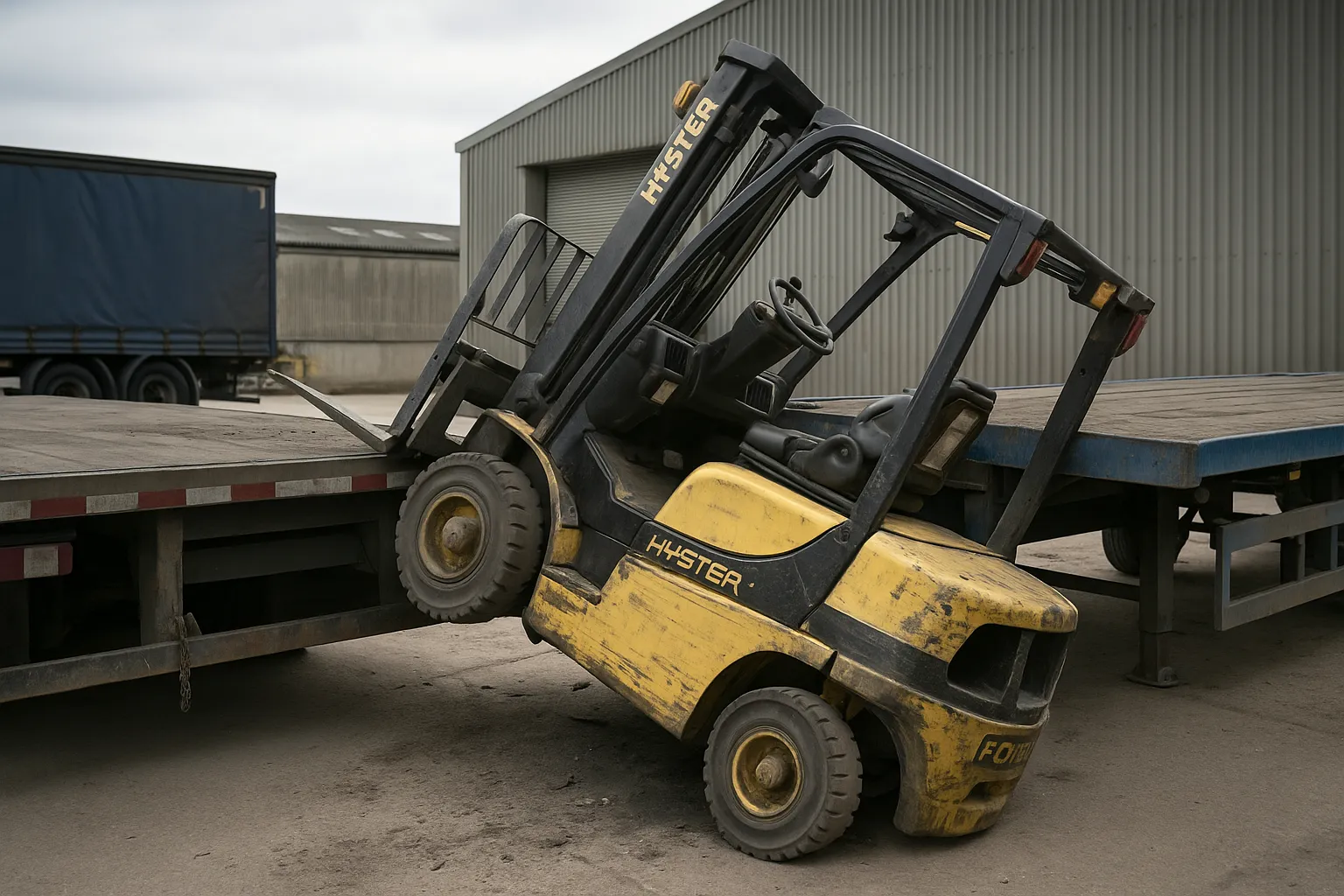
Chris Keegan, a beloved family man, was performing a routine task when the forklift truck he was operating fell off a trailer during a reverse manoeuvre. As a result of his fall, Mr Keegan was thrown from his seat and became trapped between the forklift’s chassis and another trailer nearby. Despite the rapid response from emergency services, he was pronounced dead at the scene. His widow, Dianne, expressed her grief, stating, “Chris was a wonderful, kind and generous man, who would do anything he could for anyone. He especially did anything he could for me. My heart is broken, and I will never get over losing my husband in such a horrific way. He never deserved to die in such tragic circumstances.”
The investigation undertaken by the Health and Safety Executive (HSE) uncovered a troubling array of regulatory failures concerning the operation of the forklift. It revealed that the vehicle had not undergone a comprehensive inspection following maintenance. The HSE’s post-incident examination of the forklift revealed a series of defects that should have been corrected prior to its use. It was noted that although Hessle Plant Ltd conducted thorough pre-delivery inspections for new customers, this standard was not applied to forklifts being returned to regular customers.
Additionally, the investigation highlighted a concerning trend regarding safety practices amongst employees operating forklift trucks at Hessle Plant. The HSE found that many operators frequently neglected to wear seatbelts while using the machinery and that there was a lack of systems in place to monitor or enforce seatbelt use on-site. These practices are not only contrary to established health and safety guidelines but also underscore a culture that prioritises expedience over safety—a potentially deadly oversight.
The Health and Safety Executive stipulates that employers are responsible for ensuring that all work equipment, including forklifts, is properly maintained and regularly inspected to stay compliant with safety regulations. Furthermore, their guidance specifically notes that when seatbelts are installed in counterbalance forklifts, they must be worn by operators. David Beaton, an inspector with HSE, emphasised the severity of the situation, saying, “This was a tragic and preventable death. Mr Keegan was placed at undue risk by operating a machine with underlying maintenance defects, which he would have been unaware of when attempting to reverse the forklift in the dark onto a trailer with an exposed edge.”
The consequences of this tragic incident have resonated beyond the immediate loss for Mr Keegan’s family, raising pivotal issues within the broader context of workplace safety in the plant hire sector. Employers in industries that involve heavy machinery must take stringent measures to uphold safety protocols and ensure that operators are not only equipped but also trained and encouraged to adhere to protective equipment guidelines.
The court proceedings, which concluded on 26 November, resulted in Hessle Plant Ltd pleading guilty to breaching Section 2(1) of the Health and Safety at Work etc. Act 1974. Alongside the substantial fine levied by Leeds Magistrates’ Court, the company was also ordered to pay £8,146.80 in costs and a victim surcharge of £2,000. This decision reflects not only the gravity of the infractions committed by the firm but also a commitment from the judiciary to reinforce standards that protect workers from avoidable harm.
As investigations continue, the importance of compliance with health and safety regulations cannot be overstated. The tragic loss of Chris Keegan serves as a grim reminder of the perils faced by workers when safety protocols are either ignored or improperly implemented. In light of this, experts urge all companies operating machinery to conduct regular safety audits and provide ongoing education to employees on following safety procedures.
This case also underscores the critical nature of oversight from regulatory bodies like the HSE. The enforcement of stringent health and safety standards must remain a priority to prevent similar incidents from occurring in the future. As the HSE states, “Every year there are fatal accidents caused by machinery which has not been properly maintained or inspected and forklift truck drivers not wearing seatbelts.” Establishing a durable culture of safety across all levels of a business is essential for safeguarding the lives of workers like Chris Keegan.
Moreover, the need for an ongoing conversation about workplace safety ethics and responsibilities is necessary for industries that manage heavy machinery. An inclusive dialogue among stakeholders, including employers, employees, and regulatory authorities, could galvanise sector-wide improvements that enhance operational integrity and worker safety.
As the landscape of workplace safety continues to evolve, there is an undeniable urgency to ensure that all personnel return home safely at the end of each day. Ultimately, the legacy of Chris Keegan reminds everyone of the critical need for diligence and uncompromising adherence to safety measures in a high-risk work environment.
Our Thoughts
The tragic death of Chris Keegan highlights several critical health and safety failures at Hessle Plant Ltd, primarily stemming from breaches of the Health and Safety at Work etc. Act 1974. The company neglected to conduct full inspections on the forklift after repairs, violating the requirement to ensure machinery is safe for operation. This oversight led to Mr. Keegan operating a defective forklift, which contributed to the fatal incident.
Additionally, the lack of a system to enforce seatbelt use directly contravenes HSE guidance, which mandates that seatbelts should be worn when provided. Had Mr. Keegan been secured by the seatbelt, the likelihood of fatal injury would have significantly reduced.
To prevent similar incidents, companies must implement comprehensive maintenance and inspection protocols for all equipment, including clear policies on seatbelt usage to enhance operator safety. Regular training and monitoring of employees can further foster a culture of safety awareness. This case underscores the necessity for rigorous adherence to safety legislation and proactive measures to protect workers in hazardous environments.