














Story Highlight
– Fatal accident inquiry for Aberdeenshire train derailment starts Monday.
– Three victims: driver, conductor, passenger died in crash.
– Network Rail fined £6.7 million for safety failings.
– Inquiry aims to prevent future rail safety incidents.
– Aslef demands accountability and improved rail safety measures.
Full Story
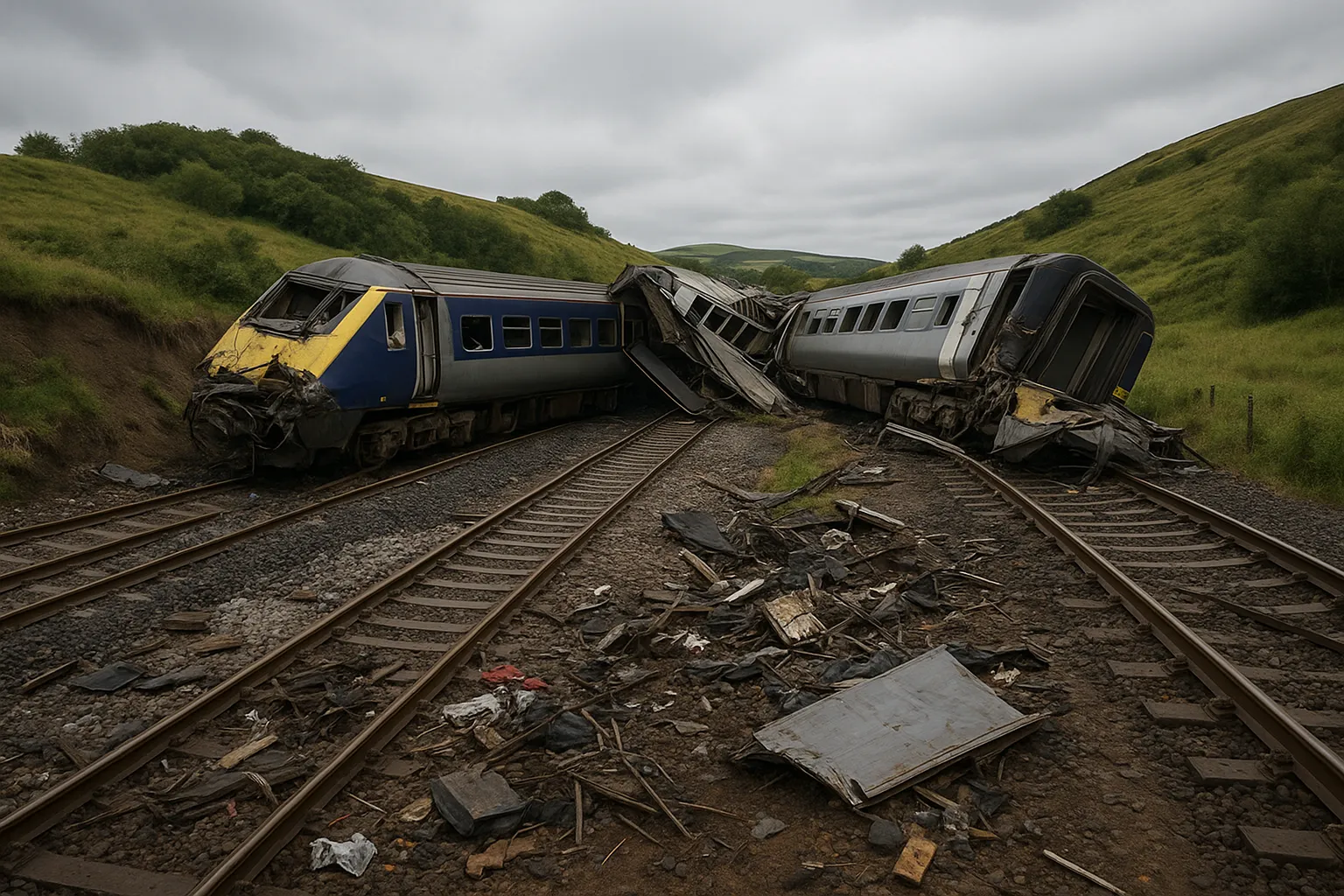
A fatal accident inquiry (FAI) concerning a tragic train derailment in Aberdeenshire that resulted in the loss of three lives is set to commence this Monday. The inquiry pertains to the incident that occurred on August 12, 2020, near Carmont, close to Stonehaven, and will be held at Aberdeen Sheriff Court.
The derailment claimed the lives of train driver Brett McCullough, conductor Donald Dinnie, and passenger Christopher Stuchbury, while also injuring six others who were on board. The affected train was operating on the 6.38am service from Aberdeen to Glasgow when it derailed on the route towards Dundee.
In a related development, Network Rail faced significant legal repercussions earlier this year, being fined £6.7 million after it acknowledged its failures in adhering to health and safety regulations concerning the incident, which unfolded amid severe weather conditions marked by heavy rainfall.
Debbie Carroll, representing the Crown Office and Procurator Fiscal Service, which oversees investigations into deaths in Scotland, commented: “Following a thorough and detailed investigation and criminal prosecution, this fatal accident inquiry will look at the full circumstances surrounding these tragic deaths and help avoid such an incident happening again.” She reassured that the families of the deceased—Christopher Stuchbury, Donald Dinnie, and Brett McCullough—along with their legal representatives, would receive ongoing updates as the inquiry progresses.
The hearings for this inquiry are anticipated to continue until February 13, with a break before resuming on February 23 for the final week. This inquiry aims to delve deep into the events leading up to the derailment and assess various factors that contributed to the catastrophe.
The train drivers’ union, Aslef, has indicated that it expects the FAI to hold accountable those responsible for the incident. Kevin Lindsay, the union’s Scottish organiser, expressed heartfelt condolences to the families of the victims. He stated: “Today is a day where our foremost thoughts are with the families of the deceased. Their pain is incalculable, and we know that days like today add to their torment.” He further addressed the systemic issues within the railway industry, emphasising the need for accountability and improved safety measures.
Lindsay remarked, “Carmont represents endemic and tragic corporate failure. If it was a busy train, it is likely many more fatalities would have occurred.” The union has previously stressed that this incident must serve as a catalyst for profound changes in rail safety protocols across the UK. He asserted the importance of ensuring that train operators work in environments where their safety is not jeopardised due to infrastructural deficiencies or inadequate consideration of climate change impacts.
The FAI presents an opportunity not only to investigate the tragic events of that fateful day but also to foster a culture of safety that prioritises the well-being of both passengers and train crew. Lindsay expressed hope that the findings of the inquiry will prevent future tragedies, stating, “We hope and expect that this FAI establishes all the facts and helps ensure that no family goes through the pain endured by those closest to Christopher, Donald, and Brett.”
The inquiry will scrutinise the timeline of events leading up to the derailment, assess emergency responses, and evaluate the structural integrity of the train and track involved in the accident. Investigators will also examine the impact of the weather conditions that day, analysing how the torrential rain may have contributed to the crash.
Survivors of the incident have also spoken out, conveying the psychological and emotional repercussions they face as a result of the derailment. Their experiences underscore the necessity of reforming systems within the rail sector to ensure such disasters do not recur. They have urged for a careful examination of safety protocols and the maintenance practices employed by Network Rail, as well as the need for robust training programs for staff to handle extreme weather scenarios effectively.
Local communities in Aberdeenshire have been deeply affected by the incident, mourning the losses and supporting the families involved. The wider implications of the derailment resonate beyond the immediate tragedy; they raise critical questions about the safety standards set by rail operators, particularly in light of changing weather patterns attributed to climate change.
As the inquiry progresses, it is expected to shed light on the systemic issues that led to the derailment and pave the way for necessary legislation and operational changes within the rail industry. Stakeholders including policymakers, transport authorities, and advocacy groups are likely to monitor its outcomes closely as they seek to enhance safety measures and reassure the public about the reliability of rail travel.
The FAI into the Carmont derailment stands as a crucial moment not only for those who lost their lives and their families but for the entire rail industry in the UK. It represents a poignant reminder of the need for vigilance in safety matters, especially during a time when extreme weather events are becoming increasingly commonplace. The commitment to learn from such tragedies is vital for fostering a safer and more accountable transportation system in the future.
Our Thoughts
The tragic train derailment in Aberdeenshire highlights significant lapses in health and safety management, particularly under the Health and Safety at Work Act 1974 and the Management of Health and Safety at Work Regulations 1999. Network Rail’s admission of safety failures indicates a breach of the duty of care owed to employees and the public.
To prevent such incidents, a robust risk assessment process should have been conducted, particularly concerning weather-related hazards, given the torrential rain on the day of the accident. Additionally, implementing regular maintenance and inspections of both rolling stock and track infrastructure, with particular attention to climate change impacts, would have been prudent.
The recommendation for improved crashworthiness and infrastructure resilience is crucial. It underscores the need for constant evaluation of safety standards in light of evolving environmental conditions and technological advancements. Increased training and communication regarding safety protocols for train crews during extreme weather could also enhance preparedness. By addressing these concerns proactively, the potential for similar catastrophic incidents could be significantly reduced.