














Story Highlight
– Jeremy Harbinson won’t testify against Joseph Muscat.
– Labour’s intimidation tactics led to witness’s withdrawal.
– Harbinson fears for his safety and fled the UK.
– Prosecution’s case largely depended on Harbinson’s report.
– Labour’s media campaign undermined the witness and inquiry.
Full Story
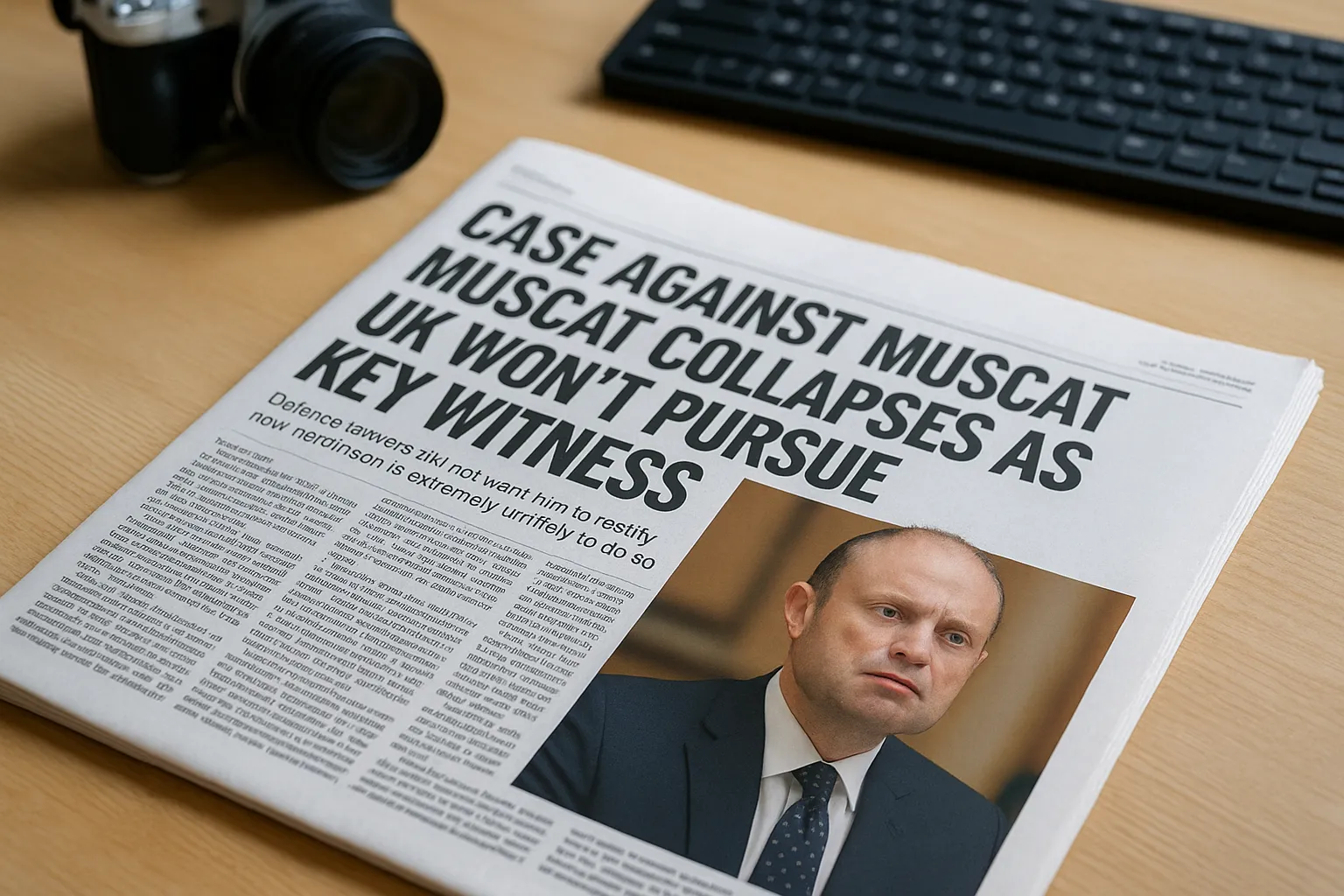
Labour’s recent triumph has been marked by a significant development in the ongoing case against former Prime Minister Joseph Muscat. Jeremy Harbinson, whose testimony was anticipated to play a crucial role in the prosecution, will not be compelled by UK authorities to testify. This decision presents a considerable obstacle for the prosecution, which now faces the prospect of a weakened case.
The situation surrounding Harbinson has escalated due to what many perceive as an orchestrated campaign of intimidation aimed at the key witness. Harbinson, once viewed as a pivotal figure in the inquiry, has expressed profound concerns for his safety, stating, “I fear for my safety…I have decided that I will never return to Malta.” His fears have been exacerbated by a series of aggressive media attacks targeting him, particularly from Labour’s ONE news network, which has broadcast numerous negative reports about his credibility. This has included an extensive focus on his image, with 36 different broadcasts depicting Harbinson, thereby increasing public scrutiny and pressure surrounding his role in the inquiry.
The context of this case highlights the tense and charged atmosphere in Malta, particularly surrounding the findings of the magisterial inquiry that challenged Muscat and his administration. Robert Abela, the current Prime Minister, has not shied away from publicly criticising Harbinson, even going so far as to describe the magistrate leading the inquiry as engaging in “political terrorism.” His comments reflect a broader strategy to undermine the inquiry’s findings and discredit the experts involved.
Adding to Harbinson’s sense of vulnerability are the specific incidents that have raised alarms about his personal security. In 2022, while in Malta to contribute to the case, Harbinson experienced a break-in at his hotel room, during which his passport was stolen. Such experiences have made it abundantly clear to him that he is encircled by risks that are both tangible and daunting.
Compounding these pressures has been the impact on Harbinson’s family life. He has voiced the emotional toll that the proceedings and subsequent harassment have taken on both himself and his wife, leading to stress and anxiety affecting their mental well-being. The gravity of the situation is underscored by the fact that the prosecution’s case largely hinged on the evidence presented by Harbinson. With the police failing to conduct an independent investigation, Harbinson’s report became the sole anchor for the prosecution’s arguments.
Amidst these developments, Harbinson’s decision not to return to Malta prompted the prosecution to seek permission from the court for him to testify via video-link from the UK. However, this proposal was met with fierce opposition from defence counsel, who contended that remote testimony would undermine the fairness of their client’s trial. Ultimately, the court agreed to the prosecution’s request, citing Harbinson’s testimony as crucial. Yet, with the recent news of the UK authorities’ refusal to compel Harbinson’s testimony, the prosecution now faces a much-diminished position.
Reports indicate that UK police have determined that the case is “closed,” having received an affidavit from Harbinson outlining his reasons for not testifying. While those reasons were not disclosed by the Attorney General’s office, it is known that they stem from his fears for his life and the belief that his safety remains at risk should he return to Malta. This has led to significant speculation about Harbinson’s whereabouts, as he has reportedly sought refuge in an undisclosed location.
Despite facing potential legal repercussions, including a fine for his absence, Harbinson has maintained his stance that he will not return to Malta. The consequences he faces underscore the level of intimidation he feels; evading the court’s summons is not merely an act of defiance but rather a reflection of his genuine fears for personal safety. His resignation to the situation illustrates the current environment in Malta, where whistleblowers or witnesses may find themselves navigating a precarious landscape fraught with threats.
In court, defence attorneys have hinted at the possibility of seeking punitive measures against Harbinson, alleging that his actions could constitute a breach of legal obligations. Meanwhile, the Attorney General’s representatives have also called for the court to take necessary action against him. However, amidst this aggressive legal posturing, there has been a noticeable absence of any appeals for witness protection. The systematic nature of the intimidation Harbinson faced seems to have gone unacknowledged by the legal framework, raising concerns about the treatment of witnesses in politically sensitive cases.
Critically, Prime Minister Robert Abela’s public comments have reinforced a culture of mistrust towards the judiciary and the inquiry process. His stance has emboldened a media climate where victimisation of individuals like Harbinson is not only permitted but encouraged. This has created an environment where those who seek to expose corruption or hold powerful figures accountable are left vulnerable.
Harbinson understands the severe implications of testifying against influential figures in Malta; history has shown that the stakes can be dangerously high for whistleblowers. His experience serves as a sobering reminder of the challenges facing those who dare to bring inconvenient truths to light. In this unfolding saga, it is evident that the ramifications of Labour’s systematic campaign have resulted in a significant victory for the party, challenging the integrity of justice in the face of political pressure. As the situation continues to unfold, questions remain about the future of accountability and the protection of those who might stand against powerful figures in Malta.
Our Thoughts
The article highlights serious issues related to witness intimidation and the failure of authorities to protect individuals involved in legal proceedings. To avoid such situations, it is critical for law enforcement and judicial bodies to implement robust protective measures for witnesses, as per the UK’s Health and Safety at Work Act 1974, which mandates ensuring the safety and welfare of individuals potentially at risk due to their roles in legal processes.
Key lessons include the necessity for a supportive environment that mitigates stress and fear for witnesses, reinforcing the importance of mental health provisions in high-stakes cases. Moreover, regular training on handling witness safety concerns should be conducted, empowering authorities to act decisively against intimidation.
Relevant regulations breached involve potential violations of the Public Interest Disclosure Act 1998, which protects individuals from retaliation when revealing wrongdoing, coupled with inadequate responses to harassment, falling under the remit of health and safety and personal safety protocols.
To prevent similar incidents, stronger policies must be enacted, including clearer guidelines for protecting key witnesses and an obligation for courts to assess the safety risks associated with testimony, ensuring that no individual feels compelled to flee or remains unprotected in the face of intimidation.