













Story Highlight
– Leaked memo claims 10 child deaths linked to Covid vaccine.
– FDA’s Dr. Vinay Prasad questions agency’s transparency on risks.
– Parents allegedly misinformed about vaccine risks for children.
– Critics argue VAERS data misused to support claims.
– Prasad calls for major changes in vaccine approval processes.
Full Story
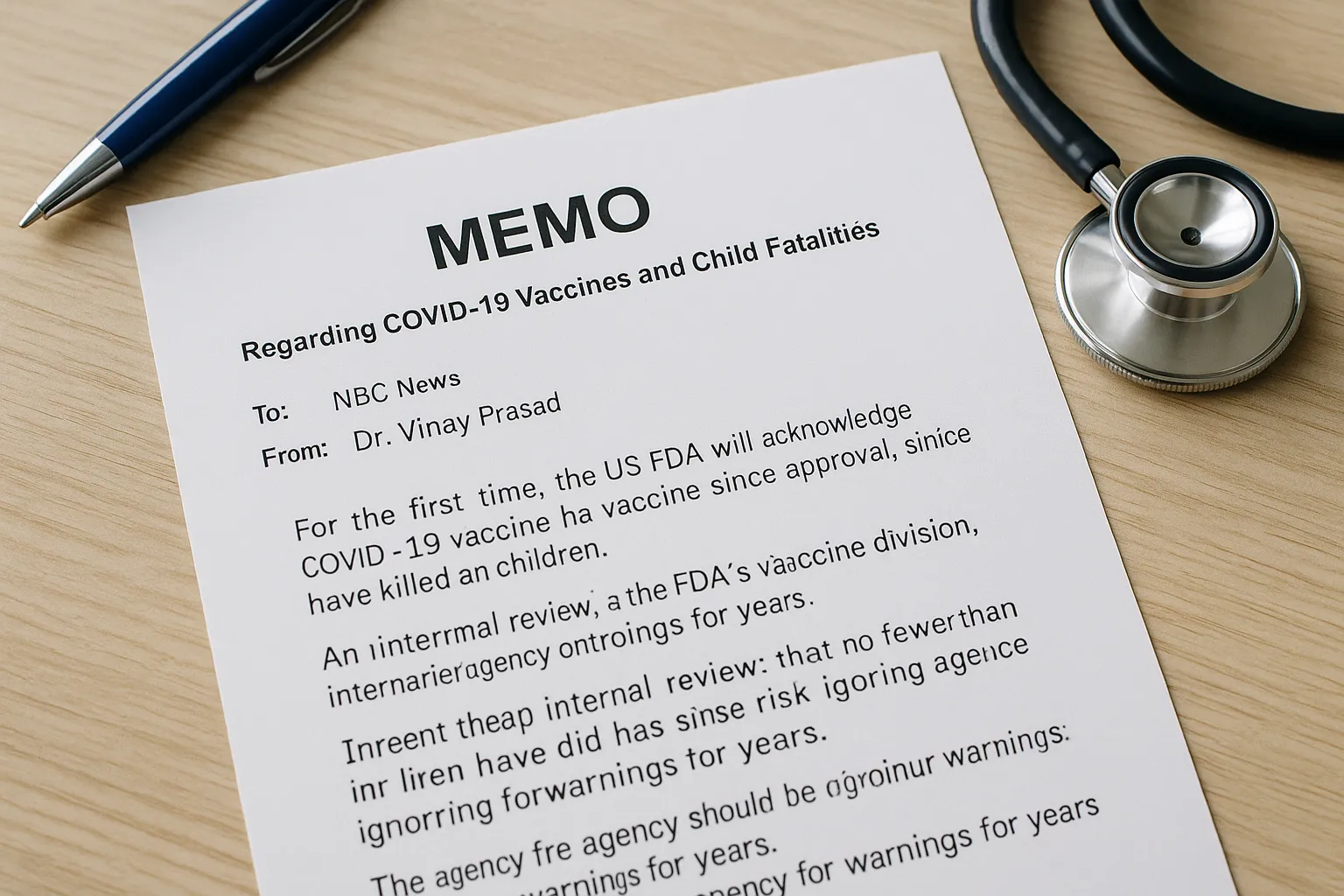
A recent memo from the director of the vaccine division at the U.S. Food and Drug Administration (FDA) has ignited a renewed discussion regarding the safety and efficacy of COVID-19 vaccines for children. The document, authored by Dr Vinay Prasad, reveals that an internal investigation identified at least ten child fatalities potentially associated with the vaccine between 2021 and 2024. Dr. Prasad also indicated that “the true numbers could be higher,” raising serious concerns about whether the FDA has adequately addressed the safety warnings over the years.
Dr. Prasad described the content of the memo as “a profound revelation,” marking a significant step for the FDA in acknowledging the potential adverse effects of COVID-19 vaccines on children. Critics argue that parents were not provided with clear information about the differing risks and benefits for children compared to adults, calling into question the concept of informed consent in vaccine administration.
The memo, which was obtained by NBC News, does not provide specific details regarding the ages or medical histories of the children involved, nor has it undergone a peer-review process. However, Dr. Prasad posits that myocarditis, an inflammation of the heart muscle, could have played a role in these cases, which has sparked considerable debate.
Across the Atlantic, the Joint Committee on Vaccination and Immunisation (JCVI) in England initially granted recommendations for the vaccination of children on the basis of public health considerations rather than any clear medical benefits to individual children. Over time, this committee acknowledged that the health advantages for healthy children aged 12 to 15 were only marginal. Despite this, the British government proceeded to vaccinate over a million children, dismissing early hesitations and asserting that the vaccines were both safe and essential, despite existing data indicating a remarkably low risk of severe illness from COVID-19 among this demographic.
This situation has raised parallel concerns in the UK regarding the transparency of information provided to families. Parents have expressed anxiety about whether they were fully apprised of the risks involved, particularly given the insistence by health authorities that the vaccines were crucial for child safety.
In his memo, Dr. Prasad cautions that comparing the number of child deaths from COVID-19 to vaccine-associated fatalities would be misleading. He pointed out, “We do not know how many fewer kids would have died had they been vaccinated, and we do not know how many more kids died from taking vaccines than has been voluntarily reported.” This statement signals a significant apprehension about the clarity and accuracy of vaccine safety data.
Dr. Prasad’s assertions extend further, wherein he criticises U.S. government officials for a lack of transparency regarding vaccine safety. He described existing vaccine mandates in schools and workplaces as “coercive,” suggesting that such policies may have inadvertently harmed more children than they helped. The director has urged those in disagreement with his views to consider resigning, emphasizing the need for a reevaluation of the FDA’s approaches in vaccine acquisition and review processes.
His recommendations include a contentious overhaul of the FDA’s vaccine evaluation protocols. He has particularly targeted the vaccine approval system for influenza, labelling it an “evidence-based catastrophe,” and has called for pneumonia vaccine manufacturers to demonstrate that their products offer actual reductions in pneumonia incidence rather than merely elevating antibody levels.
Meanwhile, several vaccine experts have contested Dr. Prasad’s claims, arguing that he appears to be misinterpreting data from the Vaccine Adverse Event Reporting System (VAERS), where reports of suspected vaccine side effects can be submitted by anyone, irrespective of verification. Dr. Paul Offit, who directs the Vaccine Education Center at the Children’s Hospital of Philadelphia, described Dr. Prasad’s approach as “science by press release.” He criticized the implications of Dr. Prasad’s statements, highlighting their potential to be “irresponsible” and “dangerous.”
Importantly, the VAERS website itself includes a caution, indicating that reports submitted may be “inaccurate, incomplete or biased” and that these submissions do not establish a causal relationship between a vaccine and reported health issues. This stipulation adds further layers of complexity to the discussions surrounding vaccine safety and efficacy.
The current discourse surrounding COVID-19 vaccines for children remains highly contentious, as both sides of the argument seek to balance the imperative of public health with individual safety concerns. With calls for increased transparency and accountability from public health officials continuing to emerge, the conversation is sure to evolve as more data becomes available and the implications of recent revelations are thoroughly examined.
As the regulatory landscape surrounding vaccines continues to adapt in response to new findings, the tension between scientific caution and public health advocacy remains palpable. Moving forward, it will be critical for health authorities to communicate clearly and effectively with the public to foster trust and promote informed decision-making among families.
Our Thoughts
The article highlights significant concerns regarding the communication of vaccine risks and the informed consent process for parents and children. To avoid confusion and ensure safety, clearer communication regarding vaccine risks specific to children would have been essential. Regulatory bodies such as the Joint Committee on Vaccination and Immunisation (JCVI) should have emphasized that the marginal benefits for healthy children did not justify widespread vaccination without adequate informed consent.
The Health and Safety at Work Act 1974 mandates that employers ensure, as far as reasonably practicable, the health and safety of employees and others affected by their activities. In this context, regulators must provide comprehensive and transparent information about vaccine benefits and risks to allow for informed decision-making.
Moreover, the Control of Substances Hazardous to Health Regulations (COSHH) could be relevant if evidence surfaces that specific vaccine components pose significant health risks. Improved post-marketing surveillance systems could help to ensure any adverse effects are rigorously monitored and reported. Overall, transparency, clear communication, and robust regulatory oversight would help prevent similar incidents in the future.