

















Story Highlights
– Worker had lower leg amputated from crush injuries.
– Company fined £200,000 for safety violations.
– Similar incident occurred at the company in 2021.
– Investigation revealed inadequate safety measures and training.
– HSE emphasizes importance of risk assessment and safety.
Full Story
A manufacturer based on the Isle of Wight has faced significant penalties after a serious incident that resulted in an employee losing his lower leg due to crush injuries. The company, A J Wells & Sons Ltd, located in Newport, has been fined £200,000 and mandated to cover £9,056 in court costs following a health and safety investigation by the Health and Safety Executive (HSE).
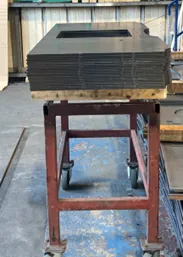
The incident occurred on the 15th of August 2023 when the injured worker was manoeuvring a trolley loaded with around 30 metal sheets, each exceeding 20 kilograms in weight. The trolley, which proved unsuitable for transporting such heavy items, overturned, ultimately leading to the unfortunate amputation of the employee’s lower right leg due to the crushing force of the sheets.
An inquiry by the HSE revealed that various safety protocols had not been upheld at the workplace, with particular flaws identified in the use of equipment, the establishment of clear transportation routes within the factory, and the provision of adequate training for staff involved in handling heavy materials. The investigation also highlighted a troubling history of similar incidents, with a comparable accident having occurred in November 2021. Despite this prior incident, the risk assessments necessary for safe operations concerning the movement of heavy metal sheets had not been sufficiently updated, creating an environment where this latest accident could occur.
Employers are legally obligated to assess their operational tasks to implement appropriate safety measures, ensuring that employees can perform their work as safely as possible. This includes the requirement that any work equipment used is fit for purpose and that personnel are thoroughly trained in its safe operation. HSE inspector Nicola Pinckney commented on the severity of the case, stating, “This is a particularly unfortunate case as lessons from a previous similar incident had not been learnt. This young man will be affected by this accident for the rest of his life and has to suffer the consequences of the company’s failings.”
The legal proceedings against A J Wells & Sons Ltd culminated on 25 November 2025 at Isle of Wight Magistrates’ Court, where the company admitted guilt to breaching Section 2(1) of the Health and Safety at Work etc. Act 1974. This legislation mandates employers to safeguard the health, safety, and welfare of their employees during work activities.
The HSE, as the national authority concerned with workplace health and safety in the UK, aims to protect individuals and promote safer working environments. Following this tragic incident, it is essential for companies across various industries to carefully evaluate their health and safety protocols, ensuring that all aspects of worker safety are diligently assessed and managed.
In light of this incident, employers are being urged to reflect on their risk assessment processes and the adequacy of training provided to employees. The importance of cultivating a safety-first culture within the workplace cannot be overstated, especially when handling heavy materials. It is imperative that businesses take the necessary steps to avoid the recurrence of such accidents, which not only endanger workers but can leave long-lasting impacts on their lives.
Historically, A J Wells & Sons Ltd has encountered legal challenges related to safety practices, with this recent event emphasizing the need for a renewed commitment to health and safety regulations. The failure to learn from past incidents exposes both employees and the company to heightened risks, underlining the significance of maintaining vigilant oversight regarding workplace safety.
Additionally, this case has led many in the manufacturing sector to reconsider their operational standards and employee training programs, prompting discussions on the necessity for rigorous evaluations of workplace conditions and the efficacy of safety equipment employed during operations. The repercussions of neglecting these responsibilities can be severe, as demonstrated by the life-altering consequences faced by the affected employee.
As discussions surrounding workplace safety continue to evolve, it becomes increasingly clear that businesses must not only comply with existing regulations but also foster an environment where workers feel valued and protected. This commitment to safety is not merely a legal obligation; it is a moral one that reflects the values of a responsible company.
The HSE remains steadfast in its mission to advocate for safe work practices across all industry sectors. Their ongoing efforts include providing guidance on the Provision and Use of Work Equipment Regulations 1998, which can serve as a valuable resource for companies aiming to improve their safety standards.
In conclusion, the incident involving A J Wells & Sons Ltd serves as a critical reminder of the lessons to be learned from workplace accidents. Employers must prioritize safety and adhere to robust risk assessment practices to ensure such tragedies do not happen in the future. As the local community reflects on the gravity of this event, it is an opportunity for industry-wide reassessment of safety measures to prevent further incidents and safeguard the wellbeing of all employees.
Our Thoughts
The incident involving A J Wells & Sons Ltd highlights several critical failures in health and safety practices. To prevent such outcomes, key measures must be implemented. Firstly, the company should have conducted a thorough risk assessment prior to allowing employees to move heavy materials, especially given the precedent of a similar incident in 2021. The use of suitable work equipment, as mandated by the Provision and Use of Work Equipment Regulations 1998 (PUWER), is essential; the trolley used was inadequate for the weight being transported.
Additionally, clear pathways for transporting materials should be established to minimize hazards. Employee training on safe handling practices is not just a recommendation but a legal requirement under Section 2(1) of the Health and Safety at Work etc. Act 1974. A clear emphasis on ongoing risk assessment and staff training could have mitigated the risks associated with moving heavy items. The company’s failure to learn from past incidents underscores a systemic neglect of health and safety responsibilities, which can lead to severe consequences, as evidenced by this life-changing injury.