
















Story Highlight
– Louise Thompson launched petition for maternity care reform.
– Maternal deaths in UK have risen significantly since 2011.
– Petition seeks Maternity Commissioner and national strategy implementation.
– Over 100,000 signatures needed for parliamentary debate.
– Campaign emphasizes urgency for safer maternity care practices.
Full Story
Louise Thompson has become a prominent voice in the call for urgent reforms in maternity care, following her troubling personal experience during childbirth. She recently shared her story in an interview with The Times, revealing that she nearly lost her life while giving birth. This experience compelled her to launch a petition demanding significant changes in the maternity system.
Reported data by Netmums indicates a disturbing trend in the UK, with maternal mortality rates escalating significantly. According to the latest national figures, direct maternal deaths have surged over 50% compared to statistics from 2009 to 2011. Many women are finding themselves at heightened risk during pregnancy and childbirth, which highlights the need for systemic change.
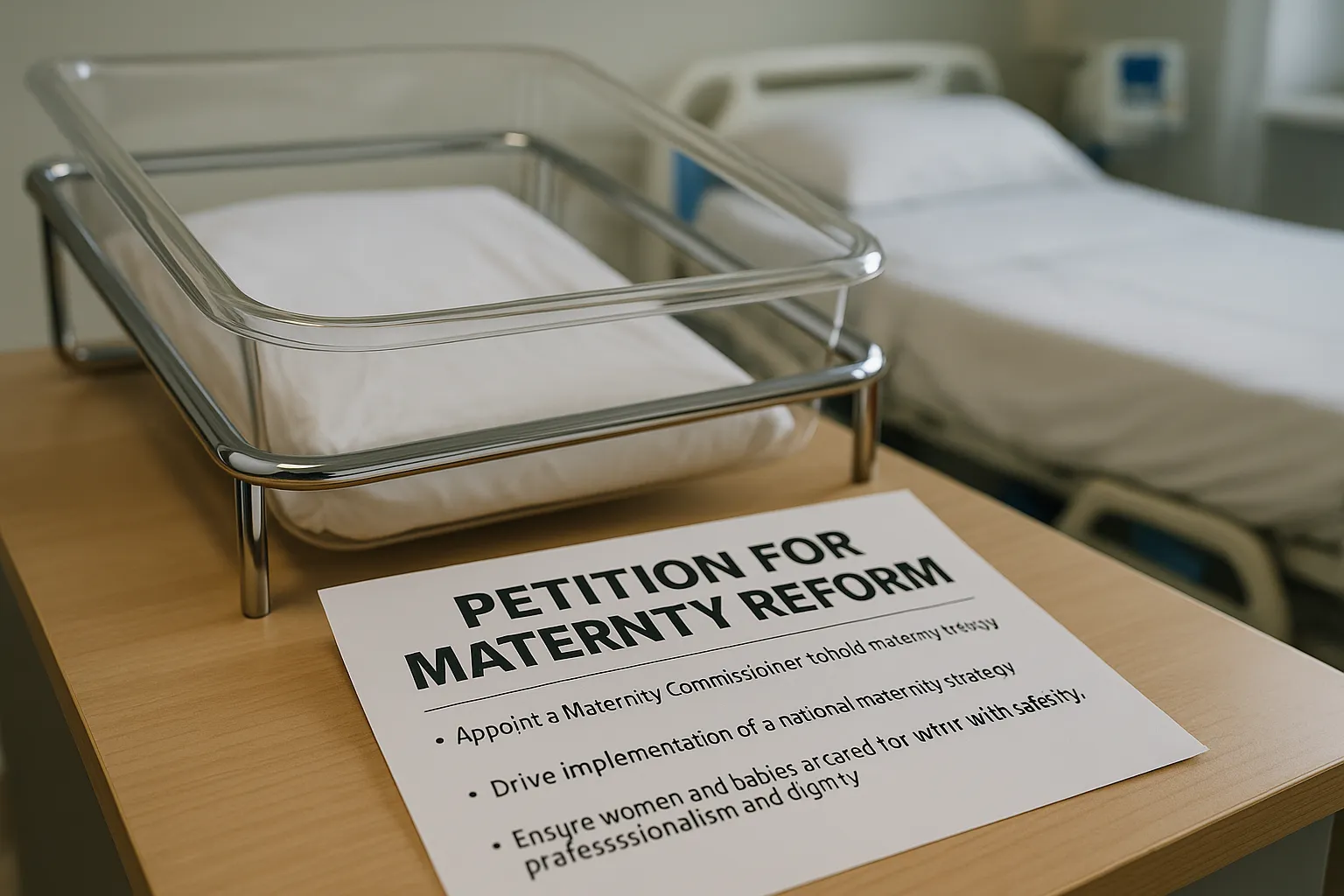
In response to these alarming statistics, Louise’s petition seeks to bring about critical reforms, such as the establishment of a Maternity Commissioner responsible for ensuring accountability within maternity services and the implementation of a national maternity strategy aimed at enhancing safety and support for mothers and their babies across the UK. As of now, the petition has garnered support from over 100,000 individuals, and should it achieve this milestone, it will be eligible for debate in Parliament.
The petition, which Louise initiated alongside former MP Theo Clarke, highlights several key demands aimed at transforming maternity care. These include:
1. The appointment of a Maternity Commissioner to oversee maternity services and ensure accountability.
2. The advancement of a cohesive national maternity strategy focused on safeguarding the well-being of mothers and infants.
3. A commitment to providing care characterised by safety, professionalism, and dignity for all women and their babies.
The response to the petition has been overwhelming, with Louise reporting that within just a day of its launch, there were already 10,000 signatures, even before promotional efforts had ramped up.
Louise’s own journey through childbirth was fraught with complications. Initially, she had opted for a planned caesarean delivery, but the medical team persuaded her to consider alternatives. Ultimately, she underwent an emergency C-section during which a catastrophic series of events unfolded—an artery was severed and her uterus ruptured. For hours, she remained conscious, watching as medical professionals fought to save both her life and that of her newborn.
Just two days after her discharge from the hospital, Louise suffered a massive haemorrhage, losing about five litres of blood. She reached the hospital just in time to receive critical care and subsequently spent weeks in intensive care. This traumatic ordeal led to serious long-term health issues, including the development of severe bowel disease, necessitating the removal of her colon and resulting in her living with a stoma. Additionally, attempts to save her uterus failed, leaving her unable to conceive again. On an emotional level, she developed post-traumatic stress disorder (PTSD) and initially found it difficult to bond with her son.
Louise has articulated her resolve to prevent others from enduring similar experiences, stating, “I can’t go back and rewrite history, but I don’t want this to happen to anyone else.” She poignantly expressed her feelings on her Instagram, saying, “I didn’t know birth could break you,” while illustrating the regrettable reality of many women who emerge from maternity care feeling “traumatised, injured, and silenced.”
During her journey, she has drawn attention to the ongoing mental and physical impact childbirth can have on women, highlighting systemic issues that enable silence surrounding birth trauma to persist. “Some women live with unending pain, their mental health deteriorates, and they no longer feel safe in their own skin,” she noted. Louise emphasised that infant mortality during or shortly after birth is not an uncommon occurrence and that it is unacceptable for such tragedies to take place in a country as developed as the UK.
Furthermore, Louise has pointed out that the UK lacks a modern national maternity strategy and a designated individual responsible for safeguarding the interests of both birthing parents and their newborns. She insists, “We need a Maternity Commissioner, we need accountability, and we must take action.” The pressing nature of the petition is underscored by her assertion, “If this reaches 100,000 signatures, Parliament has to listen.”
Louise’s campaign urges individuals, especially those who have given birth or care for new parents, to participate actively by signing and sharing the petition. “This is for all those who didn’t make it and for every parent who deserved better,” she emphasised.
The context for this petition is underscored by worrisome statistics on maternal health in the UK, including:
– A nearly 20% increase in maternal deaths over the last decade, contributing to one of the highest maternal death rates in Europe.
– Approximately 15% of NHS maternity units have received an ‘inadequate’ rating from the Care Quality Commission.
– Suicide now ranks as the leading cause of death for women in the first year postpartum.
These statistics raise concerns about systemic issues, with the Care Quality Commission warning that deficiencies in maternity care may become normalised trends. Louise’s campaign seeks to dismantle the stigma surrounding birth trauma, allowing mothers to share their experiences openly.
“People perceive childbirth as a joyful, seamless process,” she remarked. “This misconception stops women from voicing their fears and experiences, subsequently obscuring the real dangers involved.”
The need for advocacy is crucial. Conversations about difficult birth experiences must become commonplace. Louise urges parents to feel empowered to ask for help, whether it relates to physical pain, mental health struggles, or bleeding following childbirth. She advocates for secured continuity of care throughout pregnancy and delivery to improve overall outcomes.
Louise emphasises that her campaign extends beyond her personal narrative, advocating for all women who have suffered or tragically did not survive. As she succinctly puts it, “This is for the women who didn’t survive.” She believes that by demanding better treatment and accountability, we can shift the current landscape of maternity care for the better.
Our Thoughts
To prevent the tragic outcomes described in Louise Thompson’s experiences, several measures could have been taken to improve safety in maternity care. Firstly, adherence to the Health and Safety at Work Act 1974 requires that risks to health are assessed and managed, emphasizing the need for comprehensive training and protocols for medical staff involved in childbirth.
The introduction of a designated Maternity Commissioner could ensure accountability and adherence to the Care Quality Commission standards, which report that around 15% of maternity units are rated ‘inadequate’. Establishing clearer guidelines and communication protocols regarding patient autonomy—especially concerning consent for procedures like caesarean sections—would promote better patient outcomes and experiences.
Supporting mental health management post-birth aligns with the requirements of the Mental Health Act 1983, highlighting a need for timely interventions for PTSD and other mental health conditions following traumatic childbirth experiences.
Raising awareness and improving public discourse on birth-related risks, as suggested by the petition, could foster an environment where women feel safe to voice their concerns, leading to earlier interventions and potentially saving lives. Implementing a national maternity strategy could address these systemic issues, aligning with the recommendations for consistent standards of care that prioritize safety and dignity for mothers and infants.