
















Story Highlight
– Corinne Cope campaigns for preventable harm awareness post-Dylan’s death.
– Dylan died from sepsis due to hospital discharge errors.
– Inquest concluded “gross failure of basic care” occurred.
– New safety-netting leaflets approved for all Welsh health boards.
– Corinne advocates for improved sepsis recognition and care systems.
Full Story
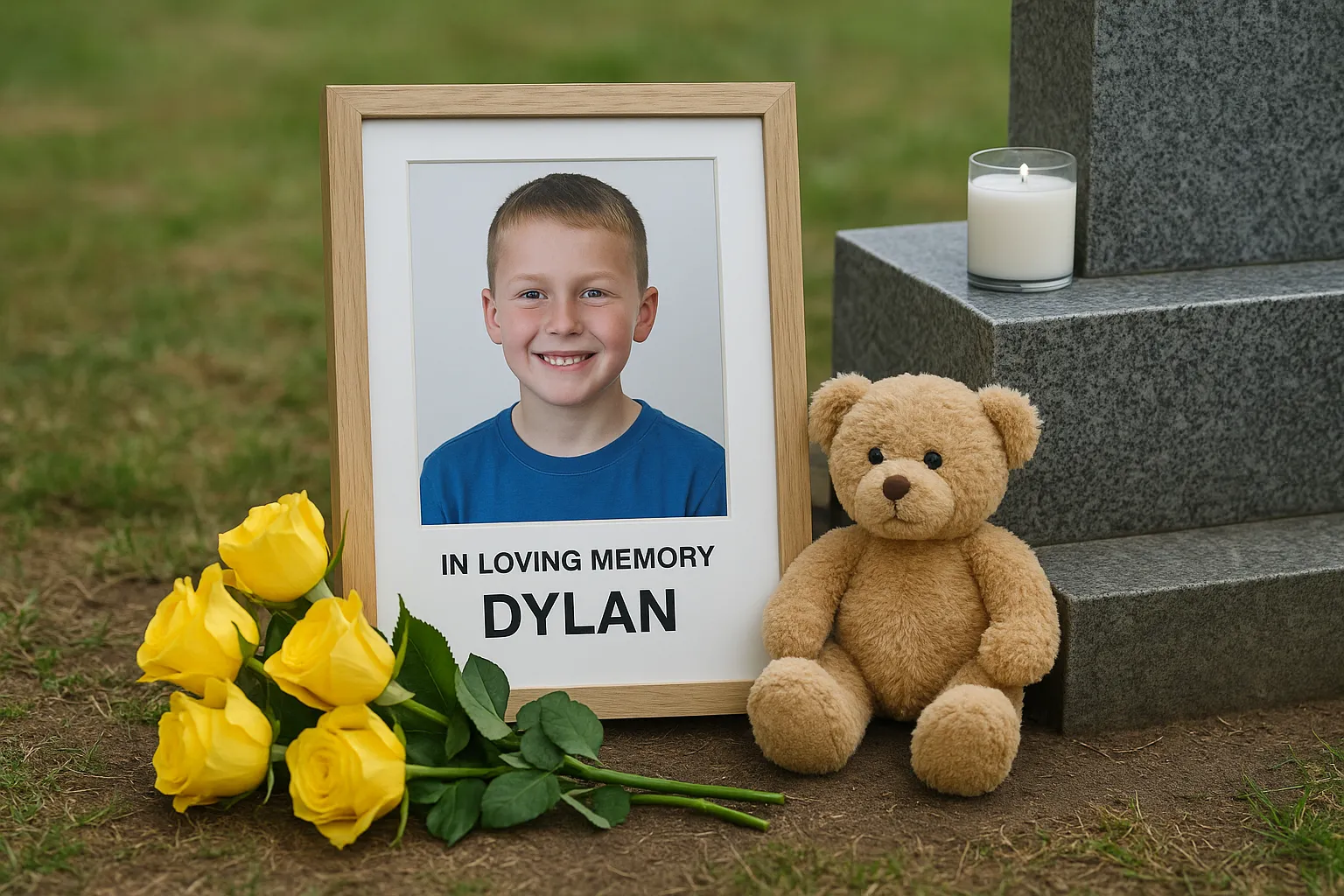
Corinne Cope, from Newport, continues her poignant campaign for healthcare reform three years after the tragic death of her nine-year-old son, Dylan. He passed away on December 14, 2022, due to sepsis resulting from a perforated appendix, a critical condition that requires immediate medical attention. His journey began when he visited the Accident and Emergency department with abdominal pain, following a GP’s referral that noted “query appendicitis.” Unfortunately, this crucial detail was overlooked by the hospital staff.
On December 7, Dylan was discharged from Grange University Hospital in Cwmbran but was subsequently readmitted three days later as his condition worsened. A series of medical oversights compounded his situation, ultimately leading to his tragic outcome. An inquest revealed that Dylan should have remained hospitalised for further evaluation. Senior coroner Caroline Saunders concluded in May 2024 that “a number of individual errors” contributed to the decision to discharge him, amounting to what she termed “a gross failure of basic care.” She indicated that had Dylan not been discharged prematurely, his death may have been prevented and highlighted that neglect played a role in this tragic case.
Reflecting on her advocacy efforts since Dylan’s passing, Corinne stated, “The only reason I’ve done it is because it didn’t already exist, and I felt that not enough was being done when I learned of the avoidable harm and death from sepsis – and the scale of it.” She believes that the lives of Dylan and others who have suffered premature deaths must not be in vain. “It can’t all be for nothing,” she insisted.
Despite her dedication to raising awareness and advocating for change, Corinne expressed that campaigning does not ease the profound grief of losing a child. “I can’t say – unfortunately – that it alleviates any of the grief and the pain,” she revealed. The struggle of coping with the loss of a child, particularly when it is due to preventable causes, has left her with an enduring emotional burden. “It’s a life sentence of pain and wonder that you just wouldn’t wish on anyone,” she remarked, adding that the complexity of a preventable death adds layers of emotional turmoil that are hard to navigate.
Corinne has pinpointed repeated hospital failures as indicative of a larger systemic issue, suggesting that there is a dire need for a “zero-tolerance approach to avoidable harm and death.” She acknowledged the challenges faced by the National Health Service (NHS) today, stating, “There are so many amazing people doing amazing work. But from my experience I’ve painfully learned that our hospitals in particular are chronically unsafe, and there is a real lack of robust safeguards in place.”
In her effort to turn tragedy into action, Corinne reached out to the UK Sepsis Trust shortly after her son’s death and also engaged with the Welsh Government. She discovered that a crucial resource, the Spotting the Unwell Child leaflet—often employed in England—was not in circulation in Wales. “The UK Sepsis Trust have been fighting for years to get it adopted,” Corinne noted, pledging to push for its implementation in light of Dylan’s circumstances.
Her advocacy has borne fruit; she has successfully achieved the introduction of All-Wales safety-netting leaflets for both adults and children in primary and secondary healthcare settings. These leaflets incorporate QR codes linking to information from the NHS-endorsed UK Sepsis Trust, aimed at aiding individuals with potential infections. The Welsh Government has urged health boards and GP practices to implement these leaflets uniformly, seeking to eliminate discrepancies in care often referred to as a “postcode lottery.”
Corinne stressed the importance of uniformity in healthcare access. “You shouldn’t be able to get this at one hospital or GP practice and not another, depending on which area you’re in,” she observed, advocating for comprehensive adoption across various regions. She believes that if successful, these initiatives could serve as a model for other parts of the UK.
The content of the leaflets directly addresses the failures identified in Dylan’s case, which include insufficient safety-netting advice, issues within the hospital’s open-access system, and shortcomings in the escalation of concerns by NHS 111 Wales. The leaflets also take into account findings from investigations carried out by Public Health Wales into deaths caused by invasive Group A Streptococcal infections in children.
Corinne highlighted the necessity of effective safety-netting measures. “Parents and patients can’t be expected to remember everything, particularly when they’re tired and worried,” she explained. “It is best to assume people know absolutely nothing and then give them robust information. It’s vital for people advocating for themselves or a loved one.”
In addition to the leaflets, the Welsh Government has committed to implementing a UK Sepsis Trust screening tool for both adults and children, displayed in waiting areas and clinical settings. This tool, which facilitates symptom assessment while patients await care, has the potential to have altered the trajectory of Dylan’s care had it been accessible sooner. “It could have potentially saved Dylan’s life,” Corinne reflected.
Corinne emphasises that while it’s unrealistic to expect the total elimination of human errors in healthcare, the establishment of strong safety-netting protocols can create a safer environment for both healthcare professionals and patients. “People will always make mistakes,” she acknowledged. “But if you have that safety-netting in place that’s really robust, staff and patients can feel safer.”
Her advocacy has also benefited from support by patient safety groups and Llais, a citizens’ body for health and social care in Wales. “Llais have been very helpful to me having my voice heard with my improved sepsis campaigning,” she praised, recognising their role in amplifying her message to the Welsh Government.
Corinne expressed gratitude towards the UK Sepsis Trust, specifically acknowledging the efforts of Terence Canning and Melissa Mead, whom she credited for their unwavering dedication to improving care for those affected by sepsis.
Looking ahead, Corinne hopes the changes made will significantly reduce avoidable harm and fatalities caused by sepsis, a condition that impacts thousands annually. “Not every death is preventable,” she conceded, “but a lot of them are with timely recognition and optimal care.” She characterised Dylan as “loving” and “feisty,” and while her campaigning does not alleviate her sorrow, she remains steadfast in her belief that meaningful action represents the only viable path forward. “If those that have the capacity and the inclination to do so don’t act,” she concluded, “then things will never improve.”
A spokesperson for Aneurin Bevan University Health Board acknowledged the coroner’s findings and expressed remorse over the failures in Dylan’s care. “We cannot imagine the heartbreak Dylan’s family experience,” they stated. “We are determined to learn from this tragedy and make the improvements necessary to ensure this does not happen again. Changes have already been made, but we recognise that there is still more work to do.”
Our Thoughts
The tragic case of Dylan Cope highlights several critical failings in the healthcare system that could have been addressed to prevent his death. Key safety lessons include the necessity for robust communication protocols within hospitals, ensuring that critical notes such as “query appendicitis” are prioritized and acted upon. The breach of the Health and Safety at Work Act 1974, particularly regarding the requirement for employers to ensure the health and safety of service users, is evident.
The coroner’s finding of gross failure in basic care indicates that adherence to established guidelines and protocols, such as the UK Sepsis Trust’s recommendations, was neglected. Implementing safety-netting policies would have provided better support for families and patients, as highlighted by Corinne Cope’s campaign for consistent access to vital information across health boards in Wales.
Going forward, training and reinforcement of existing protocols, alongside public awareness initiatives, could significantly reduce the risk of similar incidents. Regular audits of patient care processes and the establishment of a zero-tolerance approach to avoidable harm could lead to improvements in patient safety and care outcomes.