












Story Highlight
– Mum’s son swallowed toy sand that may contain asbestos.
– Smyths Toys initially reassured it was non-toxic.
– Product recall issued after discovery of asbestos traces.
– Health risk deemed low, but concern remains for children.
– Calls for improved safety checks on children’s products.
Full Story
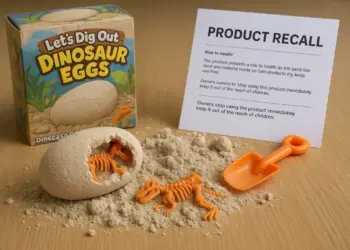
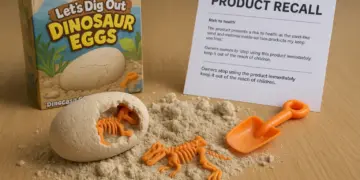
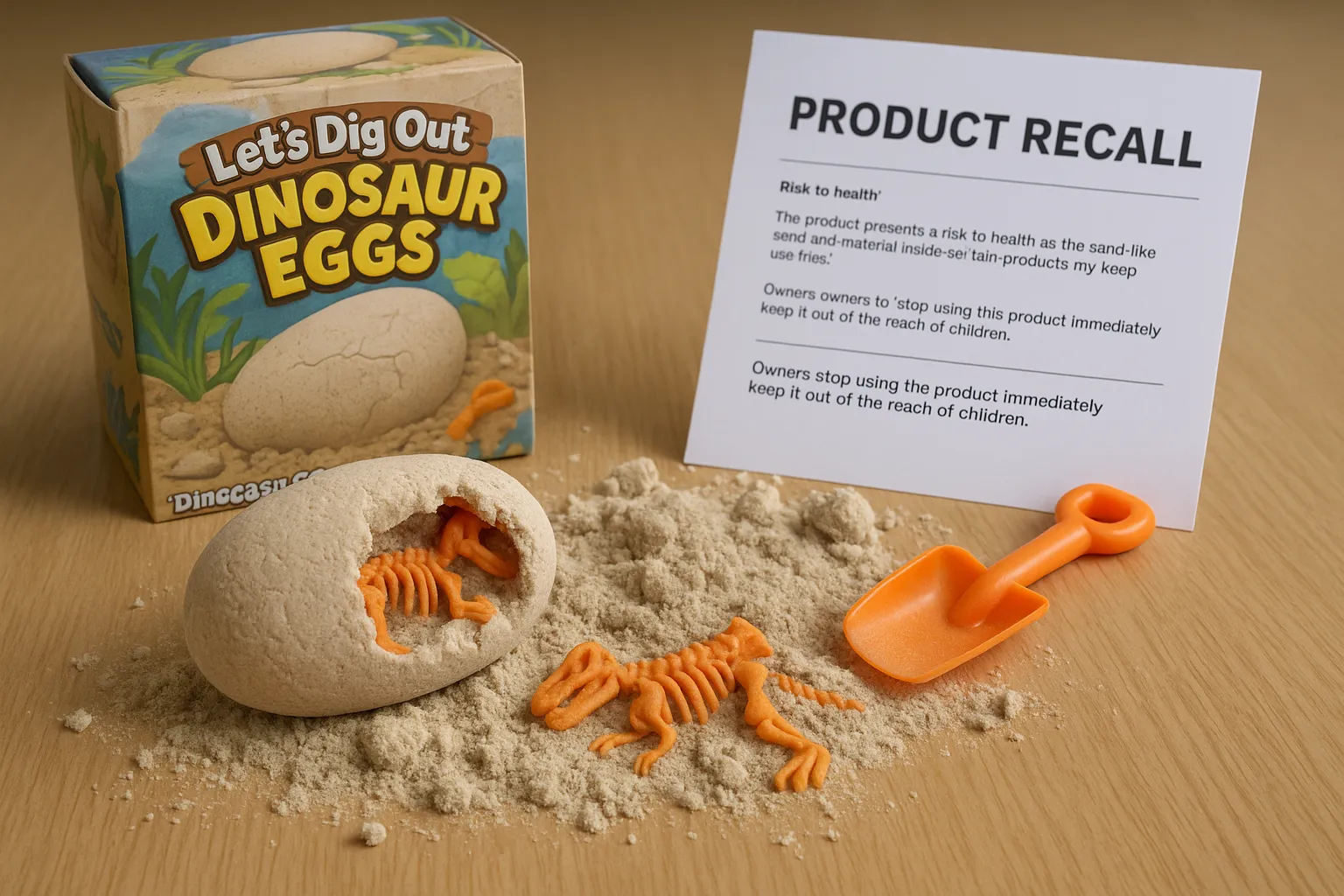
A mother from Lincoln has expressed deep concern after her three-year-old son ingested a substance from a toy that was later found to potentially contain asbestos. Charli Aitken reported that her heart sank following an email notification regarding a product recall linked to the “Let’s Dig Out Dinosaur Eggs” toy, which included “dinosaur sand” made from materials that may not be safe.
In early February, during a play session, Aitken noticed her son, Rudi, scooping a large spoonful of the toy’s dinosaur sand. “He looked at me and smiled and his mouth was full of plaster,” she recounted, highlighting the moment of panic she felt. After the incident, Aitken contacted NHS 111 which guided her to the poison control team. The team informed her that the main concern was the potential presence of toxic substances in the toy.
Subsequently, Aitken reached out to the retailer, Smyths Toys, which had initially assured her the sand was created from plaster of Paris and deemed non-toxic. “I trusted what Smyths said. I trusted it was non-toxic,” she explained. However, a few weeks later, she received an email stating that the company was recalling the product after discovering that some items might contain trace levels of asbestos. “All I saw was ‘asbestos’ and my heart dropped,” she said, reflecting her shock and disbelief upon learning of the recall.
The product recall encompassed seven toys sold by Smyths, emphasizing that the material in question “presents a risk to health as the sand-like material inside the kit may be contaminated with a small quantity of asbestos.” The advisory urged consumers to cease using the product immediately and to keep it away from children. Aitken was left feeling perplexed about the retailer’s failure to directly inform her given the circumstances. “I was really confused about why they hadn’t contacted me directly when they knew my son had ingested it,” she articulated, voicing her frustration over being given misleading advice which may have delayed Rudi’s medical assessment.
Aitken mentioned that her attempts to communicate her concerns to Smyths had taken place over 16 occasions prior to receiving a response, which she characterized as lacking understanding and accountability. When approached for comment, a representative from Smyths Toys stated that an ongoing review by the European Commission and the Office for Product Safety and Standards (OPSS) was in progress concerning those sand toy products. They expressed reliance on the expert guidance from these institutions while they awaited further insight.
Tests conducted by Smyths on one specific product—the “Lets Dig Out Dinosaur Figures Eggs 10 Pack Set”—showed trace levels of asbestos. Although the company asserted that health risks are low, it has opted to recall the products as a safety precaution.
Amid public health concerns, the UK Health Security Agency issued guidance regarding asbestos exposure. They acknowledged that all forms of asbestos fibres pose serious health hazards, particularly concerning the risk of cancer linked to inhalation. However, they also noted that the World Health Organization has indicated there is no consistent evidence to suggest that ingesting asbestos is dangerous to health.
Responding to the situation, Sue Davies, head of consumer protection policy at Which?, remarked, “It is shocking that deadly asbestos is being found in children’s toys sold at major retailers.” She underscored the urgent need for companies to reassess their product safety measures, stressing that manufacturers and retailers must enhance their oversight and testing processes to prevent hazardous products from entering the market. “The Office for Product Safety and Standards needs to take action and ensure proper checks are being carried out to keep dangerous products off the shelves,” she added, advocating for stricter regulations, especially concerning online sales where oversight is typically weaker.
Aitken’s distress continues as she seeks clarity regarding the implications of Rudi’s exposure to the toy’s contents. While she reassured that her son is currently well, she remains acutely aware that the consequences of asbestos exposure are not immediately evident. “Asbestos doesn’t affect you straight away – it’s the long-term impact,” she noted, expressing her concern regarding the potential health implications without specific details on the level of exposure.
She lamented, “Without knowing what asbestos he’s had and the actual levels, we don’t know how much he’s inhaled and eaten.” Aitken emphasized her proactive approach as a parent, having made the necessary calls to seek advice from NHS services and the retail outlet, only to be misled about the toy’s safety. “I trusted that. Now I’m questioning everything. It’s scary,” she stated, reflecting the anxiety and uncertainty that many parents may feel when faced with similar situations.
The ongoing developments surrounding this case serve as a stark reminder of the importance of product safety and the need for clarity and transparency from manufacturers and retailers alike. The community anxiously awaits further guidance while advocates call for more rigorous testing and accountability within the toy industry.
Our Thoughts
To prevent the incident involving a child’s ingestion of potentially asbestos-contaminated toy contents, stringent adherence to UK health and safety regulations is essential. The manufacturers and retailers, such as Smyths Toys, should have implemented comprehensive safety testing and supplier oversight as mandated under the General Product Safety Regulations 2005, which require products to meet safety standards to protect consumers.
Key lessons include the need for more rigorous product safety assessments and transparency in communication regarding health risks associated with toys. The lack of proactive communication from Smyths regarding the product recall suggests a breach of the Consumer Rights Act 2015, which requires businesses to provide accurate information about goods.
To prevent similar incidents, it is critical for the Office for Product Safety and Standards to enforce stricter regulations and ensure regular audits of toy manufacturers. Enhanced education about the risks of hazardous materials in consumer products should also be promoted. Implementing a more robust recall communication protocol could ensure that affected consumers are informed swiftly, thereby minimizing health risks.