














Story Highlight
– National Trust warns against visiting Birling Gap.
– Storm Goretti causes rough seas and rain hazards.
– Yellow weather warning issued for Sussex and Kent.
– Strong winds expected to start Thursday afternoon.
– Secure loose items and check travel conditions.
Full Story
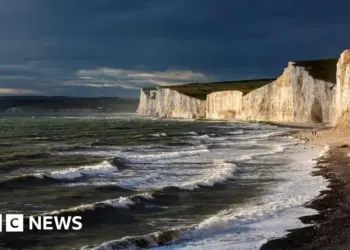
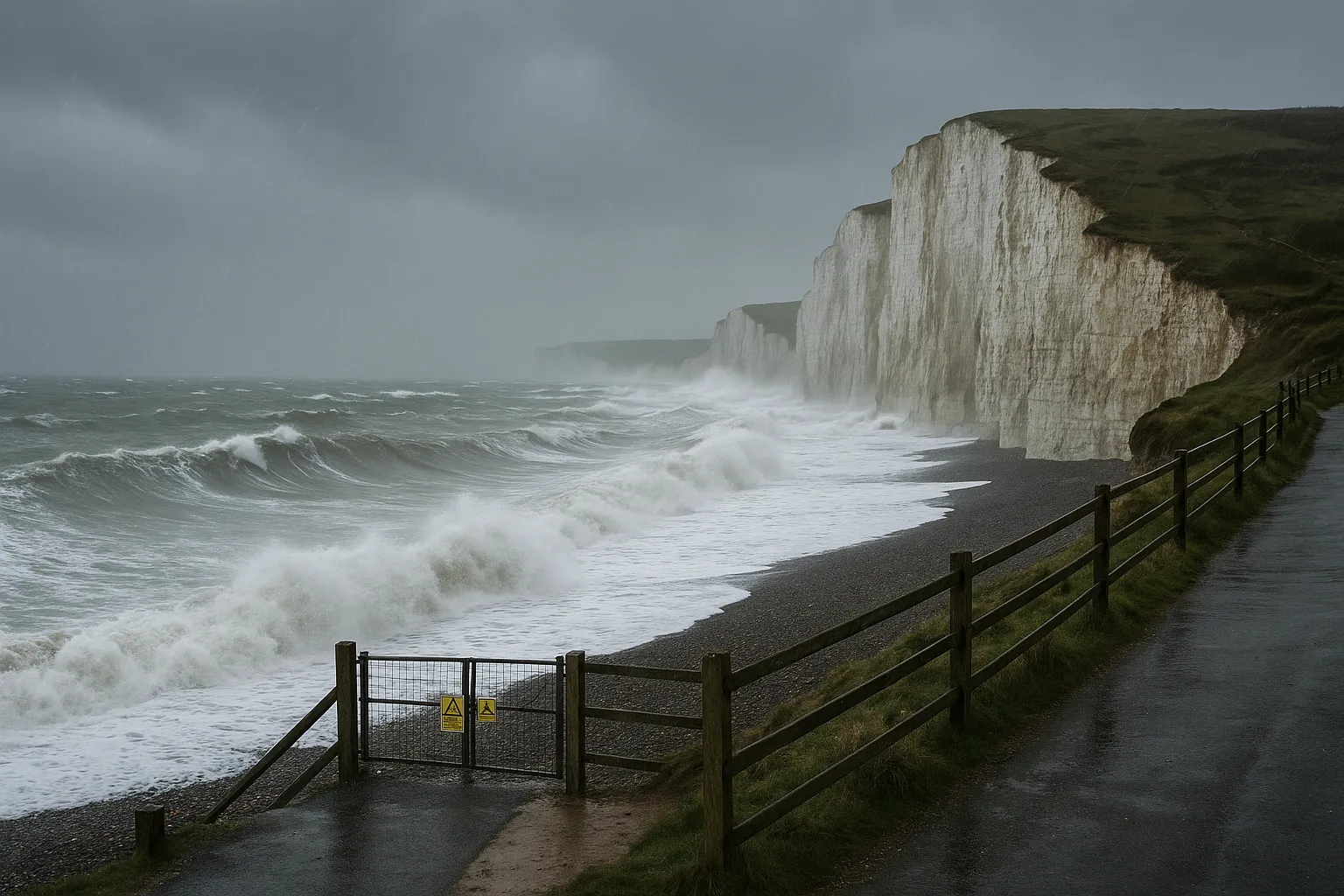
The National Trust has issued a cautionary notice regarding visits to Birling Gap, citing concerns related to the effects of Storm Goretti. Recent footage released by the organisation captures the severe rain and turbulent sea conditions affecting the picturesque cliffs situated near Eastbourne, East Sussex.
The Met Office has placed a yellow weather warning across coastal areas of Sussex and Kent, effective from 15:00 GMT on Thursday until 08:00 on Friday. The National Trust has urged the public to refrain from approaching both the cliffs and the beach, particularly during the height of the storm conditions on Thursday afternoon.
In its advisory, the Met Office highlighted the potential dangers posed by the storm, noting that even from a safe distance on the shore, significant crashing waves could knock individuals off their feet and sweep them out to sea. “Take care if walking near cliffs; know your route and keep dogs on a lead,” the meteorologists advised, underlining the need for caution in these hazardous conditions.
Storm Goretti, the first named storm of the year, has been designated its title by the French meteorological service. This storm is anticipated to develop through a process known as “explosive cyclogenesis” or what is commonly referred to as a “weather bomb.” This phenomenon leads to a rapid decrease in central pressure, which can generate exceptionally powerful winds within a matter of hours.
Forecasters predict that the strongest wind gusts will impact certain areas, particularly in Cornwall and the Isles of Scilly. According to the Met Office, wind speeds are expected to intensify during Thursday afternoon, with a gradual easing of conditions beginning from the west early Friday morning.
In light of the adverse weather, residents are advised to take precautions by securing any loose items outside their properties. Furthermore, individuals are encouraged to check road conditions and public transport schedules, as disruptions may arise due to the storm’s impact.
Local authorities and the National Trust have been proactive in communicating safety messages to residents and visitors alike. Local resident and environmental expert, Dr Hannah Williams, commented on the gravity of the situation, stating, “Storm conditions such as those produced by Goretti remind us of the power of nature and the importance of respecting our coastal environments. Everyone should heed warnings and stay safe.”
As the storm approaches, community members are urged to stay updated on weather developments. The Met Office’s warnings serve as a critical resource for those living in or visiting areas susceptible to coastal storms. For many in the region, Storm Goretti presents not only an immediate concern but also a reminder of the ongoing need for environmental awareness and preparedness, especially as climate patterns continue to evolve.
The storm is expected to create challenging conditions for emergency services and local infrastructure. Authorities have outlined action plans in anticipation of potential flooding and debris removal, ensuring that communities can swiftly respond to any arising situations. Residents are advised to remain vigilant and informed.
The potential for hazardous sea conditions also highlights the vulnerability of coastal habitats. Conservationists have pointed out that extreme weather events can lead to erosion and disruption of local ecosystems. Dr Emily Thompson, a marine biologist, expressed her concerns, saying, “Severe storms can have lasting impacts on coastal ecology, affecting both marine life and coastal vegetation. It’s crucial for us to monitor these changes closely and undertake restoration efforts where needed.”
Visitors to locations like Birling Gap are encouraged to consider alternative indoor activities or visits to local museums during such adverse weather conditions. Many heritage sites and community centers offer a wealth of information and engaging exhibits about the region’s rich history and natural environment.
The ongoing conversation about climate resilience in coastal communities is more pressing than ever as storms like Goretti become a more frequent occurrence. Experts in meteorology and climate science continue to advocate for adaptive strategies that safeguard vulnerable coastal areas while enhancing public awareness around storm preparedness.
In summary, the National Trust’s advisory against visiting Birling Gap during Storm Goretti serves as an important reminder of the risks associated with severe weather. As the storm approaches, both the Met Office and local authorities are committed to ensuring the safety of the public, while experts encourage ongoing dialogue about the long-term implications of such weather events on our coastal landscapes. Community resilience, environmental understanding, and adherence to safety warnings will be key as the region faces the challenges presented by winter storms.
Our Thoughts
To prevent incidents during events like Storm Goretti, effective measures should include the timely communication of risks and reinforced public safety guidelines. The National Trust’s warnings to avoid cliffs and beaches are essential; however, more proactive measures could involve temporary closures of these areas to prevent access during adverse weather conditions, aligning with the Health and Safety at Work Act 1974’s requirement to ensure safety for workers and the public.
Key lessons include the need for collaboration with local authorities to set up clear signage indicating potential hazards, enhanced public awareness campaigns, and robust emergency response plans to address immediate threats posed by stormy weather.
In this scenario, the potential breach of regulations could involve failures to conduct adequate risk assessments prior to severe weather events. Similar incidents could be mitigated in the future through better coordination with meteorological services for timely alerts and implementing stronger safety protocols during adverse weather conditions, minimizing risk exposure to visitors.