









Story Highlight
– Several food items recalled for safety concerns nationwide.
– Waitrose products recalled due to potential glass contamination.
– Disaronno drink recall for possible glass presence.
– Calbee crisps recalled for undeclared allergenic ingredients.
– Iceland Vegetable Lasagne recalled for risk of plastic pieces.
Full Story
**Multiple Product Recalls Due to Safety Risks Across Retail Chains**
A series of food and drink items have been recalled from a variety of supermarket shelves due to safety concerns, including potential contamination with harmful materials such as glass and plastic, as well as inaccuracies in product labeling related to use-by dates.
The Food Standards Agency (FSA) is warning consumers nationwide to check their purchases against the lists of recalled products. It stresses the importance of adhering to recall instructions to mitigate health risks associated with consuming contaminated items.
**Waitrose Takes Action on Bottled Water**
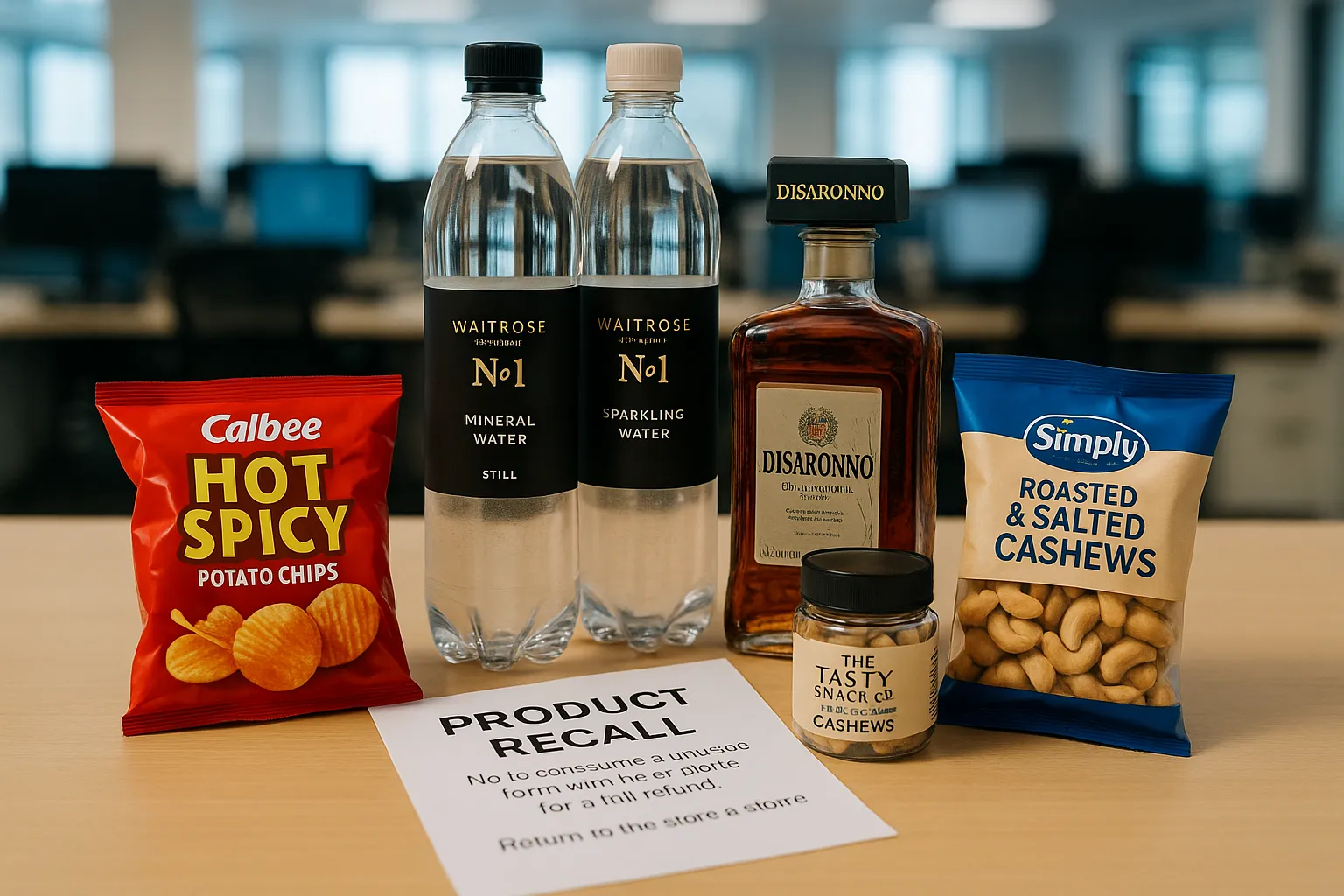
Waitrose has initiated a recall of specific batches of its bottled water, namely the Waitrose No1 Deeside Mineral Water and the Waitrose No1 Deeside Sparkling Water. The supermarket chain alerted customers to the presence of glass particles in certain bottles, rendering them unsafe for consumption.
A spokesperson for Waitrose explained, “We are recalling the above lines due to potential glass contamination. Customers are advised to return the product to their local Waitrose & Partners store for a refund. We apologise that it has been necessary to recall this product and for the inconvenience caused.”
The recalled batch codes for the mineral water include Nov2027 28, DEC2027 01, DEC2027 02, DEC2027 10, DEC2027 11, and DEC2027 16. For the sparkling water, the affected batch codes are DEC2027 01, DEC2027 03, DEC2027 12, DEC2027 15, and DEC2027 25.
The FSA confirmed this action, stating that notices will be present in all stores that sell the affected products to inform customers of the recall and the necessary steps to take if they have purchased them.
**Disaronno Recall Ahead of Festive Season**
The popular almond-flavoured liqueur Disaronno Originale is also facing a recall due to the risk of glass contamination in its 700ml bottles. This recall occurs just in time for the Christmas season, potentially impacting holiday festivities for many consumers.
The affected bottles bear batch codes 25374, 25375, 25381, 25382, 25435, 25442, and 25444. An FSA spokesperson reiterated that Illva Saronno S.p.A, the product’s manufacturer, is taking precautionary measures with this recall.
They advised consumers, “If you have bought the above product, do not consume it. Instead, return it to the store from where it was bought for a refund or replacement.”
Illva Saronno S.p.A expressed regret over the matter, stating, “We apologise for any inconvenience. Consumer safety is our priority,” highlighting their commitment to public safety.
**Crisps Pulled from Tesco and B&M for Undeclared Allergens**
In an urgent recall, Tesco and B&M are advising consumers to refrain from eating specific varieties of Calbee crisps due to undeclared ingredients that may cause severe allergic reactions.
Both retailers are recalling Calbee Hot & Spicy Chips and Calbee Pizza Chips, as the former contains mustard and the latter has celery—ingredients not listed on the packaging.
Customers are warned not to consume the affected products, which include 55g and 105g bags of Calbee Hot & Spicy Potato Chips with best before dates up to June 5, 2026, and 55g packets of Calbee Pizza Potato Chips with best before dates up to April 28, 2026.
A spokesperson for the FSA reiterated the importance of returning the products to the point of purchase for a full refund, emphasizing that failure to declare key allergens poses a serious health risk to individuals with allergies.
**Poundland and Lidl Recall Nuts Over Glass Contamination**
Poundland & Dealz issued a recall for The Tasty Snack Co. Roasted and Salted Cashews due to the possibility of glass contamination. Customers have been advised to return the product, regardless of whether they retained their receipt.
The affected product has the batch code 56T 25255 and a best before date of July 19, 2026. A representative from Poundland stated, “We sincerely apologise for any inconvenience caused,” reinforcing their dedication to customer safety.
Similarly, Lidl is recalling Simply Roasted and Salted Cashews, also over concerns of potential glass presence in the snacks, posing a choking hazard. A spokesperson noted that the recalling measures were taken as a precautionary step to appear responsible towards consumers.
**Marks & Spencer and Iceland Issue Allergy Alerts**
Marks & Spencer is recalling its M&S Milk Chocolate Honeycomb, which may contain undeclared peanuts. This product could be harmful to those with peanut allergies, specifically concerning the 120g packs with lot number 5242 and best before date of May 12, 2026.
The retailer has urged customers to return the product for a refund and has issued notices at points of sale to inform buyers of this important safety alert.
Iceland is also recalling its Vegetable Lasagne due to the risk of plastic contamination. The products implicated have best before dates of July 23, 2026, and July 30, 2026, with customers advised to avoid consumption and return the items to stores.
**Understanding Product Recalls**
Product recalls are an essential process used by manufacturers and retailers to protect consumers from potentially hazardous goods. When a serious issue arises with a particular product, it may either be withdrawn from sale or recalled to prompt affected customers to return it to the store. The FSA is responsible for issuing notifications to alert consumers and local authorities of any food-related issues, ensuring safety remains the top priority during such incidents.
Our Thoughts
The reported food recalls highlight several key safety lessons that could help prevent future incidents. Proper hazard analysis and risk assessment, as mandated by the Food Safety Act 1990 and the Food Hygiene (England) Regulations 2006, should be rigorously implemented to identify potential contamination hazards during production, such as glass and foreign materials. Enhancing quality control measures on bottling lines and during packaging would potentially reduce these risks.
Additionally, compliance with the Food Information Regulations 2014 is critical to ensure accurate labeling, especially regarding allergens. Undeclared ingredients pose serious health risks, as evidenced by recalls due to unlabeled allergens in crisps.
Retailers must develop robust response strategies for product recalls, including efficient communication with customers and regulatory bodies to mitigate risks and ensure consumer safety. Establishing a culture of safety and compliance within food production and retail environments is vital to prevent similar incidents in the future. Regular training on health and safety regulations for staff at all levels could further reinforce these measures.