












Story Highlight
– Several food items recalled for safety concerns nationwide.
– Aldi recalled mozzarella sticks due to undeclared egg allergen.
– Disaronno bottles recalled due to potential glass contamination.
– Tesco and B&M recalled crisps with undeclared allergens.
– Iceland recalled vegetable lasagne for possible plastic presence.
Full Story
Various food products have been recalled across the UK due to safety concerns, including potential contamination and incorrect labelling, which could pose health risks to consumers. Shoppers are urged to be vigilant regarding the items they buy and to adhere to official guidance if they suspect they possess any of the affected products.
Aldi’s Recall
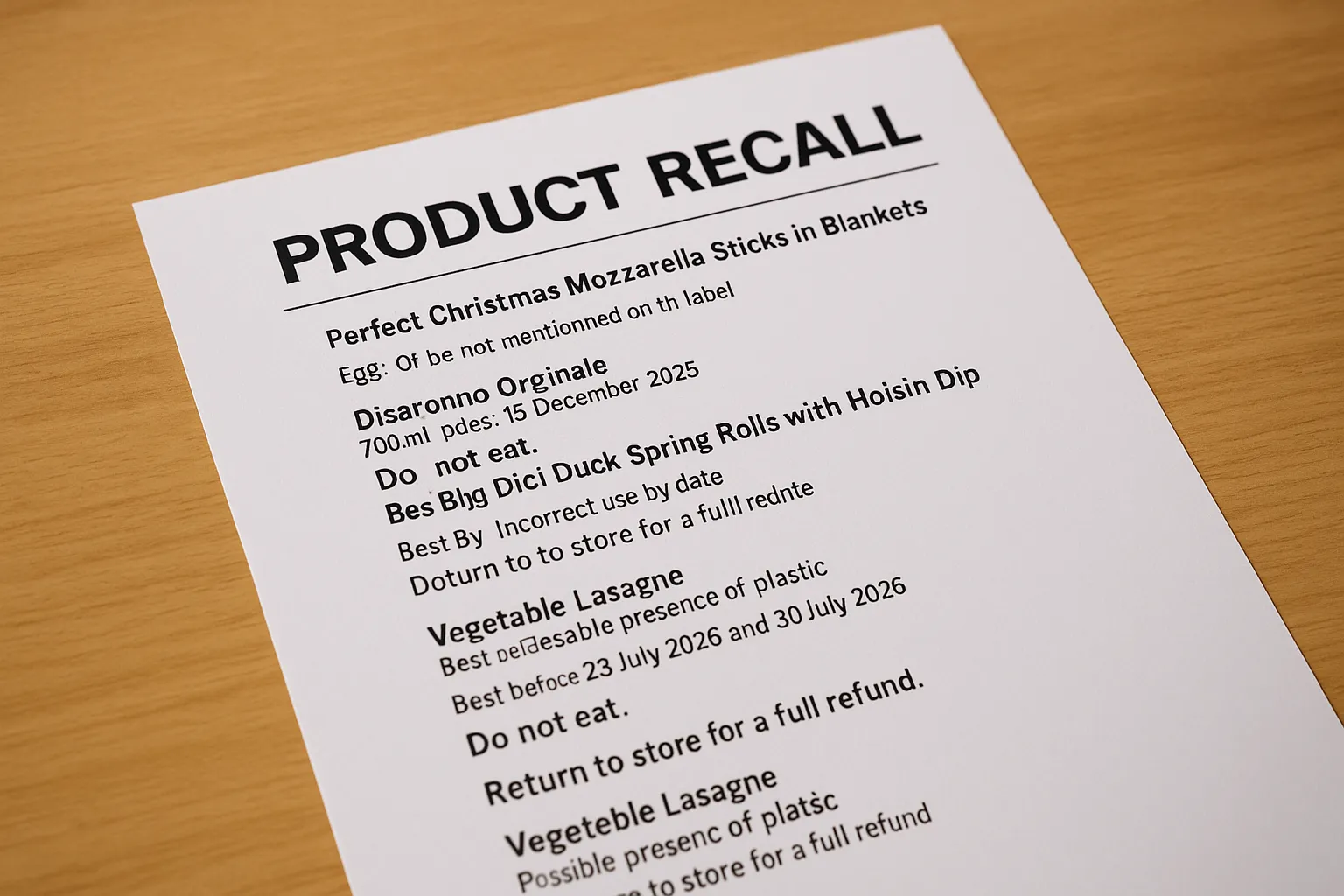
Aldi, the well-known supermarket chain, has issued a recall for its festive food item, Perfect Christmas Mozzarella Sticks in Blankets, highlighting an allergy risk related to undeclared egg content. Customers who have purchased these mozzarella sticks are advised to return them for a refund, particularly those with an egg allergy or intolerance. The specific details regarding the product are as follows:
– Weight: 278g
– Barcode: 4069365328743
– Use By Date: 15th December 2025
The supermarket communicated that “as a precautionary measure, our supplier is recalling Perfect Christmas Mozzarella Sticks in Blankets because the product is labelled incorrectly and contains an undeclared allergen (egg).” It prompted consumers to return the product to their nearest store and reassured them that the full price will be refunded. The Food Standards Agency (FSA) has reinforced this message, urging individuals with egg allergies to refrain from consuming the product and to return it for a refund.
Disaronno Recall
In another distinct recall, the popular drink Disaronno Originale has been pulled from shelves due to concerns that some bottles might contain fragments of glass, rendering it unsafe for consumption. The Food Standards Agency has confirmed the recall, which affects 700ml bottles featuring several batch codes: 25374, 25375, 25381, 25382, 25435, 25442, and 25444.
An FSA spokesperson noted, “Illva Saronno S.p.A is recalling the above product. Point of sale notices will be displayed in all retail stores that are selling these products.” Should customers have bought these bottles, they are advised to return them for a refund or replacement. Illva Saronno S.p.A reiterated their commitment to consumer safety, apologising for the inconvenience caused.
Recall of Crisps by Tesco and B&M
Retailers Tesco and B&M have launched a product recall for specific varieties of Calbee crisps due to undeclared ingredients, which may result in severe allergic reactions. Calbee Hot & Spicy Chips have been flagged for containing mustard, while Calbee Pizza Chips have an undeclared presence of celery. The retailers are urging all customers who purchased these products, in both 55g and 105g packets, to refrain from consumption.
These crisps carry best-before date codes up to June 5, 2026 (Hot & Spicy) and April 28, 2026 (Pizza). The FSA communicated, “This means the products are a possible health risk for anyone with an allergy to mustard or celery.” Shoppers are advised to return the products to their local stores for a full refund.
Asda’s Recall
Asda has also issued a recall warning concerning its 10 Mini Duck Spring Rolls with Hoisin Dip. Due to an incorrect use-by date on the packaging, the spring rolls have been deemed unsafe for consumption. The packaging incorrectly showcases a use-by date of December 29, 2025, while the actual date should be November 29, 2025.
The FSA has stated that “point of sale notices will be displayed in retail stores.” They instructed customers to avoid eating the affected product and return it for a refund, emphasising that no receipt is required.
Poundland Recall
Additionally, Poundland has recalled The Tasty Snack Co. Roasted and Salted Cashews after detecting a possible contamination risk with glass, posing a significant health risk to consumers. The chain is requesting that anyone who has purchased the cashews to return them for a full refund, assuring patrons that no proof of purchase is necessary.
The affected batch code is 56T 25255, with a best-before date of July 19, 2026. The FSA has advised customers that notices will be visible in store, detailing the recall and actions needed from consumers.
Lidl Recall
Lidl has similarly recalled its Simply Roasted and Salted Cashews, citing the potential presence of glass, which could also lead to choking hazards. The 125g packs of this item, best before June 28, 2026, are being pulled from shelves as a precautionary measure.
A spokesperson for Lidl expressed apologies for any inconvenience this incident may have caused and invited customers to return the product for a refund.
Marks & Spencer and Iceland Recalls
Marks & Spencer has announced a recall for its Milk Chocolate Honeycomb, specifically batch 5242, which may contain peanuts inadequately declared on the label, posing health risks for individuals with peanut allergies. Customers are encouraged to return the product for a refund.
In another recall, Iceland’s Vegetable Lasagne is being pulled from from sales over concerns about the potential presence of plastic. The affected products feature best before dates of July 23, 2026, and July 30, 2026.
In all these instances, consumers are urged to take precautions and return recalled products to the respective stores, ensuring their safety while shopping.
Understanding Product Recalls
Product recalls are initiated when food safety issues arise that could jeopardise consumer health. These recalls can lead to products being withdrawn from shelves or returned by customers. The FSA plays a crucial role in disseminating information to local authorities and the public regarding safety issues associated with food products, and providing guidance on the necessary steps to take for those affected.
It is vital for consumers to remain informed and responsive concerning product recalls, to safeguard their health and that of their families.
Our Thoughts
The series of product recalls highlighted in the article reflects significant lapses in safety regulations, which, if addressed, could potentially prevent such incidents. Key safety lessons include the necessity for rigorous quality control during production, especially to prevent contamination (e.g., glass and plastic) and ensure accurate labeling of allergens.
The absence of declared allergens like egg, mustard, and peanuts breaches the Food Labelling Regulations 1996 and the General Food Law Regulation (EC) No. 178/2002, which requires that food be safe for consumption and properly labeled to avoid allergic reactions. Furthermore, the inaccuracies in use-by dates contravene the Food Safety Act 1990, which mandates products must be safe throughout their shelf life.
To mitigate similar incidents in the future, companies should implement more stringent quality assurance protocols, conduct regular audits of their food safety management systems, and enhance staff training regarding allergen management and accurate labeling practices. These measures would align with UK Health and Safety legislation and promote consumer safety.