
















Story Highlight
– Speed activated signs installed for cyclists and EV users.
– 15mph limit imposed for maintenance track beside busway.
– Temporary reduced speed limit for buses during works.
– Safety measures include signage and speed monitoring equipment.
– Ongoing discussions with Health and Safety Executive noted.
Full Story
Cyclists and electric vehicle users on the maintenance track beside the guided busway in Cambridge are set to receive enhanced guidance as new speed activated signs are being introduced. This initiative comes as part of efforts by Cambridgeshire County Council to enforce a recently imposed 15mph speed limit amid ongoing works to install safety fencing along the route that connects St Ives to Cambridge.
In addition to the speed limit for cyclists and electric vehicles, the council has introduced a temporary speed reduction for buses operating on the entire length of the busway, alongside a temporary prohibition on motorbikes using the path during this period of construction.
During a recent highways and transport committee meeting held on 2 December, Councillor Ros Hathorn, a Liberal Democrat representative for the Histon and Impington area, raised concerns regarding the new speed regulations. She highlighted the existing legal speed limit for electric bicycles and scooters partaking in government-sanctioned trials, such as those operated by Voi in the Cambridge area, which stands at 25km/h, equivalent to approximately 15.5mph. This disparity prompted Hathorn to question the practicality of enforcing the 15mph speed limit, especially considering that not all users may be equipped with speedometers.
Hathorn expressed her concerns, stating, “How is it going to be governed, implemented and managed?” Her inquiry underscored the difficulties users might face in keeping track of their speed when the threshold for compliance is right at the edge of what is legally permissible for certain electric vehicles.
Responding to this, Jamie Cooke, the council’s service director for transport and connectivity, recognised the slight discrepancy between the speeds of electric vehicles and the newly implemented limit. He confirmed that further investigation into calibration of speed detection equipment was warranted, stating, “We can calibrate our equipment differently.”
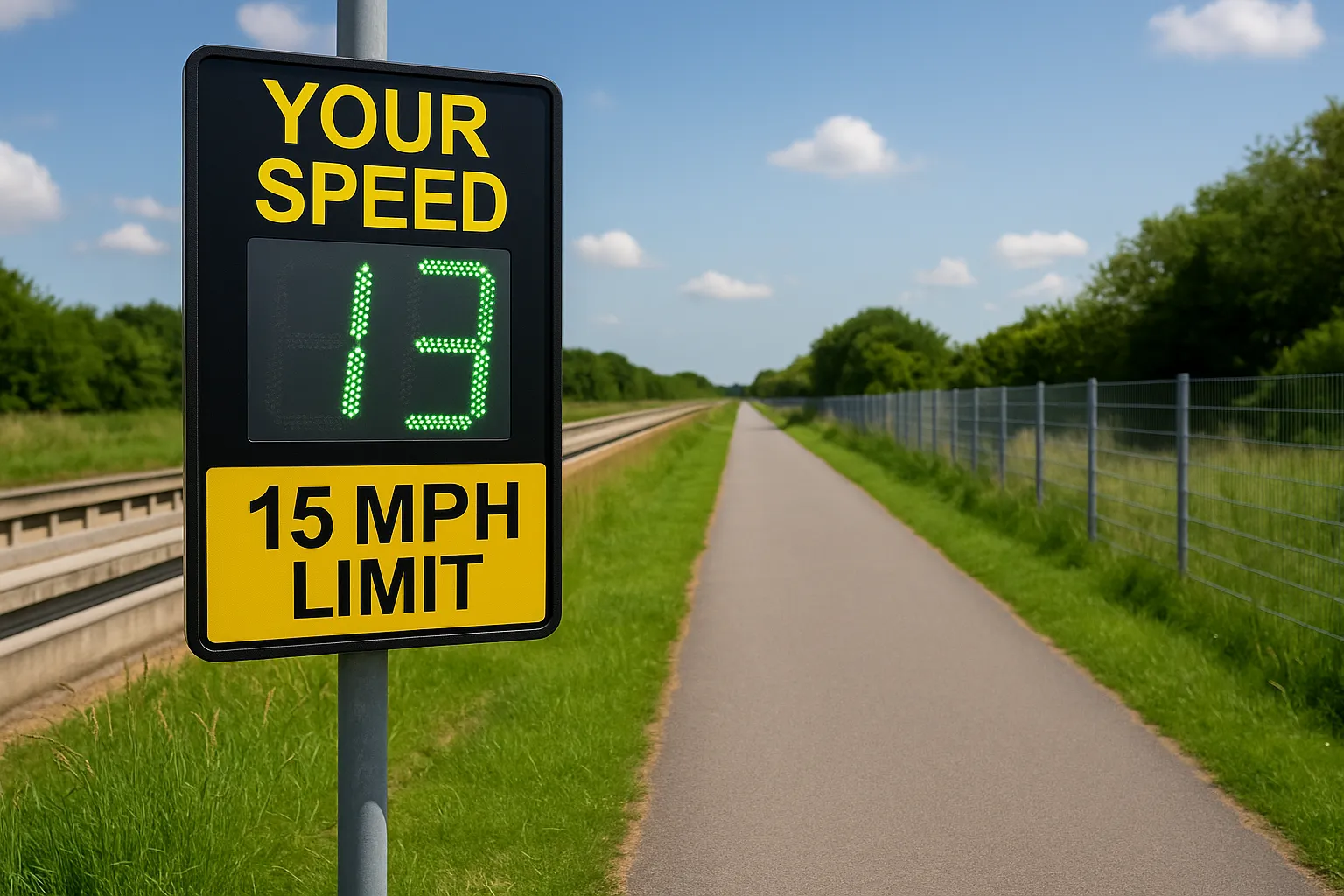
Cooke outlined a range of measures that would be necessary to formally establish the 15mph speed limit. He highlighted the initial priority of the council was to mitigate risks related to excess speeds on the maintenance track, stating, “We felt there was quite a significant risk presented of excess speed.” To assist in the enforcement of this speed limit, vehicle activated signs have been installed on the southern stretch of the route, enabling cyclists and electric vehicle operators to receive real-time feedback on their speed.
In addition to speed signage, the council plans additional deployments of these indicators further down the busway, as well as utilizing speed detection equipment to inform users when they exceed the limit. Cooke elaborated, “We’ve just installed some vehicle activated flashing signage on the southern section which will tell a cyclist or electric vehicle user how fast they are going so they will be able to see if they are complying or not.”
The diverse range of users of the maintenance track, which includes equestrians, children, and adult cyclists, necessitates immediate control measures to manage the shared space effectively. Cllr Darren Green raised concerns regarding the existing confusion among various users, particularly emphasising the lack of lane markings and the potential for collisions with cyclists navigating in both directions alongside pedestrians.
In response to the challenges posed by shared use, Cooke indicated that the council has engaged with the Health and Safety Executive (HSE) regarding the management of the maintenance track. He confirmed that discussions had taken place during site visits to assess safety measures. In an effort to improve safety, signage has been erected at four multi-use crossing points, where different categories of track users converge, including motor vehicles, cyclists, equestrian users, and pedestrians.
To further enhance clarity and safety, additional markings are being made on the southern section of the maintenance track to delineate priorities at intersections with other cycle paths. Cooke affirmed the council’s commitment, stating, “There’s a lot more for us to do on the maintenance track, recognising its shared-use nature.”
As these developments continue to unfold, the focus remains on creating a safer environment for all users of the guided busway’s maintenance track, ensuring that both cyclists and electric vehicle users can operate with reasonable understandings of the speed limits imposed while promoting safe coexistence with pedestrians and other road users. The council plans to closely monitor and adjust measures in response to user experience, with an ongoing commitment to safety throughout the community.
Our Thoughts
Key safety lessons from the article highlight the need for improved communication and clarity regarding speed limits on the maintenance track. To prevent confusion among cyclists and electric vehicle users, clear signage should specify the speed limit, ideally accompanied by speed monitoring equipment.
Relevant UK health and safety legislation, such as the Health and Safety at Work Act 1974, emphasizes the employer’s duty to ensure the safety and health of all individuals affected by their activities. The council’s temporary measures, including speed limits and signage, should comply with Traffic Management Act 2004 regulations.
To prevent similar incidents, the installation of proper lane markings is essential to delineate areas for different users, reducing the risk of collisions. Ongoing engagement with the Health and Safety Executive (HSE) is crucial for ensuring compliance and addressing safety concerns during construction. Future measures should include regular reviews of safety procedures and user feedback to promote safer shared-use paths. Additionally, user education related to speed limits and safe usage of the track will help mitigate risks associated with mixed traffic.