












Story Highlight
– NHS staff exposed to high formaldehyde levels.
– UK’s exposure limit is highest globally at 2 ppm.
– 70% of NHS pathology departments exceed EU safety levels.
– Former workers received settlements for health issues.
– Experts compare formaldehyde risks to asbestos exposure.
Full Story
An investigation has unveiled alarming findings regarding the exposure of NHS and laboratory employees in the United Kingdom to hazardous levels of formaldehyde, a substance linked to cancer. This revelation raises serious concerns over workplace safety and the health implications for staff who may have been subjected to long-term exposure in environments lacking adequate ventilation.
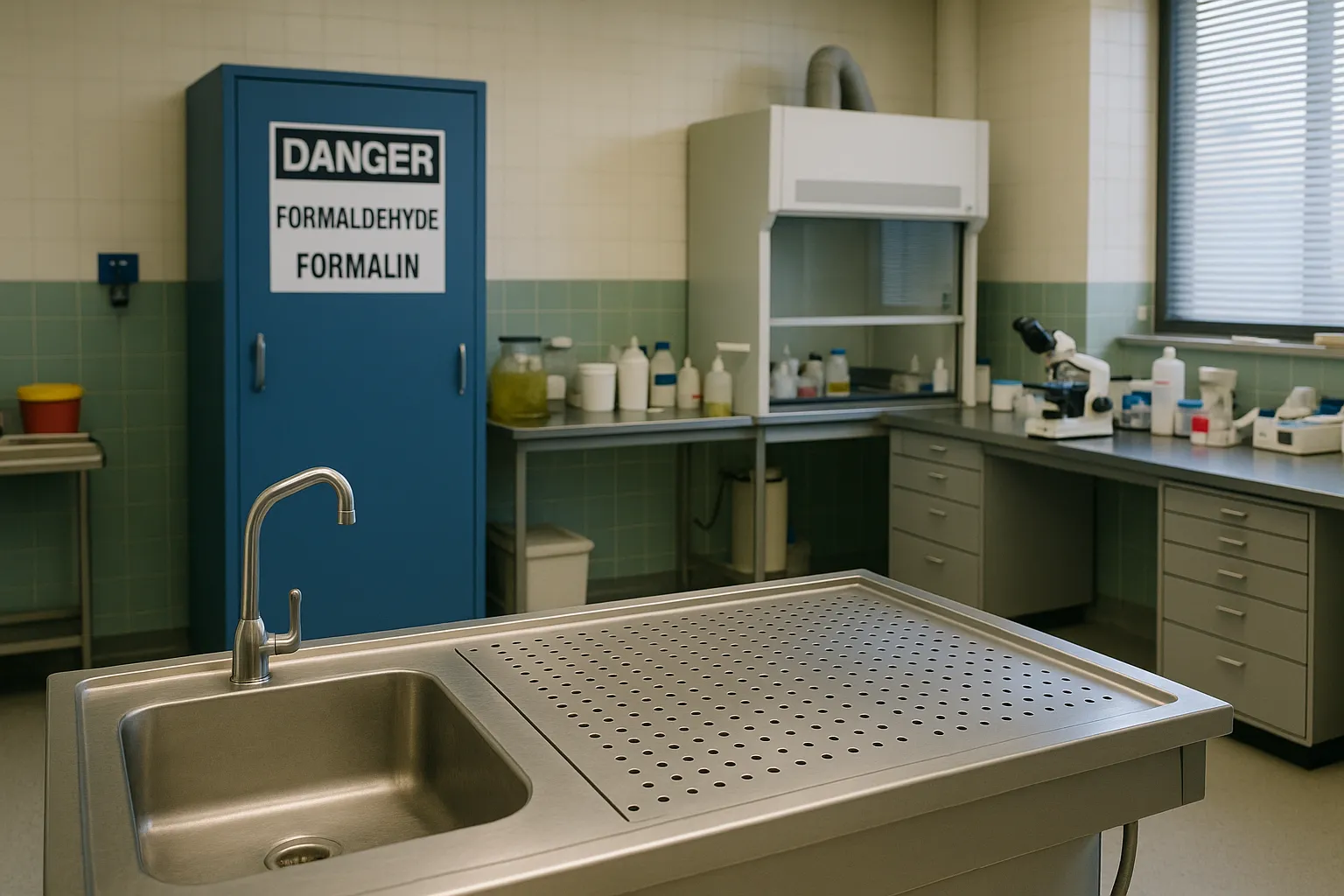
Formaldehyde, a colourless gas that is used in various biological applications, poses significant health risks, particularly for those working in pathology departments. The legal threshold for formaldehyde exposure in the UK stands at 2 parts per million (ppm). This limit is more than seven times higher than the maximum allowable concentration set by the European Union, which is 0.3 ppm. Alarmingly, this figure marks the highest permissible level in the world, raising questions about regulatory standards and workplace protection measures.
Recent research has revealed a concerning trend among NHS pathology departments where up to 70 per cent are reported to have exceeded EU safety levels for formaldehyde exposure. More worrying still, 34 per cent of these departments were found to breach even the UK’s higher limit. Despite these findings, the Health and Safety Executive (HSE) has yet to revise the exposure threshold in the wake of Brexit, a decision that has left many experts and advocates demanding immediate action.
Robert Mifflin, a former NHS employee, is among those who experienced severe health consequences due to exposure to high levels of formaldehyde. After developing acute respiratory symptoms that impacted his daily life, Mifflin was compelled to leave his position. His case has become emblematic of the broader issues faced by many UK workers who find themselves confronting health challenges linked to inadequate workplace safety.
In addition to Mifflin, another former staff member, who has requested anonymity for privacy reasons, shared similar experiences. This unnamed individual reported having developed chronic respiratory conditions, essentially attributing their health issues to protracted exposure to formaldehyde in poorly ventilated laboratories. Both individuals received substantial financial settlements in recognition of the health conditions they developed as a direct result of their work environments.
Experts in occupational health are increasingly drawing parallels between formaldehyde and other well-known hazardous substances such as asbestos. The latter has long been recognised for its dire health implications, and the argument is gaining traction that formaldehyde deserves equally stringent measures. This perspective highlights a significant inconsistency in regulatory frameworks concerning materials classified as carcinogenic, especially when considering the broad range of industries where thousands of workers may be at risk from exposure.
As the investigation continues to unravel the extent of formaldehyde exposure in various settings, stakeholders are calling for urgent revisions to safety regulations to align them more closely with the health standards recommended by the European Union. Critics are particularly vocal about the need to protect employees whose daily contributions are vital to the healthcare system, underpinning the argument that their wellbeing should be a priority over outdated regulatory thresholds.
To further gauge the situation, it is essential to look at the levels of formaldehyde reported across different healthcare settings. The presence of formaldehyde is most commonly associated with its use in laboratories for preserving biological specimens, yet its range of applications extends to other sectors, including manufacturing and building materials. Consequently, workers in these fields may also face risks that have not been adequately addressed through existing regulations.
In light of these developments, whistleblowing initiatives within the NHS and other organisations could play a pivotal role in pushing for regulatory changes. Former employees have expressed their willingness to share experiences and evidence of safety violations, reinforcing the sentiment that change is both necessary and urgent.
The response from the Health and Safety Executive has thus far been restrained, focusing on the existing legal framework without committing to immediate amendments. This approach has led to calls for increased scrutiny and a thorough review of safety standards, sparking conversations about the need for a more proactive stance on occupational health across the UK.
As investigations into this trend continue, the health and safety of laboratory workers and healthcare staff remain a pressing concern. Advocates for these individuals argue that further escalations in their struggles for safer work environments should not fall on deaf ears. The implications of formaldehyde exposure transcend individual cases; they represent a systemic issue that, if unaddressed, could result in lasting health impacts for a considerable number of NHS workers.
Meanwhile, campaigners are working diligently to raise public awareness about the potential dangers associated with formaldehyde, hoping to galvanize community and political support for regulatory changes. In the face of emerging evidence, it is increasingly clear that all measures must be taken to ensure the safety of those who dedicate their lives to caring for others within the healthcare system.
Our Thoughts
To prevent the severe health issues faced by NHS and laboratory staff due to formaldehyde exposure, several key measures could have been implemented. Firstly, regular risk assessments in accordance with the Management of Health and Safety at Work Regulations 1999 should have been conducted to identify hazardous exposure levels and ensure compliance with the Control of Substances Hazardous to Health (COSHH) Regulations 2002.
The excessive exposure of staff, with 70% of departments exceeding safe limits, indicates a failure to enforce proper control measures, such as improving ventilation systems and using alternative substances with lower health risks. The Health and Safety Executive (HSE) should have proactively reviewed and lowered the legal workplace exposure limits in line with EU standards, after the UK’s departure from the EU, to better protect workers.
The case highlights a critical safety lesson regarding the need for ongoing monitoring and immediate action in response to emerging health risks. To prevent similar incidents, it is essential for health authorities to implement strict adherence to regulations and foster a culture of safety that prioritizes worker health over outdated limits.