















Story Highlight
– NHS Wales maintenance backlog nears £1bn, 71% increase.
– Twelve main hospitals require £616m for urgent repairs.
– Aged facilities hinder healthcare efficiency and safety.
– Political parties propose new hospitals ahead of elections.
– Experts warn backlog impacts healthcare delivery and innovation.
Full Story
The state of NHS buildings across Wales has reached a critical juncture, with maintenance and repair backlogs classified as “high” or “significant risk” now nearing £1 billion. As the May Senedd elections approach, political parties are increasingly vocal about their plans to address this urgent issue by proposing the construction of new hospitals. However, any incoming Welsh government will inherit a legacy of ageing infrastructure that could significantly impact budgeting and operational efficiency.
A review of the status of 210 NHS sites in Wales reveals stark financial challenges. According to recent figures released by the NHS Wales Shared Services Partnership, the backlog in maintenance costs has surged to approximately £917 million. This figure represents a staggering increase of 71% over the past four years and encompasses a requirement of more than £616 million needed to rectify the most pressing issues at 12 of the 13 main hospitals in Wales.
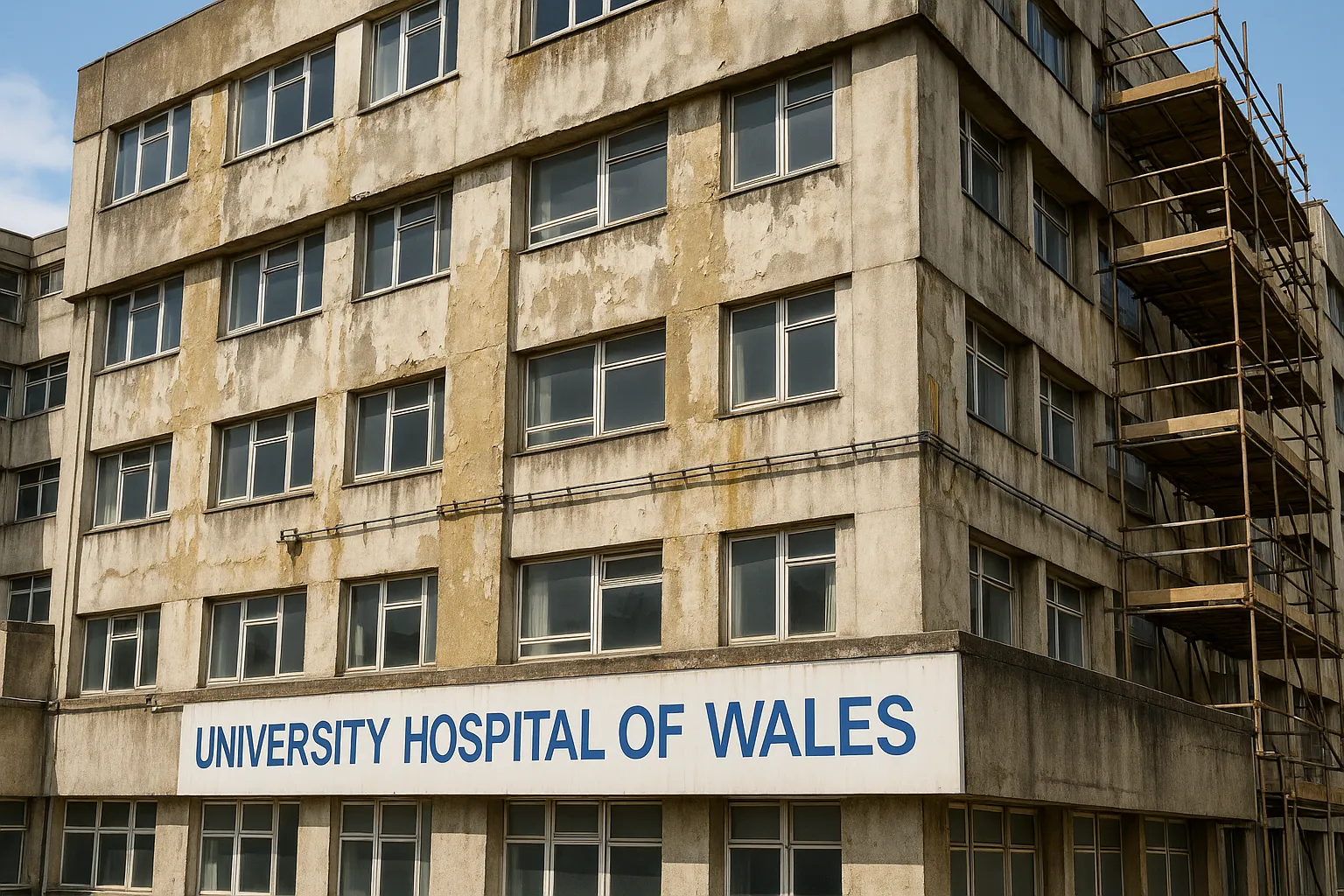
A closer examination of specific sites indicates severe disparities in infrastructure conditions. Ysbyty Gwynedd, for instance, grapples with a backlog of £110.5 million in high-risk and significant maintenance needs. Following closely behind, Cardiff’s University Hospital of Wales (UHW) faces a backlog totaling £106.8 million. Furthermore, alarming statistics highlight that three hospitals—Bronglais, Prince Philip, and Ysbyty Gwynedd—have over 40% of their facilities failing to meet fire safety regulations. In a related concern, Ysbyty Gwynedd also reports that 35% of its space does not comply with health and safety standards.
In addition to these problems, a significant number of NHS facilities appear to reflect a bygone era; over 30 sites still house structures built prior to the establishment of the NHS in 1948, primarily consisting of community clinics and smaller hospitals. Meanwhile, 17 locations, including both UHW and Bronglais, are mostly occupied by buildings that are approximately 50 to 60 years old. Encouragingly, the recently inaugurated Grange Hospital in Cwmbran is an exception, showcasing no maintenance issues, but such new constructions are infrequent and require extended timelines for planning and execution.
The scale of the repairs required across Welsh healthcare facilities is alarming. A risk-adjusted assessment has revealed that the overall backlog of necessary repairs for all NHS buildings in Wales exceeds £1 billion. The most significant proportion of this figure, almost £278 million, pertains to the Betsi Cadwaladr health board area. Despite having a relatively new primary hospital, Aneurin Bevan health board is contending with a backlog approaching £233 million. This includes nearly £150 million attributed to necessary repairs at its older institutions, the Royal Gwent and Nevill Hall hospitals.
In the Hywel Dda health board, where plans for a new hospital serving West Wales may take years to come to fruition, the backlog stands at £221 million. This figure encompasses pressing issues at several hospitals, including Glangwili in Carmarthen, which alone accounts for £82 million in high-risk repairs.
The chair of Cardiff and Vale Health Board has recently voiced concern over the state of UHW, established in 1971, acknowledging that the dilapidated condition of the facility adversely affects both employee morale and operational efficacy. The longevity of these structural concerns has raised significant alarm within the health sector.
This maintenance challenge is not unique to Wales; NHS England’s estimated backlog has ballooned to £16 billion, illustrating a nationwide crisis. Mark Dayan, a policy analyst with the Nuffield Trust, observes that investment in healthcare infrastructure has lagged significantly over the past two decades, contributing to the alarming state of maintenance backlogs. He notes, “Wales has a worryingly large backlog of maintenance by anyone’s standards,” further underscoring that the total exceeds Wales’ annual expenditure on healthcare buildings and equipment.
Dayan highlighted the detrimental impact that inadequate facilities can impose on healthcare delivery. He stated, “The condition of buildings and infrastructure can have a really limiting effect on healthcare,” especially when attempting to innovate or streamline services. If hospitals are severely restricted in their capacity to operate effectively, it hinders any potential for strategic reconfiguration, ultimately compromising patient care.
In light of these deteriorating conditions, political parties are articulating various strategies in their campaign pledges. Welsh Labour, for instance, has proposed a sweeping £4 billion “Hospitals of the Future” fund aimed at constructing state-of-the-art facilities, including replacements for both Wrexham Maelor and University Hospital Wales, in addition to developing a major hospital in West Wales. This initiative would potentially be financed through traditional capital measures, borrowing, and a mutual investment model, granting new authorities the opportunity to collaborate on tailored solutions for local health boards.
Conversely, Plaid Cymru criticises Labour’s promise as unrealistic, dubbing the maintenance backlog “eye watering.” Party health spokesman Mabon ap Gwynfor has articulated a commitment to resolving high-risk maintenance issues through urgent repair initiatives to ensure safety for both staff and patients. He also emphasised the importance of adopting a digital strategy aimed at enhancing health service efficiency.
On a different note, Reform UK’s James Evans has condemned the deteriorating state of Welsh healthcare facilities, calling for realistic and pragmatic approaches to overcoming today’s substantial maintenance challenges. He asserts that only by prioritizing funds towards clearing this backlog can there be hope for meaningful improvements.
The Welsh Conservatives have similarly addressed the situation, attributing the deteriorating health estate to decades of mismanagement. They have articulated a vision that includes a declaration of a health emergency and plans to restore NHS efficiency alongside building new community hospitals equipped with minor injury units.
Lastly, the Welsh Liberal Democrats have proposed a focus on upgrading some of the most dilapidated NHS buildings with a commitment to modernize facilities to improve patient care outcomes. They underscore the need for a strategic approach that ties capital investment in healthcare to reforms within social care, aiming to alleviate the pressures currently facing hospitals across the region.
The discourse surrounding the state of NHS facilities in Wales underscores a pressing need for both immediate action and long-term strategic planning to ensure the sustainability and efficiency of healthcare delivery in the country. As stakeholders prepare to navigate the complexities of the upcoming elections, proactive measures are imperative for addressing these urgent infrastructure concerns.
Our Thoughts
The backlog of nearly £1bn in maintenance and repairs across NHS buildings in Wales highlights significant breaches of the Health and Safety at Work Act 1974, specifically relating to the duty of employers to ensure, as far as is reasonably practicable, the health, safety, and welfare of employees and others affected by their activities. Critical failures include neglecting to address fire safety compliance and health hazards in over 40% of certain buildings.
To prevent such incidents, regular maintenance audits, prioritizing funding for urgent repairs, and timely action on high-risk issues are essential. Implementing a proactive maintenance management system could help address wear and tear before they escalate into safety concerns.
Additionally, there appears to be a lack of long-term strategic planning for building upgrades and new constructions, which can be addressed by government policy reforms to ensure consistent capital investment in NHS infrastructure. This situation serves as a reminder of the importance of maintaining a safe working environment, as failure to do so not only endangers staff and patients but also impacts service delivery efficiency.