











Story Highlight
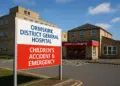
– NHS plans to close children’s A&E at Ormskirk Hospital.
– Campaigners warn decision risks children’s lives and safety.
– MP Ashley Dalton seeks government intervention against closure.
– Consultation process criticized as biased and ineffective.
– Concerns raised over increased travel times for emergencies.
Full Story
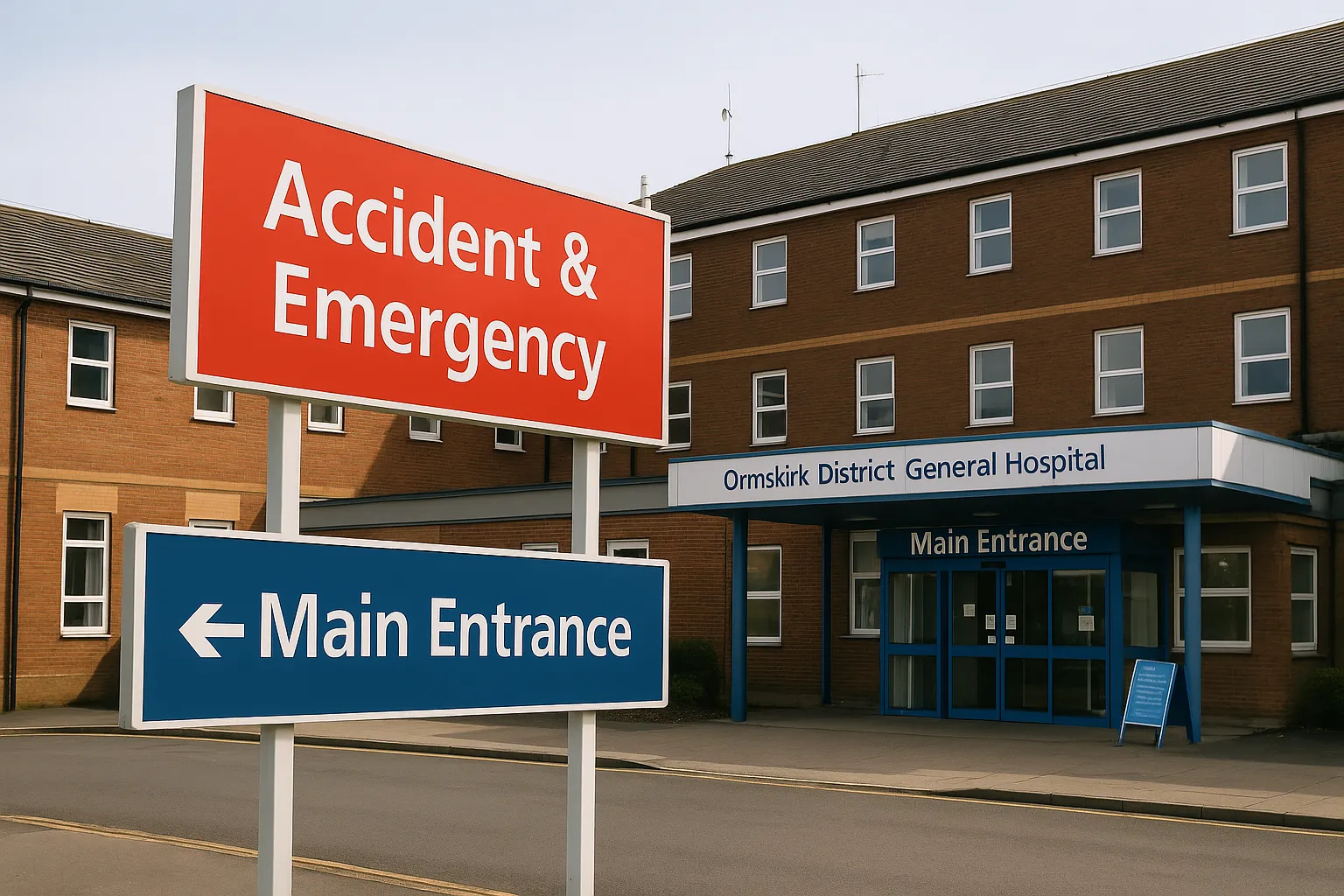
Concerns are mounting across West Lancashire following the decision by NHS officials to shut down the children’s Accident and Emergency (A&E) unit at Ormskirk Hospital. Opponents argue that the closure places vulnerable children’s lives at risk and forces critically ill patients to travel much longer distances in emergencies. Critics have described the plan as a “done deal” that prioritises financial cuts over patient care in a region reliant on local healthcare services.
The decision, made by the integrated care boards (ICBs) of NHS Lancashire and South Cumbria and NHS Cheshire and Merseyside, came during a meeting on March 13. It entails relocating children’s A&E services to Southport Hospital, which will also house a 24-hour service for adults. This shift has triggered backlash from local representatives and community members who fear it will jeopardise health outcomes for children in the region.
Local MP Ashley Dalton has been vocally opposed to the move, asserting on social media that it represents devastating news for the West Lancashire community. “We’ve been clear throughout this process that A&E should be co-located at Ormskirk,” she remarked. Following her initial response, Dalton delivered a letter to Secretary of State for Health and Social Care Wes Streeting, urging him to intervene and reverse the decision. She expressed disbelief that the changes would genuinely benefit her constituents: “I simply do not accept that this decision is in the best interests of my constituents.”
Community members like Mary Whitby echoed Dalton’s concerns, articulating that the closure would impose greater risks, particularly for children and other vulnerable groups. She highlighted that increased travel distances could lead to dire consequences, especially for those with critical health issues. “Removing A&E and related services increases travel times and risk, particularly for children, the elderly, and disabled people,” Whitby stated. “These decisions have happened all over the UK under the guise of practicality, but they often leave us with less than we need.”
The Shaping Care Together (SCT) consultation process has faced severe scrutiny amid allegations that its outcome was predetermined. Some residents have indicated that the closure of Ormskirk’s A&E services was never genuinely up for discussion, despite NHS assurances. Barrie French, a resident who described the final vote on the matter as reminiscent of a “banana republic,” expressed frustration over the consultation’s perceived lack of substance. He claimed, “They told us the consultation would be ‘best in class,’ but in the end, many residents feel like their voices were not heard.”
French, along with others, is seriously contemplating legal avenues to challenge the decision. He pointed out discrepancies in financial arguments presented by the health authorities, questioning the underlying motives for service consolidation rather than expansion. Similarly, NHS Lancashire and South Cumbria’s chief commissioning officer, Craig Harris, attempted to justify the decision as necessary for ensuring sustainable emergency care across the region. He stated, “This decision was about making sure we have a 24/7 emergency department for both adults and children at the same site, which can safely and sustainably deliver emergency care.”
Amidst the turmoil, there is an increasing concern that financial imperatives are taking precedence over patient safety. The British Medical Association (BMA) recently highlighted fears that imposed financial targets are adversely impacting patient care in Cheshire and Merseyside. A survey revealed that an overwhelming majority of medical professionals believe that funding cuts are compromising the integrity of healthcare delivery in the region.
As the debate intensifies, critics of the Ormskirk closure maintain that the move to Southport will detrimentally impact the population across West Lancashire and beyond. Sharron Wright, a retired nurse and a caregiver to her grandson with complex medical needs, voiced her alarm over the situation. “This news is a huge blow. It’s essentially going to leave vulnerable children like my grandson, Jamie, in a situation that is untenable,” she explained. Wright’s concerns echoed those of several local residents who fear that extended travel times could lead to tragic outcomes, noting that emergency situations often require immediate access to medical facilities.
For residents living in more rural or isolated areas, such as Kirkby, the implications of closing Ormskirk’s A&E could extend even further. Neil Dunne, a local citizen, pointed out that many from his area have historically relied on Ormskirk’s services. “Ormskirk has provided a safe and reliable alternative which has helped treat thousands of patients for years,” he stated. With increasing waiting times at hospitals, the community’s reliance on the A&E has only strengthened through the years.
In response to the growing dissatisfaction, NHS authorities assert that Ormskirk Hospital will continue to operate, delivering essential medical services to local residents. Harris reaffirmed that his team is in the process of enhancing urgent care services in the West Lancashire region, including plans to upgrade the walk-in centre in Skelmersdale.
Despite the reassurances, public sentiment remains tense. Many residents across Southport and Ormskirk are left grappling with the fear that essential A&E services are being eroded, potentially putting lives at risk. Ongoing discussions around the future of medical services in the region will likely be met with heightened scrutiny as the impact of the changes unfolds. The community’s collective voice appears resolute: healthcare decisions should prioritise patient safety above all else.
Our Thoughts
The decision to close the children’s A&E at Ormskirk Hospital raises significant health and safety concerns under UK legislation, particularly the Health and Safety at Work Act 1974, which mandates ensuring the safety of employees and the public. To mitigate the risks associated with this closure, NHS management could have conducted a more thorough and inclusive consultation process that genuinely considered community feedback, ensuring that patient safety was prioritized over financial considerations.
Key safety lessons include the importance of maintaining critical local healthcare services, particularly for vulnerable populations like children and the elderly. The Care Quality Commission (CQC) emphasizes access to safe and effective healthcare, highlighting that service availability directly impacts patient outcomes.
Regulations potentially breached include failure to adequately assess risks associated with extended travel times for emergencies, contravening the principles of the Management of Health and Safety at Work Regulations 1999. To prevent similar incidents, it is crucial for health authorities to robustly evaluate the impact of service changes on local communities, prioritizing patient safety and accessibility in decision-making processes. An ongoing dialogue with stakeholders should be established to ensure transparency and trust in the decision-making process.