














Story Highlight
– Peak Cluster aims to reduce greenhouse gas emissions.
– Project backed by government funding, needs final approval.
– Local opposition grows with significant public petition signed.
– Councillors propose alternative routes to minimize community impact.
– Government emphasizes carbon capture’s importance for clean energy.
Full Story
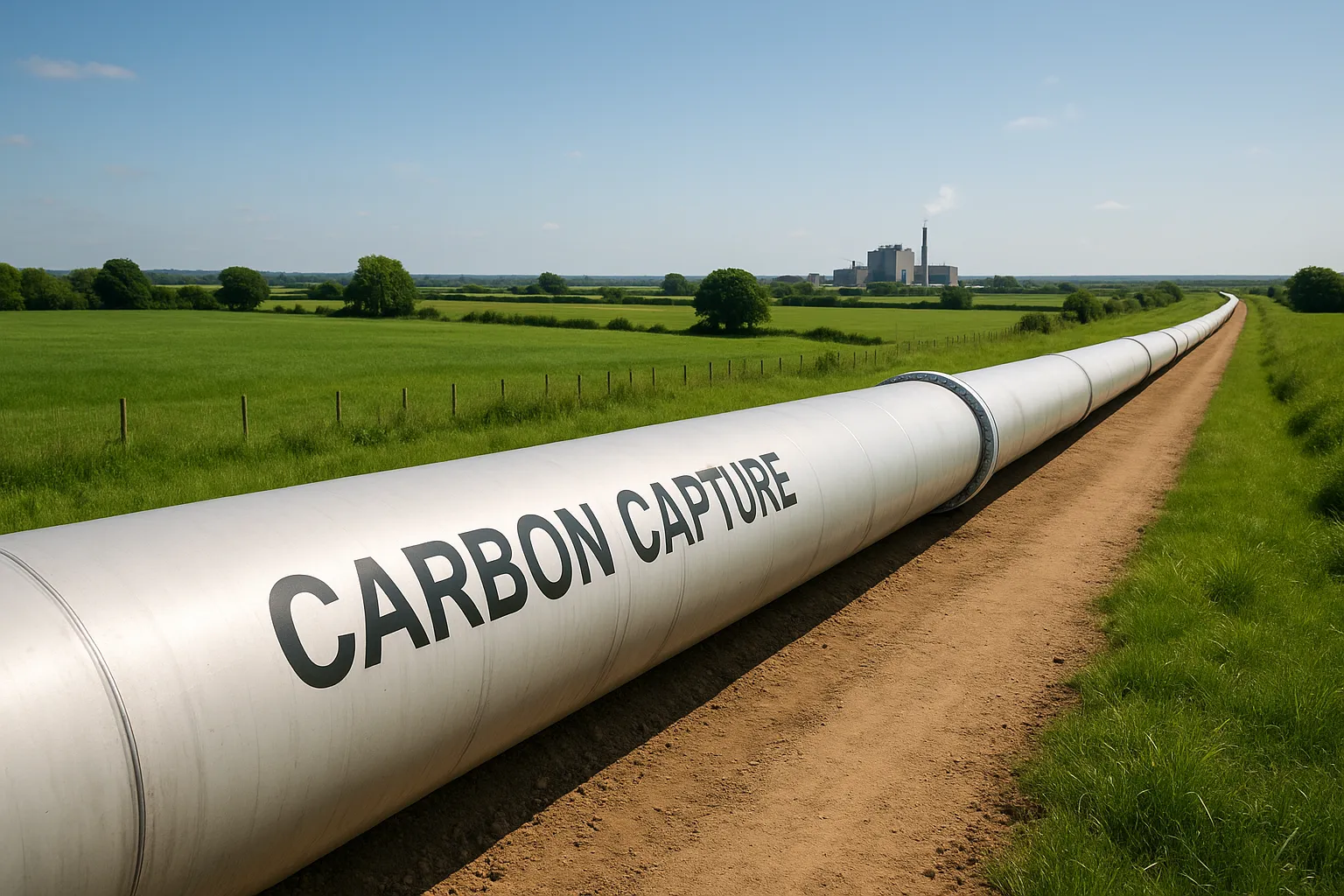
Plans for a significant carbon capture and storage initiative, known as the Peak Cluster project, are underway, aiming to transport greenhouse gas emissions from the Peak District to the Irish Sea. Initially announced in 2023, this ambitious venture seeks to address the pressing issue of climate change by capturing emissions from four cement and lime producers and subsequently storing them in the depleted Morecambe gas fields.
The scheme has garnered substantial government backing, with millions allocated to support its development. However, it is still awaiting final approval, leaving its future uncertain. The UK government envisions the project as part of broader efforts to bolster the carbon capture sector, which could lead to the creation of approximately 50,000 jobs by 2050. Current estimates suggest that ongoing initiatives could already be safeguarding around 4,800 jobs, with the Peak Cluster and another initiative, Morecambe Net Zero, potentially preserving around 13,000 jobs in the region.
Despite the projected benefits, government modelling indicates that balancing emissions released with those removed from the atmosphere may entail expenses amounting to several billion pounds annually in the 2030s. This looming financial burden raises concerns about the viability of such extensive programmes.
Opposition has emerged from local groups, notably a petition spearheaded by Mark Fleming of Reform Wirral, which has attracted over 14,600 signatures advocating for a halt to all carbon capture projects. In response to these concerns, the Labour Party in Wirral convened an emergency council meeting on March 9, urging the government to reconsider its approach. Meanwhile, Liberal Democrat representatives have been working on their own motion to address these issues.
The motion proposed by Councillors Mark Skillicorn and Angie Davies emphatically states that local authorities, community stakeholders, and political parties should collectively oppose the use of Wirral as a conduit for emissions transportation from industries situated over 200 kilometres away. They further called for the total cancellation of the Peak Cluster project, or at the very least, suggested alternative routes to the Irish Sea that would not compromise the well-being of local residents, wildlife, or the environment.
The motion clarified their stance, asserting, “We are not standing here to say ‘do nothing’ about climate change. We are not climate deniers. We support effective, science-based action to cut emissions.” However, they emphasized the necessity for such actions to be conducted in a fair and transparent manner that prioritises the community and natural ecosystems.
Further criticisms have emerged from Liberal Democrat councillors, including Stuart Kelly and Phil Gilchrist, who have expressed dissatisfaction with aspects of the project, particularly the justification for the selected transport route. They raised alarms regarding its potential adverse impacts on wildlife and highlighted legitimate public safety and emergency planning issues that, they contend, have not been sufficiently addressed.
In response to these growing concerns, a spokesperson from the Department for Energy Security and Net Zero reiterated the importance of carbon capture, usage, and storage for the UK’s clean energy future. They stated, “The Climate Change Committee describes it as a ‘necessity not an option’ for reaching our climate goals.” The official highlighted that the government is investing significantly, with £9.4 billion earmarked for pioneering carbon capture projects throughout this parliamentary term. These initiatives are expected to help revive industrial regions and create thousands of jobs nationwide.
The spokesperson emphasized that safety is paramount, asserting that all carbon capture projects must adhere to the highest independent safety standards prior to commencement. In light of safety inquiries, Peak Cluster has addressed many questions, stating that while their current information may be somewhat high-level, they will provide clearer details as the project progresses.
Regarding construction methods, the pipeline will be installed using an open-trench technique across a defined area of 30 to 40 metres, with the construction process expected to take up to three years in total. The segment linking the compression facility to the shoreline is anticipated to take between nine and twelve months. Two potential construction sites have been identified, either south of Meols or north of Moreton, although a 50-metre high stack is expected to be used only for infrequent maintenance and will not emit carbon dioxide during typical operations.
While Peak Cluster has considered various routes along the coastline from North Wales to Cumbria, they confirmed there is currently no indication that the pipeline will avoid passing through Wirral. Addressing the safety concerns, the project representatives asserted that the transportation of gases and liquids via pipelines has been a well-established practice for more than a century in the UK. Presently, around 27,000 kilometres of high-pressure pipelines operate safely, transporting natural gas and various other fluids.
The firm further assured that their engineering designs comply with recognised safety standards and regulations, adhering to best practices established within the industry. They also plan to implement a fibre optic monitoring system to detect issues in real-time, allowing rapid isolation of pipeline sections as necessary. This development is seen as a significant enhancement in the project’s monitoring capabilities.
As discussions continue around the Peak Cluster project, the balance between addressing climate change and ensuring the safety and welfare of local communities remains at the forefront of the conversation. The outcomes of the ongoing debates will likely shape the future of this ambitious initiative and its impacts on the region.
Our Thoughts
The project highlighted in the article raises significant safety and regulatory concerns that could have been addressed to prevent public opposition and potential hazards. Key lessons include the necessity for thorough stakeholder engagement and transparent communication about safety measures and environmental impacts. Ensuring compliance with the Health and Safety at Work Act 1974 and the Control of Major Accident Hazards (COMAH) Regulations can mitigate risks associated with the transportation of hazardous materials.
Additionally, the concerns raised by local councillors about public safety and environmental implications indicate a lack of comprehensive risk assessments required under the Management of Health and Safety at Work Regulations 1999. Implementing more robust emergency planning and environmental impact assessments could alleviate community fears and potential breaches of the Environmental Protection Act 1990.
To avoid similar incidents, it would be prudent to conduct ongoing consultations and integrate community feedback into project planning. Furthermore, alternative routing options should be explored to lessen environmental impacts, directly addressing public concerns and ensuring compliance with the principles of sustainable development as outlined in the UK’s policy framework.